
Ch. 2 - The Chemistry of Microbiology
Bauman - Microbiology with Diseases by Taxonomy 6th Edition
Bauman6th EditionMicrobiology with Diseases by TaxonomyISBN: 9780134832302Non è quello che usi tu?Cambia libro di testo
Capitolo 2, Problema 7

Which of the following can be most accurately described as a decomposition reaction?


a. C₆H₁₂O₆ + 6 O₂ → 6 H₂O + 6 CO₂
b. glucose + ATP → glucose phosphate + ADP
c. 6 H₂O + 6 CO₂ → C₆H₁₂O₆ + 6 O₂
d. A + BC → AB + C

Guida verificata passo dopo passo
1
Step 1: Understand what a decomposition reaction is. In chemistry, a decomposition reaction involves a single compound breaking down into two or more simpler substances.
Step 2: Analyze each option to see if it fits the definition of decomposition:
- Option a: C₆H₁₂O₆ + 6 O₂ → 6 H₂O + 6 CO₂. This shows glucose reacting with oxygen to produce water and carbon dioxide, which is a breakdown of glucose, so it might be a decomposition.
- Option b: glucose + ATP → glucose phosphate + ADP. This is a phosphorylation reaction where glucose is modified, not broken down.
- Option c: 6 H₂O + 6 CO₂ → C₆H₁₂O₆ + 6 O₂. This is photosynthesis, a synthesis reaction building glucose from water and carbon dioxide.
- Option d: A + BC → AB + C. This is a single replacement reaction, where parts of compounds are exchanged.
Step 3: Identify the reaction where one compound breaks down into simpler products without combining with other reactants. This matches the definition of decomposition.
Step 4: Confirm that the reaction involves one reactant breaking into multiple products, which is the hallmark of decomposition.
Step 5: Conclude which option best fits the decomposition reaction based on the above analysis.

Risposta video verificata per un problema simile:

Questa soluzione video è stata consigliata dai nostri tutor come utile per risolvere questo problema.
Durata del video:
2m

Concetti chiave

Ecco i concetti essenziali che devi comprendere per rispondere correttamente alla domanda.

Decomposition Reaction

A decomposition reaction involves a single compound breaking down into two or more simpler substances. It is the opposite of a synthesis reaction and typically requires energy input. For example, AB → A + B represents a decomposition process.
Video consigliato:
01:56
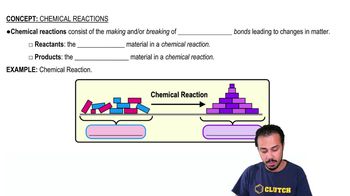
Chemical Reactions

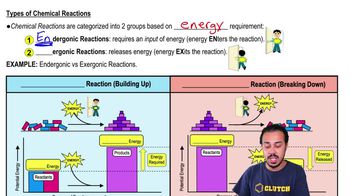
Types of Chemical Reactions

Chemical reactions can be classified into synthesis, decomposition, single replacement, and combustion, among others. Recognizing the pattern of reactants and products helps identify the reaction type, such as synthesis combining substances or decomposition breaking them apart.
Video consigliato:
05:48
Types of Chemical Reactions

Interpreting Chemical Equations

Understanding chemical equations involves identifying reactants and products and the direction of the reaction. This skill helps determine if a reaction is decomposition (one reactant to many products) or another type, by analyzing the molecular formulas and reaction structure.
Video consigliato:
01:56
Chemical Reactions