
Ch. 5 - Microbial Metabolism
Bauman - Microbiology with Diseases by Taxonomy 6th Edition
Bauman6th EditionMicrobiology with Diseases by TaxonomyISBN: 9780134832302Non è quello che usi tu?Cambia libro di testo
Capitolo 5, Problema 1

For the phrase given below, indicate the type of metabolism referred to, using the following choices:
a. Anabolism only
b. Both anabolism and catabolism (amphibolic)
c. Catabolism only


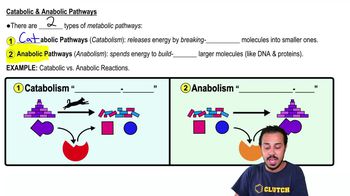
Breaks a large molecule into smaller ones

Guida verificata passo dopo passo
1
Understand the definitions of the metabolic types: Anabolism refers to the biosynthetic processes that build larger molecules from smaller ones, requiring energy input; Catabolism refers to the breakdown of larger molecules into smaller ones, releasing energy; Amphibolic pathways involve both anabolic and catabolic reactions.
Analyze the phrase 'Breaks a large molecule into smaller ones' to determine which metabolic process it describes. Since it involves breaking down molecules, it is associated with energy release.
Recognize that breaking down large molecules into smaller ones is a characteristic of catabolic metabolism, as it involves degradation and energy release.
Confirm that the phrase does not describe building molecules (anabolism) or a combination of both processes (amphibolic), but specifically the breakdown process.
Conclude that the correct type of metabolism referred to by the phrase is 'catabolism only'.

Risposta video verificata per un problema simile:

Questa soluzione video è stata consigliata dai nostri tutor come utile per risolvere questo problema.
Durata del video:
2m

Concetti chiave

Ecco i concetti essenziali che devi comprendere per rispondere correttamente alla domanda.

Catabolism

Catabolism is the metabolic process that breaks down large molecules into smaller units, releasing energy stored in chemical bonds. It includes reactions like digestion and cellular respiration, providing energy and building blocks for the cell.
Video consigliato:
03:25
Catabolic & Anabolic Pathways

Anabolism

Anabolism involves the synthesis of complex molecules from simpler ones, requiring energy input. It supports cell growth, repair, and storage by building macromolecules such as proteins, nucleic acids, and lipids.
Video consigliato:
03:25
Catabolic & Anabolic Pathways

Amphibolic Pathways

Amphibolic pathways function in both catabolism and anabolism, serving dual roles in breaking down molecules for energy and providing intermediates for biosynthesis. The citric acid cycle is a classic example of an amphibolic pathway.
Video consigliato:
04:40
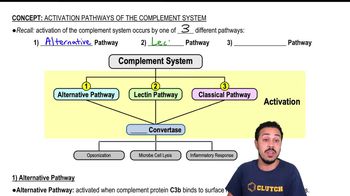
1) Alternative Pathway