
Domanda del libro di testo
Explain the mechanism of negative feedback with respect to enzyme action.
1418
views

 Guida verificata passo dopo passo
 03:35
03:35 03:35
03:35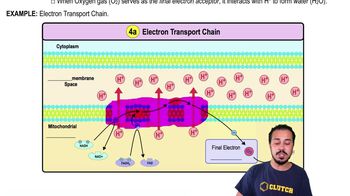 07:41
07:41Explain the mechanism of negative feedback with respect to enzyme action.
For the phrase given below, indicate the type of metabolism referred to, using the following choices:
a. Anabolism only
b. Both anabolism and catabolism (amphibolic)
c. Catabolism only
Includes hydrolytic reactions
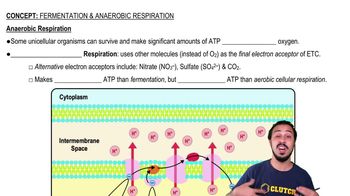
The final electron acceptor in aerobic respiration is ________.
For the phrase given below, indicate the type of metabolism referred to, using the following choices:
a. Anabolism only
b. Both anabolism and catabolism (amphibolic)
c. Catabolism only
Involves the production of cell membrane constituents
Photosynthetic bacteria that also fix nitrogen are:
a. Mycoplasmas
b. Spirilla
c. Bacteroids
d. Cyanobacteria
Facultative anaerobes can live under either aerobic or anaerobic conditions. What metabolic pathways allow these organisms to continue to harvest energy from sugar molecules in the absence of oxygen?