
Ch. 7 - Microbial Genetics
Bauman - Microbiology with Diseases by Taxonomy 6th Edition
Bauman6th EditionMicrobiology with Diseases by TaxonomyISBN: 9780134832302Non è quello che usi tu?Cambia libro di testo
Capitolo 7, Problema 4

Insertions and deletions in the genetic code are also called ___________ mutations.

Guida verificata passo dopo passo
1
Understand the types of mutations in genetics: point mutations, insertions, deletions, and frameshift mutations.
Recall that insertions and deletions involve adding or removing nucleotides from the DNA sequence.
Recognize that when insertions or deletions are not in multiples of three nucleotides, they shift the reading frame of the genetic code.
Identify that this shift in the reading frame is specifically called a frameshift mutation.
Conclude that insertions and deletions in the genetic code are also called frameshift mutations.

Risposta video verificata per un problema simile:

Questa soluzione video è stata consigliata dai nostri tutor come utile per risolvere questo problema.
Durata del video:
1m

Concetti chiave

Ecco i concetti essenziali che devi comprendere per rispondere correttamente alla domanda.

Types of Genetic Mutations

Genetic mutations are changes in the DNA sequence and include substitutions, insertions, and deletions. Insertions add extra nucleotides, while deletions remove them, both potentially altering the genetic code significantly.
Video consigliato:
08:44
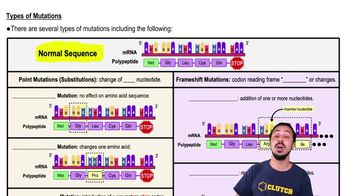
Types of Mutations

Frameshift Mutations

Insertions and deletions that are not in multiples of three nucleotides cause frameshift mutations. These shift the reading frame of the genetic code, often resulting in completely different and nonfunctional proteins.
Video consigliato:
08:44
Types of Mutations

Impact of Mutations on Protein Synthesis

Mutations can affect protein synthesis by changing the mRNA sequence, which alters the amino acid sequence during translation. Frameshift mutations typically lead to premature stop codons or dysfunctional proteins, impacting cellular function.
Video consigliato:
00:37
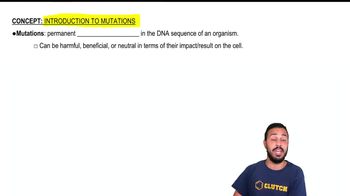
Introduction to Mutations