Ch. 7 - Microbial Genetics
Bauman - Microbiology with Diseases by Taxonomy 6th Edition
Bauman6th EditionMicrobiology with Diseases by TaxonomyISBN: 9780134832302Non è quello che usi tu?Cambia libro di testo
Capitolo 7, Problema 4

Polypeptide synthesis requires large amounts of energy. How do cells regulate synthesis to conserve energy? Describe one specific example.

Guida verificata passo dopo passo
1
Understand that polypeptide synthesis is an energy-intensive process because it involves multiple steps such as initiation, elongation, and termination, each requiring energy molecules like GTP and ATP.
Recognize that cells regulate polypeptide synthesis primarily at the level of transcription and translation to conserve energy, preventing unnecessary production of proteins.
One specific example is the use of the lac operon in bacteria, where the presence or absence of lactose controls the transcription of genes needed for lactose metabolism, thus regulating protein synthesis based on environmental conditions.
In the lac operon system, when lactose is absent, a repressor protein binds to the operator region, blocking RNA polymerase and preventing transcription of the operon's genes, thereby conserving energy by not producing unneeded enzymes.
When lactose is present, it binds to the repressor, causing it to release from the operator, allowing transcription and subsequent translation to proceed, ensuring energy is used only when the proteins are necessary.

Risposta video verificata per un problema simile:

Questa soluzione video è stata consigliata dai nostri tutor come utile per risolvere questo problema.
Durata del video:
2m

Concetti chiave

Ecco i concetti essenziali che devi comprendere per rispondere correttamente alla domanda.

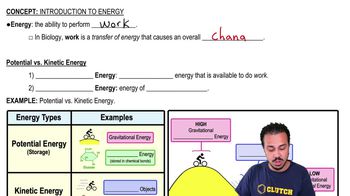
Energy Requirements of Polypeptide Synthesis

Polypeptide synthesis, or translation, consumes significant energy primarily through ATP and GTP molecules used in amino acid activation, initiation, elongation, and termination steps. This high energy demand necessitates tight regulation to prevent wasteful protein production when not needed.
Video consigliato:
04:58
Introduction to Energy

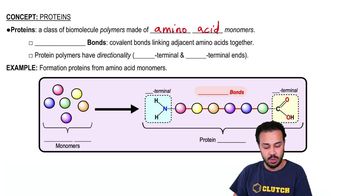
Regulation of Protein Synthesis

Cells regulate protein synthesis at multiple levels, including transcriptional control, mRNA stability, and translational control, to conserve energy. By controlling when and how much protein is made, cells avoid unnecessary energy expenditure on producing unneeded proteins.
Video consigliato:
02:50
Proteins

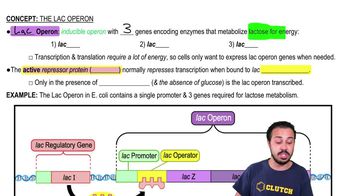
Example: The lac Operon in Bacteria

The lac operon in E. coli is a classic example where protein synthesis is regulated based on environmental conditions. When lactose is absent, the operon is repressed, preventing synthesis of enzymes like β-galactosidase, thus conserving energy by not producing proteins unnecessary for the current environment.
Video consigliato:
07:06
The Lac Operon