


Ch. 9 - Controlling Microbial Growth in the Environment
Bauman - Microbiology with Diseases by Taxonomy 6th Edition
Bauman6th EditionMicrobiology with Diseases by TaxonomyISBN: 9780134832302Non è quello che usi tu?Cambia libro di testo
Capitolo 9, Problema 1

Describe three types of microbes that are extremely resistant to antimicrobial treatment, and explain why they are resistant.

Guida verificata passo dopo passo
1
Identify three types of microbes known for their extreme resistance to antimicrobial treatments. Common examples include bacterial endospores, mycobacteria, and certain protozoan cysts.
Explain bacterial endospores: These are dormant, tough structures formed by some bacteria (e.g., Bacillus and Clostridium species). Their resistance comes from a thick protective coat, low water content, and metabolic inactivity, which protect them from heat, chemicals, and radiation.
Describe mycobacteria: These bacteria (e.g., Mycobacterium tuberculosis) have a unique cell wall rich in mycolic acids, which makes them impermeable to many antibiotics and disinfectants, contributing to their resistance.
Discuss protozoan cysts: Some protozoa form cysts with a thick, protective outer layer that shields them from harsh environmental conditions and antimicrobial agents, allowing them to survive until conditions improve.
Summarize that the resistance mechanisms involve structural barriers, metabolic states, and protective layers that prevent antimicrobial agents from reaching or effectively acting on these microbes.

Risposta video verificata per un problema simile:

Questa soluzione video è stata consigliata dai nostri tutor come utile per risolvere questo problema.
Durata del video:
51s

Concetti chiave

Ecco i concetti essenziali che devi comprendere per rispondere correttamente alla domanda.

Types of Microbes Resistant to Antimicrobial Treatment

Certain microbes such as bacterial spores, mycobacteria, and biofilm-forming bacteria exhibit high resistance to antimicrobials. Bacterial spores are dormant forms that survive harsh conditions. Mycobacteria have a waxy cell wall that limits drug penetration. Biofilms are communities of microbes encased in a protective matrix that impedes antimicrobial access.
Video consigliato:
07:24
Types of Microbes (Microbial Characteristics)

Mechanisms of Microbial Resistance

Microbes resist antimicrobials through various mechanisms including reduced permeability, enzymatic drug degradation, efflux pumps, and altered target sites. For example, mycobacteria’s mycolic acid layer reduces drug entry, while biofilms physically block drugs. Understanding these mechanisms explains why some microbes survive treatments that kill others.
Video consigliato:
01:59
Introduction to Avoiding Host Defense Mechanisms

Clinical Implications of Antimicrobial Resistance

Resistance in microbes complicates infection treatment, leading to persistent infections and increased healthcare costs. Resistant microbes require higher drug doses or alternative therapies, which may have more side effects. Recognizing resistant microbes helps guide effective treatment strategies and infection control measures.
Video consigliato:
02:45
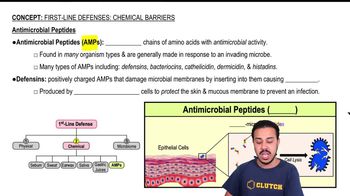
Antimicrobial Peptides