

Ch. 17 - Skin and Eye Infections
Norman-McKay- Microbiology: Basic and Clinical Principles 2nd Edition
Norman-McKay2nd EditionMicrobiology: Basic and Clinical PrinciplesISBN: 9780137661619Non è quello che usi tu?Cambia libro di testo
Capitolo 13, Problema 15

Your diabetic patient has a foot wound that has developed into serious necrosis and the recommended treatment has been sessions in the hyperbaric oxygen chamber. You are explaining to him what has contributed to this condition, including the causative agent, which is:
a. Bacillus anthracis.
b. Clostridium perfringens.
c. Corynebacteria diphtheriae.
d. Streptococcus pyogenes.
e. Pseudomonas aeroginosa.

Guida verificata passo dopo passo
1
Step 1: Understand the clinical context—necrosis in a diabetic foot wound often results from infection by bacteria that produce toxins causing tissue death and gas formation.
Step 2: Review the characteristics of each listed bacterium: Bacillus anthracis causes anthrax; Clostridium perfringens is known for gas gangrene and rapid tissue necrosis; Corynebacterium diphtheriae causes diphtheria; Streptococcus pyogenes causes strep throat and some skin infections; Pseudomonas aeruginosa is an opportunistic pathogen often involved in chronic wounds.
Step 3: Identify the causative agent most commonly associated with necrotizing infections and gas gangrene, which is characterized by severe tissue destruction and often treated with hyperbaric oxygen therapy.
Step 4: Recognize that hyperbaric oxygen therapy is particularly effective against anaerobic bacteria that thrive in low oxygen environments, such as Clostridium perfringens.
Step 5: Conclude that the causative agent in this scenario is the anaerobic, toxin-producing bacterium responsible for gas gangrene and necrosis, which matches Clostridium perfringens.

Risposta video verificata per un problema simile:

Questa soluzione video è stata consigliata dai nostri tutor come utile per risolvere questo problema.
Durata del video:
2m

Concetti chiave

Ecco i concetti essenziali che devi comprendere per rispondere correttamente alla domanda.

Clostridium perfringens and Gas Gangrene

Clostridium perfringens is an anaerobic, spore-forming bacterium commonly associated with gas gangrene, a severe necrotizing infection. It produces toxins that destroy tissue rapidly, leading to necrosis and systemic toxicity. This bacterium thrives in low-oxygen environments like deep wounds, making it a key causative agent in necrotic infections requiring hyperbaric oxygen therapy.
Video consigliato:
02:56
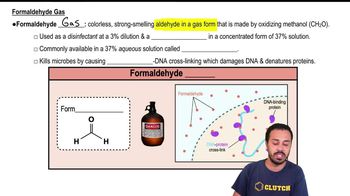
Formaldehyde Gas

Hyperbaric Oxygen Therapy (HBOT)

Hyperbaric oxygen therapy involves breathing pure oxygen in a pressurized chamber, increasing oxygen delivery to tissues. It is used to treat infections caused by anaerobic bacteria like Clostridium perfringens by inhibiting their growth and enhancing immune response. HBOT promotes wound healing and helps control necrosis in diabetic foot infections.
Video consigliato:
04:43
Reactive Oxygen Species

Diabetic Foot Infections and Necrosis

Diabetic foot infections often result from poor circulation and neuropathy, leading to wounds that heal poorly and become infected. Necrosis occurs when tissue dies due to infection and lack of oxygen. Understanding the pathophysiology of diabetic wounds is essential to recognize why certain bacteria cause severe infections and why treatments like HBOT are necessary.
Video consigliato:
03:52
Map of Lesson on Bacteriophage Infections
Pratica correlata
Domanda del libro di testo

Your patient is reminiscing about her childhood diseases while reviewing her medical history. She claims she had a really bad case of rubella (German measles) when she was a child and that she was very sick. You think she is confusing it with rubeola (measles) because:

a. measles can cause congenital rubella syndrome.

b. German measles causes a mild rash and is not likely to make a patient very sick.

c. the largest concern is for secondary infections like pneumonia.

d. she didn’t mention Koplik’s spots in the mouth or raised lesions.

e. the raised red rash usually begins on the trunk and spreads from there.

1173
views
Domanda del libro di testo

A child comes into your clinic with impetigo. The lab cultures a sample for further analysis. If the sample is S. aureus, which lab results would you expect?

a. Gram-positive cocci in clusters, catalase and coagulase positive

b. Gram-negative diplococci, catalase positive, and coagulase negative

c. Gram-positive cocci in clusters, catalase negative, and coagulase positive

d. Gram-positive cocci in chains, catalase positive, and coagulase negative

e. Gram-positive cocci in chains, catalase negative, and coagulase positive

1136
views
Domanda del libro di testo

Select the false statement about trachoma:

a. The causative agent is bacterial.

b. It is the leading cause of infectious blindness in the United States.

c. It is transmitted by unhygienic items, such as flies, fingers, and fomites.

d. Uncomplicated cases can be resolved with antibiotics.

e. Severe cases require surgery.

1091
views
Domanda del libro di testo

Acanthamoeba protozoa species are associated with:

a. keratitis.

b. conjunctivitis.

c. river blindness.

d. trachoma.

e. all of the above.

1528
views
Domanda del libro di testo

A frantic mother comes into your clinic because her two-year-old child has had a very high fever for two days now, with mild diarrhea and coldlike symptoms. As you consider the differential list, which is the most likely causative agent if the fever breaks and is replaced with a rash by tomorrow?

a. Human parvovirus B19

b. Hand, foot, and mouth disease

c. Roseola

d. Rubella

e. Measles

1169
views
Domanda del libro di testo

Which best describes conjunctivitis (select ALL that apply)?

a. Itchy eyes

b. Scarred cornea

c. Red eyes

d. Inverted eyelashes

e. Scarred conjunctiva

1094
views