Ch. 13 - Viruses, Viroids, and Prions
Tortora - Microbiology: An Introduction 14th Edition
Tortora14th EditionMicrobiology: An IntroductionISBN: 9780138200398Non è quello che usi tu?Cambia libro di testo
Capitolo 9, Problema 9

Which of the following does not initiate DNA synthesis?
a. A double-stranded DNA virus (Poxviridae)
b. A DNA virus with reverse transcriptase (Hepadnaviridae)
c. An RNA virus with reverse transcriptase (Retroviridae)
d. A single-stranded RNA virus (Togaviridae)
e. None of the above

Guida verificata passo dopo passo
1
Step 1: Understand the process of DNA synthesis initiation in viruses. DNA synthesis typically requires a primer or a mechanism to start the formation of a new DNA strand from a template.
Step 2: Analyze each virus type in the options to determine if it initiates DNA synthesis: - Poxviridae (double-stranded DNA virus) directly uses its DNA for replication. - Hepadnaviridae (DNA virus with reverse transcriptase) synthesizes DNA from an RNA intermediate. - Retroviridae (RNA virus with reverse transcriptase) synthesizes DNA from RNA. - Togaviridae (single-stranded RNA virus) generally does not synthesize DNA as part of its replication cycle.
Step 3: Recall that reverse transcriptase is an enzyme that synthesizes DNA from an RNA template, so viruses with this enzyme initiate DNA synthesis through reverse transcription.
Step 4: Recognize that single-stranded RNA viruses like Togaviridae replicate their RNA genome without producing DNA, so they do not initiate DNA synthesis.
Step 5: Conclude which virus type does not initiate DNA synthesis based on the above analysis.

Risposta video verificata per un problema simile:

Questa soluzione video è stata consigliata dai nostri tutor come utile per risolvere questo problema.
Durata del video:
2m

Concetti chiave

Ecco i concetti essenziali che devi comprendere per rispondere correttamente alla domanda.

DNA Synthesis Initiation in Viruses

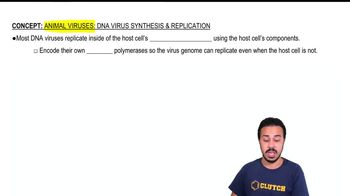
DNA synthesis initiation refers to the process by which a virus begins replicating its DNA genome. Some viruses carry enzymes or use host machinery to start DNA replication, often requiring primers or reverse transcription. Understanding which viral families initiate DNA synthesis helps determine their replication strategies.
Video consigliato:
01:10
Animal Viruses: DNA Virus Synthesis & Replication

Role of Reverse Transcriptase in Viral Replication

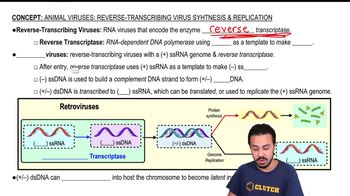
Reverse transcriptase is an enzyme that synthesizes DNA from an RNA template. Viruses like Retroviridae and Hepadnaviridae use reverse transcriptase to convert their RNA or RNA intermediates into DNA, initiating DNA synthesis indirectly. This enzyme is key to understanding how certain RNA viruses replicate via a DNA intermediate.
Video consigliato:
04:28
Animal Viruses: Reverse-Transcribing Virus Synthesis & Replication

Differences Between DNA and RNA Viruses

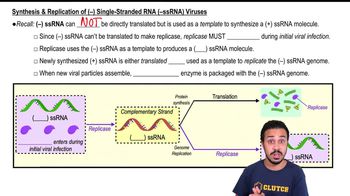
DNA viruses typically replicate their genomes directly as DNA, while RNA viruses replicate RNA genomes and may or may not involve DNA intermediates. Single-stranded RNA viruses like Togaviridae generally do not initiate DNA synthesis, as their replication relies on RNA-dependent RNA polymerase, not DNA synthesis.
Video consigliato:
04:36
Replication of (-) Single Strand RNA Viruses