
Ch. 14 - Principles of Disease and Epidemiology
Tortora - Microbiology: An Introduction 14th Edition
Tortora14th EditionMicrobiology: An IntroductionISBN: 9780138200398Non è quello che usi tu?Cambia libro di testo
Capitolo 10, Problema 6

How can a local infection become a systemic infection?

Guida verificata passo dopo passo
1
Understand the definitions: A local infection is confined to a specific part of the body, while a systemic infection spreads throughout the body, often via the bloodstream or lymphatic system.
Identify the initial site of infection where pathogens multiply and cause localized symptoms.
Recognize that pathogens can invade nearby tissues and enter the bloodstream or lymphatic vessels, a process called dissemination.
Consider factors that facilitate this spread, such as virulence factors of the pathogen (e.g., enzymes that break down tissue barriers) and the host's immune response.
Conclude that once pathogens circulate through the bloodstream or lymph, they can infect multiple organs or tissues, leading to a systemic infection.

Risposta video verificata per un problema simile:

Questa soluzione video è stata consigliata dai nostri tutor come utile per risolvere questo problema.
Durata del video:
2m

Concetti chiave

Ecco i concetti essenziali che devi comprendere per rispondere correttamente alla domanda.

Local Infection

A local infection is confined to a specific part of the body, such as a wound or a single organ, where pathogens multiply and cause symptoms. It is typically limited in scope and does not spread beyond the initial site.
Video consigliato:
03:52
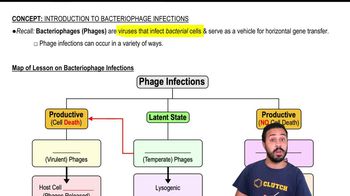
Map of Lesson on Bacteriophage Infections

Pathogen Dissemination Mechanisms

Pathogens can spread from a local site to other body parts through the bloodstream, lymphatic system, or by direct extension. This dissemination allows microbes to invade distant tissues, leading to a systemic infection.
Video consigliato:
03:40
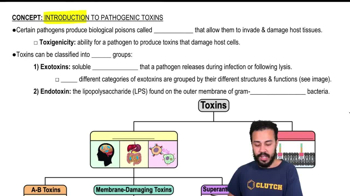
Introduction to Pathogenic Toxins

Systemic Infection

A systemic infection occurs when pathogens spread throughout the body, affecting multiple organs or systems. This can result in widespread symptoms like fever and sepsis, and often requires more aggressive treatment than local infections.
Video consigliato:
04:25
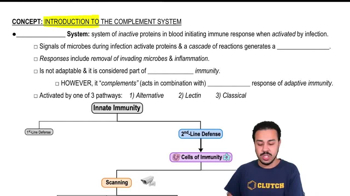
Introduction to the Complement System
Pratica correlata
Domanda del libro di testo

Use the following information to answer questions 6–7.

On September 6, a 6-year-old boy experienced fever, chills, and vomiting. On September 7, the child was hospitalized with diarrhea and swollen lymph nodes under both arms. On September 3, he had been scratched and bitten by a cat. The cat was found dead on September 5, and Y. pestis was isolated from the cat. Chloramphenicol was administered to the child from September 7, when Y. pestis was isolated from his blood. On September 17, the child's temperature returned to normal. On September 22, the child was released from the hospital

Identify the prodromal period for this disease.

a. September 3-5

b. September 3-6

c. September 6-7

d. September 6-17

630
views
Domanda del libro di testo

Distinguish symptoms from signs as signals of disease.

1210
views
Domanda del libro di testo

Why are some organisms that constitute the normal microbiota described as commensals, whereas others are described as mutualistic?

1467
views
Domanda del libro di testo

Which of the following is not one of Koch's postulates?

a. The same pathogen must be present in every case of the disease.

b. The pathogen must be isolated and grown in pure culture from the diseased host.

c. The pathogen from pure culture must cause the disease when inoculated into a healthy, susceptible laboratory animal.

d. The disease must be transmitted from a diseased animal to a healthy, susceptible animal by direct contact.

e. The pathogen must be isolated in pure culture from an experimentally infected lab animal.

1538
views
Domanda del libro di testo

Which one of the following diseases is not correctly matched to its reservoir?

a. Influenza-animal

b. Rabies-animal

c. Botulism-nonliving

d. Anthrax-nonliving

e. Toxoplasmosis-cats

1398
views
Domanda del libro di testo

Use the following information to answer questions 6–7.

On September 6, a 6-year-old boy experienced fever, chills, and vomiting. On September 7, the child was hospitalized with diarrhea and swollen lymph nodes under both arms. On September 3, he had been scratched and bitten by a cat. The cat was found dead on September 5, and Y. pestis was isolated from the cat. Chloramphenicol was administered to the child from September 7, when Y. pestis was isolated from his blood. On September 17, the child's temperature returned to normal. On September 22, the child was released from the hospital.

Identify the incubation period for this case of bubonic plague.

a. September 3-5

b. September 3-6

c. September 6-7

d. September 6-17

845
views