Ch. 15 - Microbial Mechanisms of Pathogenicity
Tortora - Microbiology: An Introduction 14th Edition
Tortora14th EditionMicrobiology: An IntroductionISBN: 9780138200398Non è quello che usi tu?Cambia libro di testo
Capitolo 11, Problema 3

Describe how hemolysins, leukocidins, coagulase, kinases, hyaluronidase, siderophores, and IgA proteases might contribute to pathogenicity.

Guida verificata passo dopo passo
1
Begin by defining pathogenicity as the ability of a microorganism to cause disease, often through various virulence factors that help it invade, evade, or damage the host.
Explain that hemolysins are enzymes that lyse red blood cells, releasing nutrients like iron, which supports bacterial growth and contributes to tissue damage.
Describe leukocidins as toxins that specifically target and kill white blood cells, weakening the host's immune defense and allowing the pathogen to survive and multiply.
Discuss coagulase, an enzyme that causes blood plasma to clot by converting fibrinogen to fibrin, which can protect bacteria from immune cells by forming a physical barrier.
Explain kinases as enzymes that break down fibrin clots, helping bacteria to spread through tissues by dissolving barriers formed by the host to contain infection.
Describe hyaluronidase as an enzyme that degrades hyaluronic acid in connective tissue, facilitating the spread of bacteria through host tissues by breaking down the extracellular matrix.
Explain siderophores as molecules secreted by bacteria to scavenge iron from the host environment, which is essential for bacterial metabolism and growth.
Finally, describe IgA proteases as enzymes that cleave immunoglobulin A (IgA) antibodies on mucosal surfaces, helping bacteria evade immune detection and colonize mucosal tissues.

Risposta video verificata per un problema simile:

Questa soluzione video è stata consigliata dai nostri tutor come utile per risolvere questo problema.
Durata del video:
3m

Concetti chiave

Ecco i concetti essenziali che devi comprendere per rispondere correttamente alla domanda.

Virulence Factors and Their Role in Pathogenicity

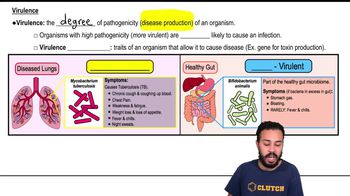
Virulence factors are molecules produced by pathogens that enhance their ability to cause disease. They help microbes invade host tissues, evade the immune system, and obtain nutrients. Understanding these factors is essential to grasp how bacteria establish infections and cause damage.
Video consigliato:
03:05
Virulence

Mechanisms of Immune Evasion by Bacterial Enzymes

Enzymes like leukocidins, IgA proteases, and coagulase help bacteria avoid immune defenses. Leukocidins destroy white blood cells, IgA proteases degrade antibodies, and coagulase promotes clot formation to shield bacteria. These mechanisms allow pathogens to survive and multiply within the host.
Video consigliato:
03:48
Environmental Factors Affecting Enzyme Activity

Tissue Invasion and Nutrient Acquisition Strategies

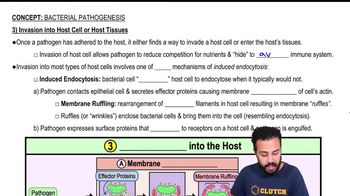
Enzymes such as hyaluronidase and kinases break down host tissues and clots, facilitating bacterial spread. Siderophores scavenge iron, a vital nutrient, from the host environment. These strategies enable pathogens to invade deeper tissues and sustain growth during infection.
Video consigliato:
05:38
3) Invasion into Host Tissues