Ch. 15 - Microbial Mechanisms of Pathogenicity
Tortora - Microbiology: An Introduction 14th Edition
Tortora14th EditionMicrobiology: An IntroductionISBN: 9780138200398Non è quello che usi tu?Cambia libro di testo
Capitolo 11, Problema 4

Explain how drugs that bind each of the following would affect pathogenicity:
a. Iron in the host's blood
b. N. gonorrhoeae fimbriae
c. S. pyogenes M protein

Guida verificata passo dopo passo
1
Understand that pathogenicity refers to the ability of a microorganism to cause disease, which often depends on factors like nutrient acquisition, adhesion, and immune evasion.
For drugs that bind iron in the host's blood: Recognize that many pathogens require iron for growth and metabolism. Binding iron reduces its availability, thereby limiting bacterial growth and reducing pathogenicity. This mechanism is called iron sequestration.
For drugs that bind N. gonorrhoeae fimbriae: Know that fimbriae are hair-like structures that help bacteria adhere to host cells. Binding fimbriae would block adhesion, preventing colonization and infection, thus decreasing pathogenicity.
For drugs that bind S. pyogenes M protein: Understand that M protein helps the bacteria evade the host immune system by inhibiting phagocytosis. Binding M protein would neutralize this effect, making bacteria more susceptible to immune clearance and reducing pathogenicity.
Summarize that each drug targets a specific virulence factor—nutrient acquisition, adhesion, or immune evasion—and by interfering with these, the drugs reduce the ability of the pathogen to cause disease.

Risposta video verificata per un problema simile:

Questa soluzione video è stata consigliata dai nostri tutor come utile per risolvere questo problema.
Durata del video:
3m

Concetti chiave

Ecco i concetti essenziali che devi comprendere per rispondere correttamente alla domanda.

Iron Acquisition and Pathogenicity

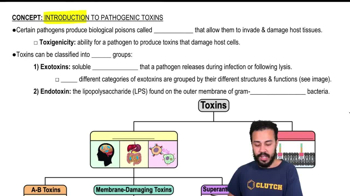
Iron is essential for bacterial growth and metabolism, but hosts limit its availability to inhibit pathogens. Drugs that bind iron in the host's blood reduce free iron, starving bacteria and limiting their ability to multiply and cause infection.
Video consigliato:
03:40
Introduction to Pathogenic Toxins

Role of N. gonorrhoeae Fimbriae in Infection

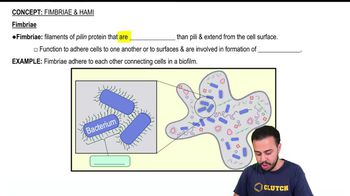
Fimbriae are hair-like structures that enable N. gonorrhoeae to adhere to host cells, facilitating colonization and infection. Drugs targeting fimbriae can prevent bacterial attachment, reducing the pathogen's ability to establish infection.
Video consigliato:
01:52
Fimbriae & Hami

Function of S. pyogenes M Protein in Virulence

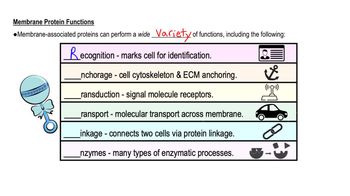
The M protein helps S. pyogenes evade the host immune system by inhibiting phagocytosis and promoting adhesion. Drugs binding M protein can impair these functions, enhancing immune clearance and reducing bacterial virulence.
Video consigliato:
03:35
Membrane Protein Functions
Pratica correlata
Domanda del libro di testo

Compare and contrast the following aspects of endotoxins and exotoxins: bacterial source, chemistry, toxigenicity, and pharmacology. Give an example of each toxin.

1549
views

Domanda del libro di testo

How are capsules and cell wall components related to pathogenicity? Give specific examples.

1523
views
Domanda del libro di testo

Describe how hemolysins, leukocidins, coagulase, kinases, hyaluronidase, siderophores, and IgA proteases might contribute to pathogenicity.

1325
views
Domanda del libro di testo

Which of the following is not a portal of entry for pathogens?

a. Mucous membranes of the respiratory tract

b. Mucous membranes of the digestive canal

c. Skin

d. Blood

e. Parenteral route

1653
views
Domanda del libro di testo

All of the following are related to bacterial infection. Which would prevent all of the others?

a. Vaccination against fimbriae

b. Phagocytosis

c. Inhibition of phagocytic digestion

d. Destruction of adhesins

e. Alteration of cytoskeleton

1499
views
Domanda del libro di testo

The ID₅₀ for Campylobacter sp. is 500 cells; the ID₅₀ for Cryptosporidium sp. is 100 cells. Which of the following statements is false?

a. Both microbes are pathogens.

b. Both microbes produce infections in 50% of the inoculated hosts.

c. Campylobacter is more virulent than Cryptosporidium.

d. Campylobacter and Cryptosporidium are equally virulent; they cause infections in the same number of test animals.

e. Cryptosporidium infections are acquired more easily than Campylobacter infections.

1279
views