Ch. 15 - Microbial Mechanisms of Pathogenicity
Tortora - Microbiology: An Introduction 14th Edition
Tortora14th EditionMicrobiology: An IntroductionISBN: 9780138200398Non è quello che usi tu?Cambia libro di testo
Capitolo 11, Problema 3

Which of the following is not a portal of entry for pathogens?
a. Mucous membranes of the respiratory tract
b. Mucous membranes of the digestive canal
c. Skin
d. Blood
e. Parenteral route

Guida verificata passo dopo passo
1
Understand the concept of 'portal of entry' in microbiology: it refers to the site through which pathogens enter the host to cause infection.
Review each option and determine if it is a recognized portal of entry: mucous membranes of the respiratory tract, digestive canal, skin, blood, and parenteral route.
Recall that mucous membranes (respiratory and digestive) are common portals of entry because they are exposed surfaces where pathogens can enter.
Recognize that the parenteral route is a mode of entry involving direct introduction of pathogens into tissues beneath the skin or mucous membranes, such as through injections or cuts, and is considered a portal of entry.
Evaluate 'blood' as an option: blood itself is not a portal of entry but rather a medium where pathogens may circulate after entering through other portals; therefore, it is not considered a portal of entry.

Risposta video verificata per un problema simile:

Questa soluzione video è stata consigliata dai nostri tutor come utile per risolvere questo problema.
Durata del video:
4m

Concetti chiave

Ecco i concetti essenziali che devi comprendere per rispondere correttamente alla domanda.

Portals of Entry for Pathogens

Portals of entry are the routes through which pathogens enter the host to cause infection. Common portals include mucous membranes (respiratory, digestive, urogenital tracts), skin (especially if broken), and parenteral routes (direct entry via cuts or injections). Understanding these helps identify how infections begin.
Video consigliato:
03:40
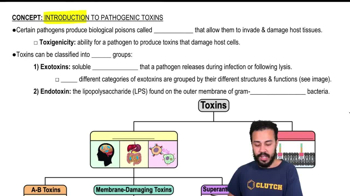
Introduction to Pathogenic Toxins

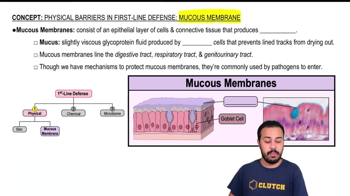
Mucous Membranes as Entry Points

Mucous membranes line body cavities exposed to the environment, such as the respiratory and digestive tracts. They provide moist surfaces that can harbor pathogens, making them common and effective portals of entry for many microorganisms.
Video consigliato:
02:34
Mucous Membranes

Blood as a Portal of Entry

Blood itself is not a natural portal of entry but rather a medium inside the body. Pathogens enter the bloodstream typically through parenteral routes like injections or wounds. Therefore, blood is not considered a direct portal of entry but a site pathogens reach after entry.
Video consigliato:
02:29
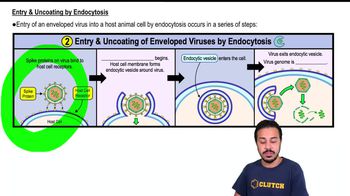
Entry & Uncoating by Endocytosis