Ch. 7 - The Control of Microbial Growth
Tortora - Microbiology: An Introduction 14th Edition
Tortora14th EditionMicrobiology: An IntroductionISBN: 9780138200398Non è quello che usi tu?Cambia libro di testo
Capitolo 4, Problema 3

Which of these disinfectants does not act by disrupting the plasma membrane?
a. Phenolics
b. Phenol
c. Quats
d. Halogens
e. Biguanides

Guida verificata passo dopo passo
1
Step 1: Understand the mechanism of action of each disinfectant listed. Disinfectants can act by various mechanisms, including disrupting the plasma membrane, denaturing proteins, or oxidizing cellular components.
Step 2: Recall that phenolics and phenol primarily disrupt the plasma membrane by damaging lipid components, leading to leakage of cellular contents.
Step 3: Recognize that quaternary ammonium compounds (quats) and biguanides also act mainly by disrupting the plasma membrane, causing cell lysis.
Step 4: Identify that halogens (such as chlorine and iodine) act differently; they typically kill microbes by oxidizing cellular components, including proteins and nucleic acids, rather than primarily disrupting the plasma membrane.
Step 5: Conclude that among the options, halogens do not act by disrupting the plasma membrane but instead by oxidation, which is a distinct antimicrobial mechanism.

Risposta video verificata per un problema simile:

Questa soluzione video è stata consigliata dai nostri tutor come utile per risolvere questo problema.
Durata del video:
1m

Concetti chiave

Ecco i concetti essenziali che devi comprendere per rispondere correttamente alla domanda.

Mechanism of Action of Disinfectants

Disinfectants kill or inhibit microbes through various mechanisms, such as disrupting cell membranes, denaturing proteins, or oxidizing cellular components. Understanding how each disinfectant works helps determine their effectiveness and specific targets within microbial cells.
Video consigliato:
05:21
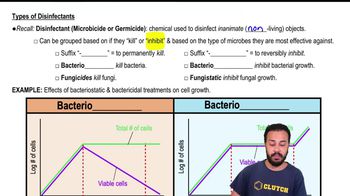
Types of Disinfectants

Plasma Membrane Disruption

Many disinfectants act by damaging the plasma membrane, causing leakage of cellular contents and cell death. Agents like phenolics, quaternary ammonium compounds (quats), and biguanides typically disrupt membrane integrity, leading to loss of vital functions.
Video consigliato:
02:10
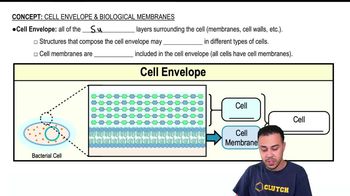
Biological Membranes

Halogens as Oxidizing Agents

Halogens, such as chlorine and iodine, primarily kill microbes by oxidizing cellular components like proteins and nucleic acids rather than disrupting the plasma membrane. This oxidative damage impairs essential cellular functions, leading to microbial death.
Video consigliato:
00:56
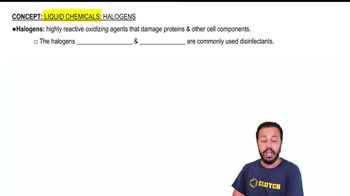
Liquid Chemicals: Halogens