Ch. 7 - The Control of Microbial Growth
Tortora - Microbiology: An Introduction 14th Edition
Tortora14th EditionMicrobiology: An IntroductionISBN: 9780138200398Non è quello che usi tu?Cambia libro di testo
Capitolo 4, Problema 2

Which of the following is most effective for sterilizing mattresses and plastic Petri dishes?
a. Chlorine
b. Ethylene oxide
c. Glutaraldehyde
d. Autoclaving
e. Nonionizing radiation

Guida verificata passo dopo passo
1
Step 1: Understand the nature of the materials to be sterilized. Mattresses and plastic Petri dishes are heat-sensitive and can be damaged by high temperatures or moisture.
Step 2: Evaluate each sterilization method's suitability for heat-sensitive materials: chlorine is a chemical disinfectant but not a sterilant and can damage materials; autoclaving uses high heat and pressure, which can deform plastics and mattresses; nonionizing radiation (like UV) has limited penetration and is mostly surface-level.
Step 3: Consider ethylene oxide, a gaseous sterilant that can penetrate porous materials and sterilize heat-sensitive items without damaging them, making it suitable for mattresses and plastic Petri dishes.
Step 4: Glutaraldehyde is a liquid chemical sterilant effective for instruments but less practical for large or porous items like mattresses and may leave residues on plastics.
Step 5: Conclude that ethylene oxide is the most effective sterilization method among the options for heat-sensitive and porous materials such as mattresses and plastic Petri dishes.

Risposta video verificata per un problema simile:

Questa soluzione video è stata consigliata dai nostri tutor come utile per risolvere questo problema.
Durata del video:
1m

Concetti chiave

Ecco i concetti essenziali che devi comprendere per rispondere correttamente alla domanda.

Sterilization Methods and Their Applications

Sterilization refers to the complete elimination of all microorganisms, including spores. Different methods like autoclaving, chemical sterilants, and radiation vary in effectiveness depending on the material being sterilized. Understanding which method suits heat-sensitive or heat-resistant items is crucial for effective sterilization.
Video consigliato:
05:16
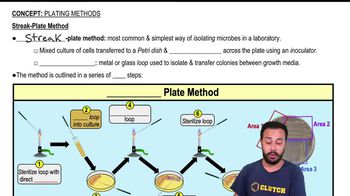
Streak-Plate Method

Autoclaving and Its Mechanism

Autoclaving uses pressurized steam at high temperatures (usually 121°C) to kill all microbes and spores. It is highly effective for heat-resistant materials like metal and glass but can damage heat-sensitive items such as plastics or mattresses. Its efficiency and limitations must be considered when selecting sterilization methods.
Video consigliato:
01:59
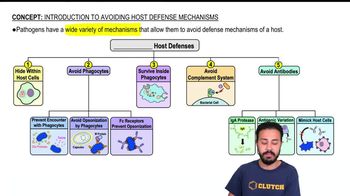
Introduction to Avoiding Host Defense Mechanisms

Chemical Sterilants: Ethylene Oxide and Glutaraldehyde

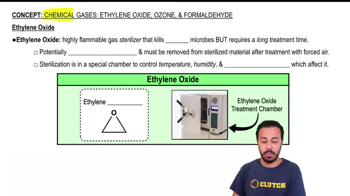
Ethylene oxide is a gaseous sterilant effective for heat- and moisture-sensitive materials, penetrating porous items like mattresses and plastics without damage. Glutaraldehyde is a liquid disinfectant used for sterilizing medical equipment but requires long exposure times and may not be suitable for all materials. Their chemical properties influence their practical use.
Video consigliato:
03:22
Chemical Gases: Ethylene Oxide