Ch. 7 - The Control of Microbial Growth
Tortora - Microbiology: An Introduction 14th Edition
Tortora14th EditionMicrobiology: An IntroductionISBN: 9780138200398Non è quello che usi tu?Cambia libro di testo
Capitolo 4, Problema 2

If pasteurization does not achieve sterilization, why is pasteurization used to treat food?

Guida verificata passo dopo passo
1
Understand the difference between sterilization and pasteurization: Sterilization aims to kill all microorganisms, including spores, while pasteurization targets reducing the number of pathogenic and spoilage microorganisms to safe levels without killing all microbes.
Recognize that pasteurization is used because it effectively reduces harmful bacteria that can cause disease or spoilage, thereby making food safer to consume and extending its shelf life.
Consider that pasteurization uses milder heat treatment compared to sterilization, which helps preserve the taste, texture, and nutritional value of food better than sterilization would.
Note that sterilization often requires higher temperatures or longer times that can negatively affect food quality, making pasteurization a practical compromise between safety and food quality.
Conclude that pasteurization is used because it balances microbial safety and food quality, reducing pathogens to safe levels without the harsher effects of sterilization.

Risposta video verificata per un problema simile:

Questa soluzione video è stata consigliata dai nostri tutor come utile per risolvere questo problema.
Durata del video:
2m

Concetti chiave

Ecco i concetti essenziali che devi comprendere per rispondere correttamente alla domanda.

Pasteurization

Pasteurization is a heat treatment process that reduces the number of pathogenic and spoilage microorganisms in food, especially liquids like milk, without achieving complete sterilization. It involves heating the food to a specific temperature for a set time to kill most harmful bacteria while preserving taste and nutritional value.
Video consigliato:
03:50
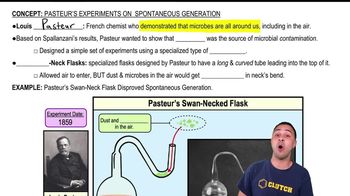
Pasteur's Experiments on Spontaneous Generation

Sterilization vs. Pasteurization

Sterilization is the complete elimination of all microorganisms, including spores, often achieved by high heat or chemical methods. Pasteurization, in contrast, only reduces microbial load to safe levels but does not kill all microbes or spores, making it less harsh and more suitable for preserving food quality.
Video consigliato:
05:58
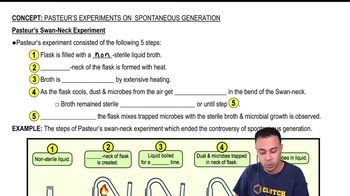
Pasteur’s Swan-Neck Experiment

Food Safety and Shelf Life

Pasteurization improves food safety by significantly lowering harmful bacteria, reducing the risk of foodborne illness. It also extends shelf life by slowing microbial spoilage, making food safer and more durable without the negative effects of sterilization on flavor and texture.
Video consigliato:
05:20
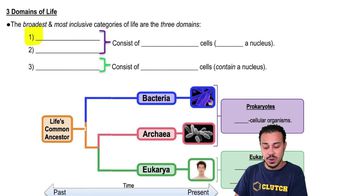
3 Domains of Life