 Indietro
Digestion and Absorption: Structure, Function, and Disorders
Guida di studio - Note intelligenti
 Appunti personalizzati basati sui tuoi materiali, ampliati con definizioni chiave, esempi e contesto.
Digestion and Absorption
Overview of Digestion
Digestion is the process by which food is broken down into smaller components that can be absorbed and utilized by the body. It involves both mechanical and chemical actions, transforming food into nutrients necessary for cellular renewal and function.
Mechanical Digestion: Includes chewing, peristalsis, segmentation, and sphincter contractions. These actions physically break down food and move it through the gastrointestinal (GI) tract.
Chemical Digestion: Involves digestive juices and enzymes that further break down carbohydrates, proteins, and fats into absorbable units.
Renewal: The body continually replaces cells, such as taste cells (every 7 days), intestinal lining (every 3 days), skin (every month), and red blood cells (every 120 days).
Nutrients: Serve as raw materials for this renewal.
Mechanical Aspects of Digestion
Mechanical digestion facilitates the breakdown and movement of food through the GI tract.
Chewing: Breaks down large food particles and mixes them with saliva.
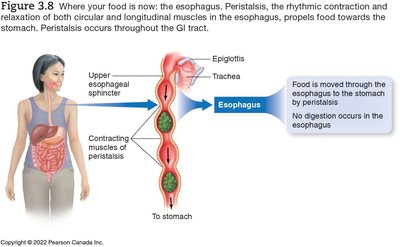
Peristalsis: Wavelike muscular contractions that propel food through the esophagus, stomach, and intestines.
Stomach Action: Involves circular, longitudinal, and diagonal muscles mixing food and releasing chyme into the intestine.
Segmentation: Moves food back and forth to increase contact with digestive juices.
Sphincter Contractions: Prevent reflux and regulate passage between GI tract sections.
Chemical Aspects of Digestion
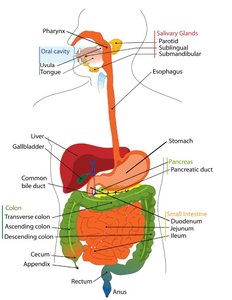
Chemical digestion uses enzymes and secretions to break down macronutrients and release micronutrients.
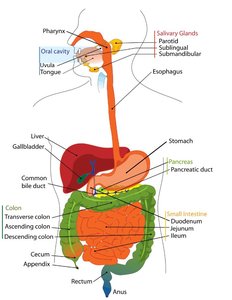
Salivary Glands: Produce enzymes (amylase, lipase) to begin starch and fat digestion.
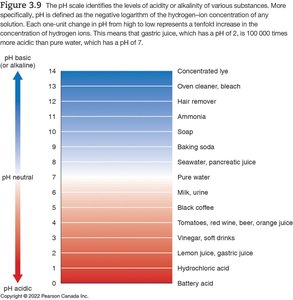
Stomach: Secretes gastric juice (water, enzymes, hydrochloric acid) to break down proteins and fats.
Pancreas: Releases enzymes (amylase, lipase, trypsin) and bicarbonate to neutralize stomach acid.
Liver: Produces bile for fat digestion.
Gallbladder: Stores and releases bile.
Small Intestine: Secretes enzymes for final breakdown of carbohydrates, proteins, and fats; site of most nutrient absorption.
Large Intestine: Absorbs water and hosts bacteria that digest some fiber and undigested carbohydrates.
Absorption and Circulation
Absorption is the process by which the end products of digestion are taken up by the lymphatic and circulatory systems. Circulation distributes these nutrients to all cells for growth and regeneration.
Absorption: Occurs primarily in the small intestine, where nutrients enter blood or lymph vessels.
Circulation: Blood and lymph transport nutrients throughout the body.
Structure and Function of the Intestines
Intestinal Surface Area and Villi
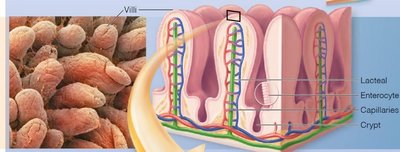
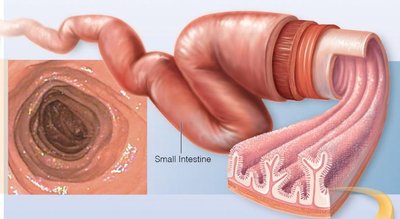
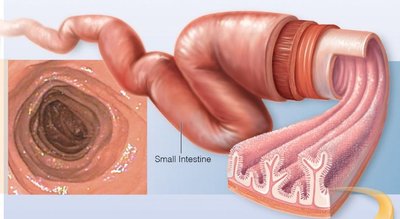
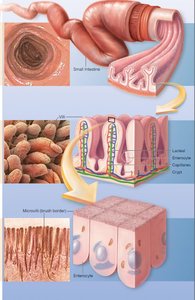
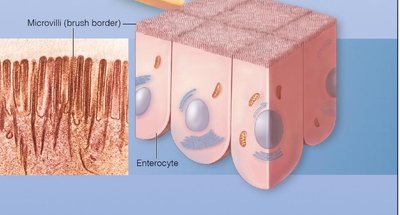
The intestines are lined with villi, finger-like projections that greatly increase surface area for digestion and absorption. This tissue requires a high level of nutrients for maintenance, much of which is supplied by the food being digested.
Surface Area: Approximately 675 square feet, enhancing nutrient absorption.
Villi: Each villus contains blood and lymph vessels for nutrient transport.
Maintenance: High nutrient demand met by digested food.
Blood and Lymphatic Systems
Blood and lymph vessels in the villi play distinct roles in nutrient transport.
Blood Vessels: Arteries pick up nutrients (carbohydrate and protein breakdown products), veins remove waste.
Lymphatic System: Absorbs fat digestion by-products, transports them to the bloodstream near the heart.
Role of Dietary Fibre
Dietary fibre is not digested by human enzymes and exits the digestive system largely unchanged. It provides bulk for muscle contractions and can be partially digested by bacteria in the large intestine.
Bulk: Fibre increases fecal mass and stimulates intestinal muscle contractions.
Transit Time: High-fibre meals pass through the large intestine faster.
Bacterial Digestion: Some fibre is digested by bacteria, producing gas and other by-products.
Efficiency of Digestion and Absorption
The digestive process is highly efficient, with most macronutrients being absorbed:
Carbohydrates: 99% absorbed
Proteins: 92% absorbed
Fats: 95% absorbed
Digestive Disorders
Common Digestive Disorders
Digestive disorders are prevalent and often related to dietary intake. Adequate fibre intake can offer protection and prevention.
Irritable Bowel Syndrome (IBS): Characterized by gas, bloating, diarrhea, and constipation. Prevention includes a low-fat diet, fibre, probiotics, and medications.
Constipation and Hemorrhoids: Often due to low fibre and physical inactivity. Prevention: 25–30 g/day fibre and adequate fluids.
Ulcers & Heartburn: Triggered by fatty foods, coffee, alcohol, citrus, and soft drinks. Prevention: high-fibre diets.
Diarrhea: Caused by bacterial/viral contamination or nutrient deficiencies. Prevention: sanitation, immunizations, adequate diets, and oral rehydration fluids.
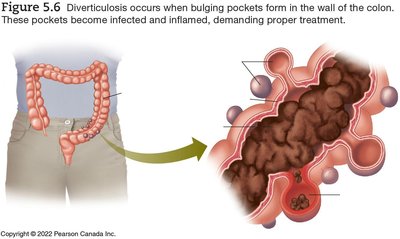
Diverticulosis: Bulging pockets in the colon wall, worsened by constipation. Prevention: increased dietary fibre.
Flatulence
Gas production in the digestive tract is normal and results from swallowed air and bacterial breakdown of undigested foods.
Sources: Swallowed air and bacterial digestion of complex carbohydrates.
Foods: Beans, broccoli, cauliflower, onions, corn, and other vegetables.
Symptoms: Gas, bloating, and discomfort.
Lactose Intolerance
Lactose intolerance is due to reduced digestion of lactose from low availability of the enzyme lactase. It is genetically determined and varies among populations.
Symptoms: Nausea, bloating, diarrhea, gas, abdominal cramping.
Incidence: Higher in Asian Americans, Native Americans, African Americans, Mediterranean people, and Hispanics; lower in Northern Europeans.
Management: Fortified juices, soy/rice milk, low-lactose milk, lactase tablets, yogurt, and aged cheese.
Population | Estimated Incidence of Lactose Maldigestion |
|---|---|
Asian Americans | 90% |
Native Americans | 80% |
African Americans | 80% |
Mediterranean People | 70% |
Asians | ≥65% |
Hispanics | ≥53% |
U.S. adults (overall) | 25% |
Northern Europeans | <15% |
Summary
The digestive system efficiently breaks down food into nutrients for absorption and circulation.
Intestinal structure, especially villi, enhances nutrient absorption.
Dietary fibre is essential for digestive health and prevention of disorders.
Common digestive disorders can often be managed or prevented through dietary choices, especially adequate fibre intake.
