 Indietro
Isomers and Chirality: The Arrangement of Atoms in Space
Guida di studio - Note intelligenti
 Appunti personalizzati basati sui tuoi materiali, ampliati con definizioni chiave, esempi e contesto.
Isomers: The Arrangement of Atoms in Space
Types of Isomers
Isomers are molecules with the same molecular formula but different arrangements of atoms. Understanding the types of isomers is fundamental to organic chemistry, as it helps classify and predict the properties of organic compounds.
Constitutional Isomers: Compounds with the same molecular formula but different connectivity of atoms.
Stereoisomers: Compounds with the same connectivity but different spatial arrangements of atoms.
Enantiomers: Stereoisomers that are non-superimposable mirror images of each other.
Diastereomers: Stereoisomers that are not mirror images.
Key Point: The degree of similarity increases from constitutional isomers (least similar) to diastereomers, to enantiomers (most similar, but not identical).
Chirality and Symmetry
Introduction to Chirality
A molecule is chiral if it cannot be superimposed on its mirror image. Chirality is a central concept in stereochemistry, affecting molecular interactions and properties such as optical activity.
The mirror image of a chiral molecule is called an enantiomer.
If a molecule has an internal plane of symmetry, it is achiral (its mirror image is superimposable).
Example: Drawing mirror images and identifying symmetry helps determine chirality.
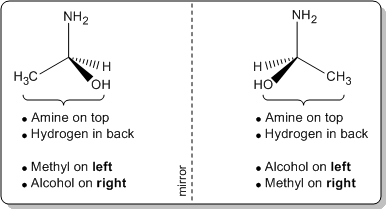
Test 1: Plane of Symmetry
The presence of an internal plane of symmetry is a quick test for achirality. If a molecule can be divided into two symmetrical halves, it is achiral.
This test is most useful for identifying meso compounds and simple molecules.
Example: Determining chirality by checking for a plane of symmetry in various molecules.
Test 2: Stereocenter Test
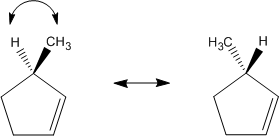
A stereocenter (or stereogenic center) is any atom at which the interchange of two groups produces a stereoisomer. The most common stereocenter is a carbon atom bonded to four different groups (chiral center).
The presence of a stereocenter usually indicates chirality, but exceptions exist (e.g., meso compounds).
Double bonds capable of E/Z isomerism are trigonal centers and are not chiral.
Example: Identifying stereogenic centers and determining chirality.
R and S Configuration
Assigning R and S Configuration
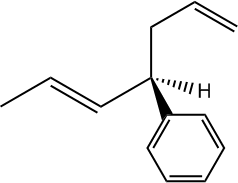
The Cahn-Ingold-Prelog (CIP) system assigns absolute configuration to chiral centers as either R (rectus, right) or S (sinister, left).
Assign priorities to the four groups attached to the chiral center based on atomic number (higher atomic number = higher priority).
If there is a tie, compare the next set of atoms outward (the "playoff").
Double and triple bonds are treated as if the atom is bonded to multiple single atoms.
Orient the molecule so the lowest priority group is in the back. Trace a path from priority 1 → 2 → 3:
Clockwise = R
Counterclockwise = S
If the lowest priority group is not in the back, swap it with the group that is, and reverse the sign.
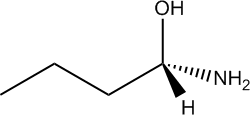
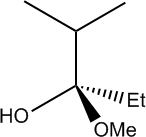
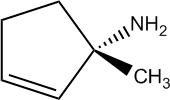
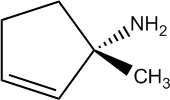
Example: Assigning priorities and determining R/S configuration for a chiral center.
Enantiomers vs. Diastereomers
Classification of Stereoisomers
Stereoisomers can be classified based on the number of chiral centers and their configurations:
Compounds with no chiral centers are usually achiral.
Compounds with one chiral center are always chiral and exist as a pair of enantiomers.
Compounds with two or more chiral centers can form multiple stereoisomers, including enantiomers and diastereomers.
The total number of possible stereoisomers is given by $2^n$, where $n$ is the number of stereocenters.
Example: Drawing all stereoisomers for a given molecule and determining their relationships.
Meso Compounds
Definition and Properties
Meso compounds are achiral compounds that contain multiple chiral centers but have an internal plane of symmetry, causing their optical activities to cancel out.
Meso compounds have fewer stereoisomers than predicted by the $2^n$ rule.
Criteria for meso compounds:
Two or more chiral centers
Atomically symmetrical
An even number of chiral centers are mirror images of each other
Example: Identifying meso compounds among stereoisomers.
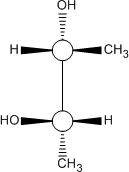
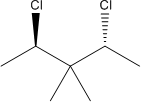
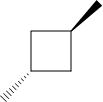
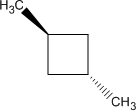
Test 3: Disubstituted Cycloalkanes
Chirality in Cycloalkanes
For cycloalkanes with two identical substituents, simple rules help determine chirality:
Cis isomers (on the same side) are meso and achiral.
Trans isomers (on opposite sides) are chiral.
These rules apply only to even-membered rings (e.g., cyclohexane).
Example: Determining chirality in disubstituted cycloalkanes.
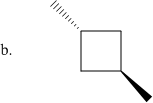
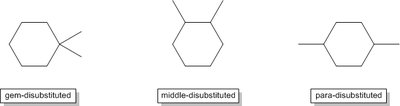
Relationships Between Isomers
Stepwise Approach
To determine the relationship between two molecules:
Count non-hydrogen atoms and index of hydrogen deficiency (IHD).
Check connectivity (constitutional isomers vs. stereoisomers).
Count and compare stereogenic centers:
All same: identical
One or more different: diastereomers
All different: enantiomers
Symmetrical, opposite: meso
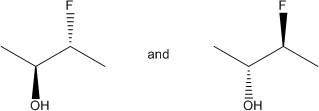
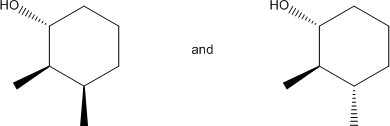
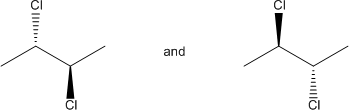
Example: Classifying pairs of molecules as identical, constitutional isomers, enantiomers, or diastereomers.
Fischer Projections
Visualizing Stereochemistry
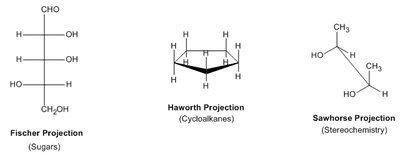
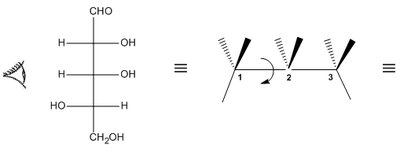
Fischer projections are a two-dimensional representation of three-dimensional molecules, commonly used for sugars and amino acids. They help visualize stereochemistry and facilitate conversion to other representations (e.g., bond-line structures).
To convert a Fischer projection to a bond-line structure, rotate every other bond as needed.
Example: Converting Fischer projections to bond-line structures.

R and S in Fischer Projections
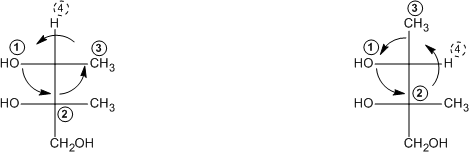
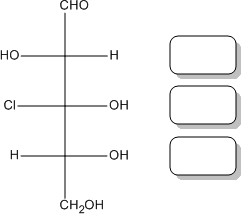
Assigning R/S configuration in Fischer projections requires attention to the position of the lowest priority group:
If the lowest priority group is on a vertical line (top or bottom), assign as drawn.
If on a horizontal line, the configuration is reversed.
Example: Determining absolute configurations in Fischer projections.
Optical Activity
Chirality and Plane-Polarized Light
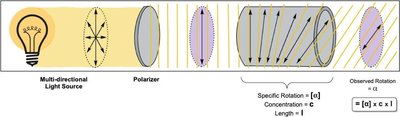
Chiral molecules rotate plane-polarized light, a property known as optical activity:
Clockwise rotation: dextrorotatory (d or +)
Counterclockwise rotation: levorotatory (l or -)
The direction of rotation is independent of R/S configuration.
Enantiomeric Excess (ee) and Calculations
Definition and Calculation
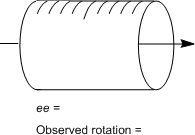
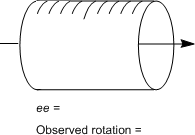
Enantiomeric excess (ee) quantifies the purity of an enantiomer in a mixture:
Specific rotation $[\alpha]$ is the rotation of a pure enantiomer.
Observed rotation is proportional to the enantiomeric excess.
Racemic mixture (1:1) has ee = 0% and is optically inactive.
Formulas:
$ee = \frac{\text{observed rotation}}{\text{rotation of pure enantiomer}} \times 100\%$
Percent of major enantiomer = $\frac{ee + 100}{2}$
Percent of minor enantiomer = $100 - \text{percent major}$
Example: Calculating ee and observed rotation for mixtures of enantiomers.

Non-Carbon Chiral Centers
Chirality Beyond Carbon
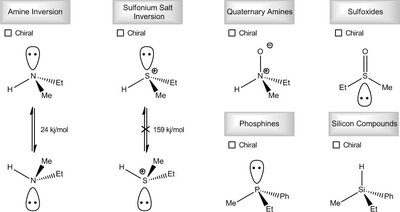
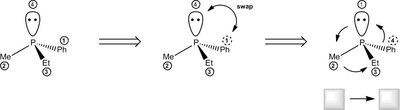
Chirality can also arise from atoms other than carbon, such as nitrogen, phosphorus, sulfur, and silicon. The rules for assigning R/S configuration are similar, with the lone pair often treated as the lowest priority group.
Amine inversion can cause loss of chirality in neutral amines due to rapid inversion.
Quaternary ammonium, sulfonium, and phosphonium ions can be chiral if all substituents are different.
Additional info: This guide covers the essential concepts of isomerism, chirality, stereochemistry, and their implications for molecular properties and reactivity, as outlined in a typical Organic Chemistry curriculum.
