Ch. 11 - Properties and Synthesis of Alkyl Halides: Radical Reactions
Mullins - Organic Chemistry: A Learner Centered Approach 1st Edition
Mullins1st EditionOrganic Chemistry: A Learner Centered ApproachISBN: 9780137566471Non è quello che usi tu?Cambia libro di testo
Capitolo 10, Problema 36

Vitamin E, especially the B ring and the side chain, is a terpenoid derivative. Identify the isoprene units nature used to make it.

Guida verificata passo dopo passo
1
Examine the structure of Vitamin E provided in the image. Notice the B ring and the long side chain attached to it. The molecule is a terpenoid derivative, which means it is constructed from isoprene units.
Recall that isoprene units have the structure CH₂=C(CH₃)-CH=CH₂. These units are the building blocks of terpenoids and are often joined in a head-to-tail fashion.
Identify the isoprene units in the structure. Look for repeating patterns of five-carbon units (C₅) in the side chain and the B ring. These units may be modified but retain the basic isoprene skeleton.
Count the number of isoprene units in the side chain. The side chain appears to be composed of multiple isoprene units linked together, forming a long hydrocarbon chain.
Analyze the B ring. The B ring is derived from isoprene units as well, but it has undergone cyclization and functionalization to form the aromatic structure seen in the image.

Risposta video verificata per un problema simile:

Questa soluzione video è stata consigliata dai nostri tutor come utile per risolvere questo problema.

Concetti chiave

Ecco i concetti essenziali che devi comprendere per rispondere correttamente alla domanda.

Isoprene Units

Isoprene units are the fundamental building blocks of terpenoids and terpenes, consisting of a five-carbon structure (C5H8). These units can be linked together in various ways to form larger molecules. In the case of Vitamin E, the arrangement and combination of isoprene units contribute to its unique structure and properties.
Video consigliato:
Percorso guidato
1:39
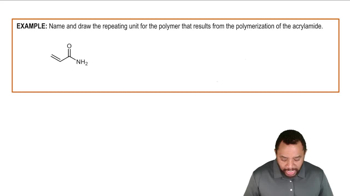
Introduction to Polymers Example 1

Terpenoids

Terpenoids, also known as isoprenoids, are a large class of organic compounds derived from isoprene units. They are characterized by their diverse structures and biological activities, often found in essential oils and natural resins. Vitamin E is classified as a terpenoid due to its derivation from isoprene, specifically through the modification of its structure to include rings and side chains.

Vitamin E Structure

Vitamin E refers to a group of fat-soluble compounds, primarily tocopherols and tocotrienols, that possess antioxidant properties. The structure of Vitamin E includes a chromanol ring and a long hydrophobic tail, which are crucial for its biological function. Understanding the specific arrangement of isoprene units in Vitamin E helps in recognizing how its structure relates to its role in protecting cell membranes from oxidative damage.
Video consigliato:
01:56
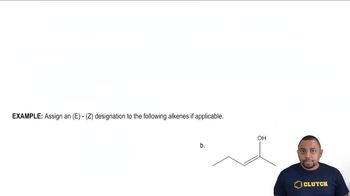
Assigning E/Z