Indietro
 Mullins 1st EditionCh. 12 - Substitution and Elimination: Reactions of Haloalkanes
Problema 61
In Chapter 10, you learned how to make an alkyne by acetylide alkylation with a 1° haloalkane. Suggest a mechanism by which this reaction occurs.
Problema 62
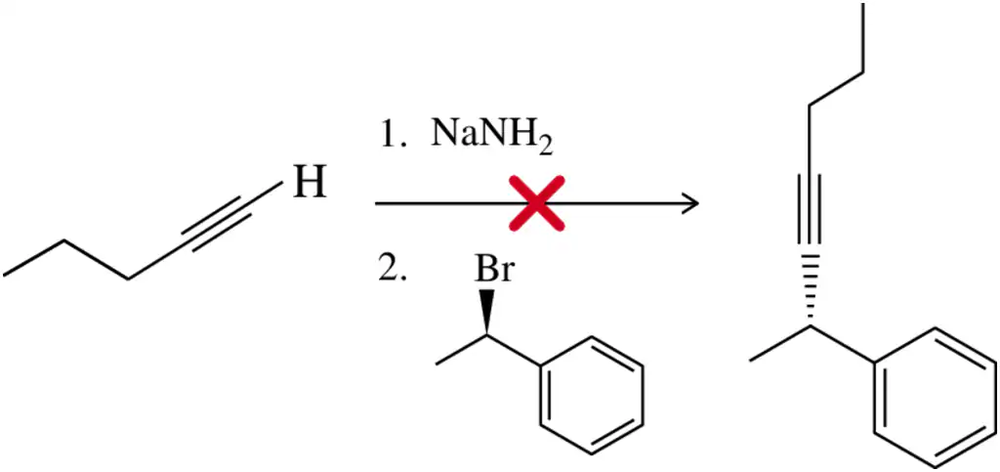
Acetylide alkylation, from Assessment 12.61, fails to give the desired product with 2° haloalkanes. Why? What is the actual product of this reaction?
Problema 63
The introduction of elimination reactions provides a second way to synthesize alkynes in a two-step process starting with an alkene. Suggest a mechanism for both steps of this process.
Problema 64
When the reaction scheme in Assessment 12.63 is done on a monosubstituted alkene, at least three equivalents of base are needed. Reacting the product of step 2 with D–Cl (D is an isotope of H) incorporates deuterium at the terminal carbon. Explain these two observations.
Problema 65
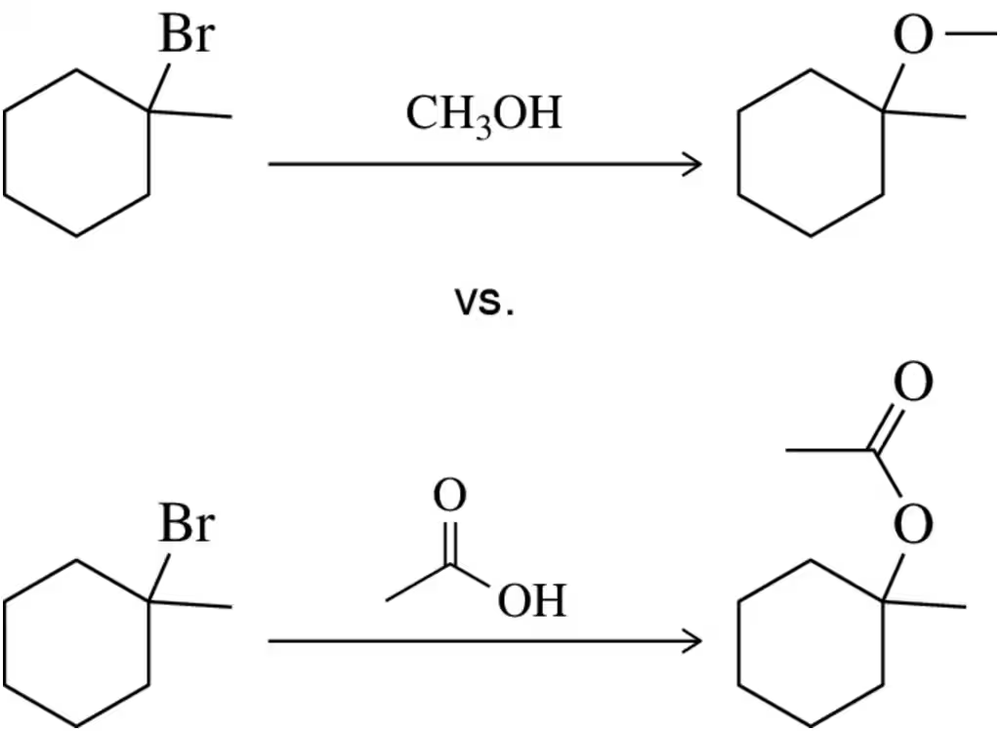
Which of the following substitution reactions would you expect to occur more quickly? Explain your answer.
Problema 66
Give a mechanism for the following substitution and elimination reactions.
(a)
Problema 66b
Give a mechanism for the following substitution and elimination reactions.
(b)
Problema 66c
Give a mechanism for the following substitution and elimination reactions.
(c)
Problema 67
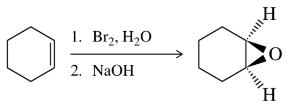
In addition to using mCPBA, epoxides can be synthesized from alkenes in the two-step process shown. Give a mechanism for each step of the process.
Problema 68
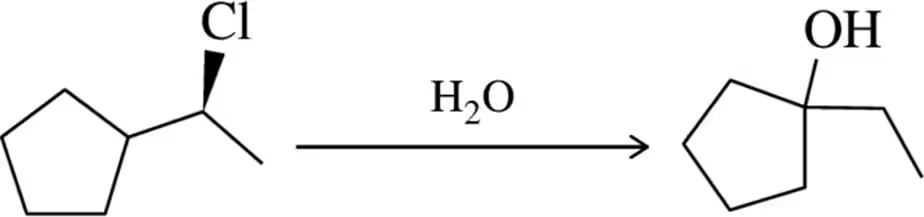
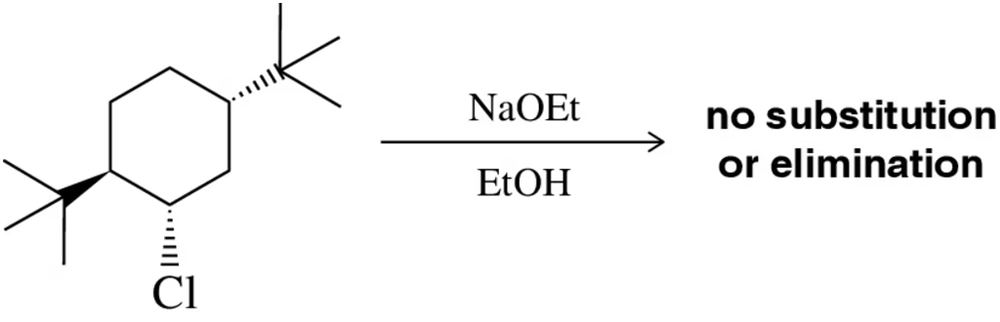
The following chlorocyclohexane undergoes neither Sₙ2 nor E2 under the conditions shown. Why?
Problema 69
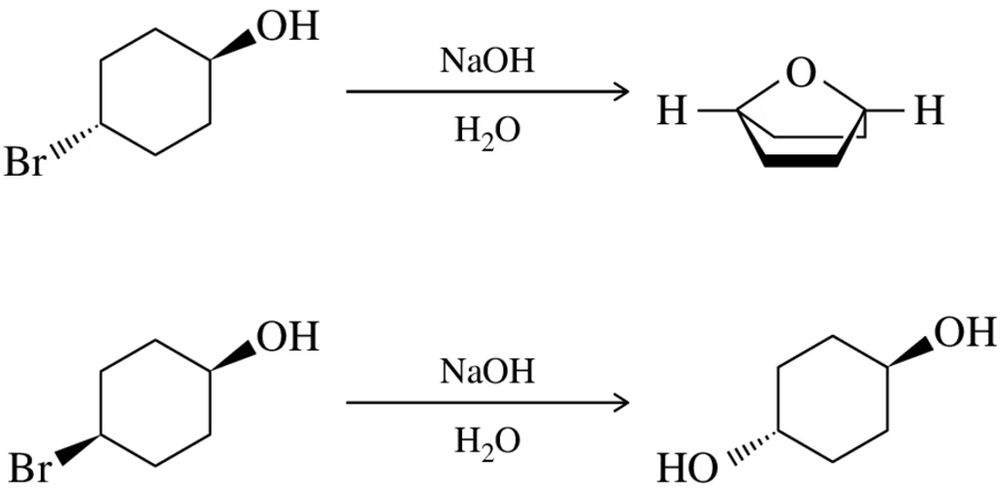
When trans-4-bromocyclohexanol is treated with base, an intramolecular substitution reaction occurs to give a cyclic ether. This product does not form when cis-4-bromocyclohexanol is reacted under the same conditions. Explain these observations.
Problema 70
The following substitution reaction, between a strong base and a 1° haloalkane, occurs in a single step via backside displacement. Yet it is not technically an SN2 reaction. Why?
Problema 71
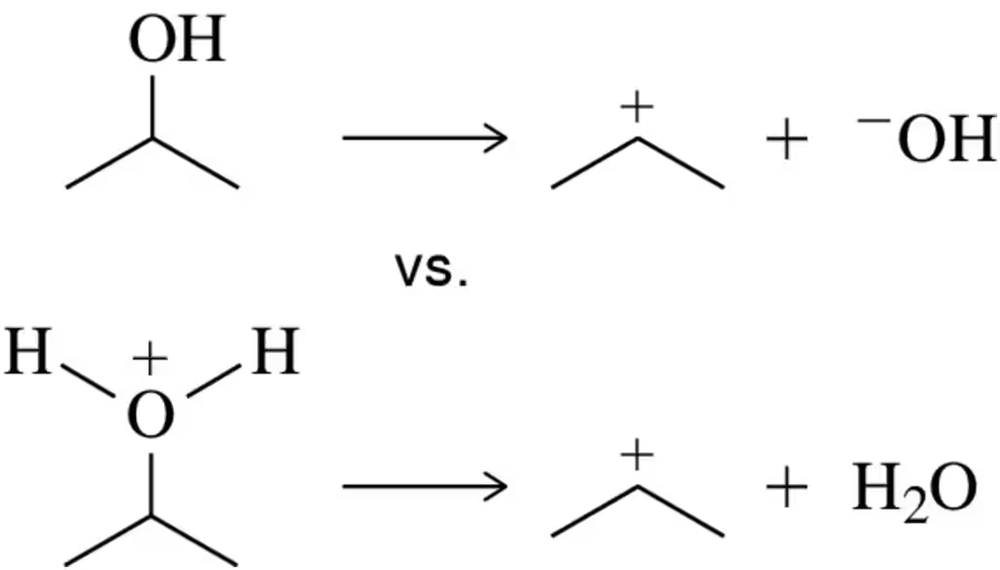
Which is a better leaving group, HO⁻ or H2O? Explain your answer.
Problema 72
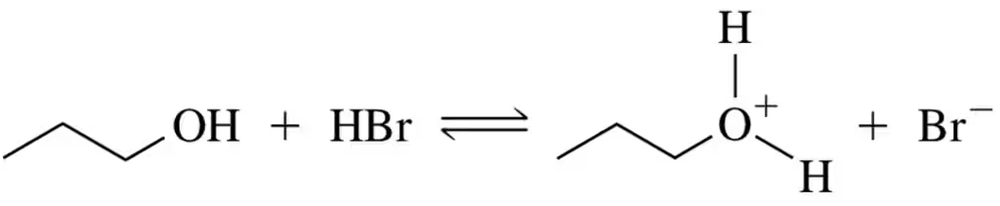
Using pKₐ values, calculate Keq for the following acid–base reaction.
Problema 73a
Suggest a mechanism for the following reactions.
(a) Substitution:
Problema 73b
Suggest a mechanism for the following reactions.
(b) Substitution :
Problema 73c
Suggest a mechanism for the following reactions.
(c) Elimination:
Problema 75
In this, and previous, chapters, we have seen 1,2-alkyl and 1,2-hydride shifts. If both are possible, as in the carbocation shown, which would you expect to occur? Explain your answer.
Problema 77
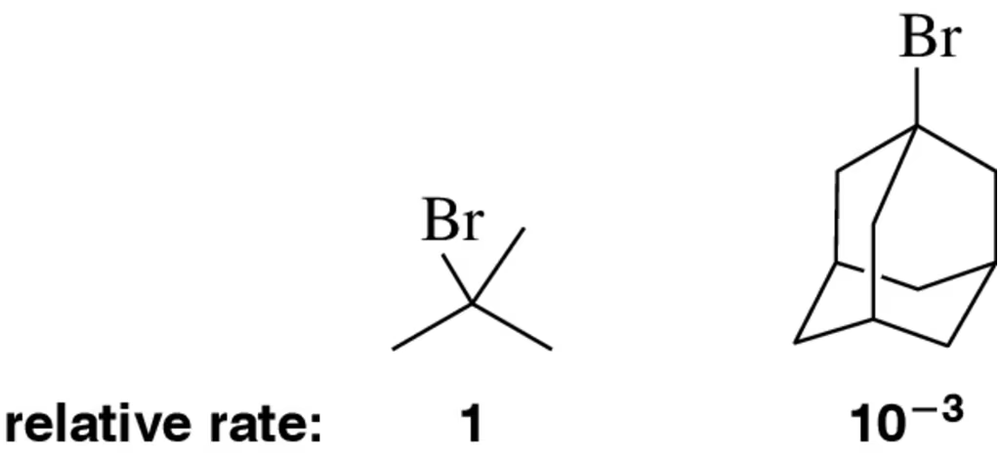
The bromoalkanes shown below participate in SN1 reactions with the relative rates shown. Explain this trend. relative rate:
Problema 78
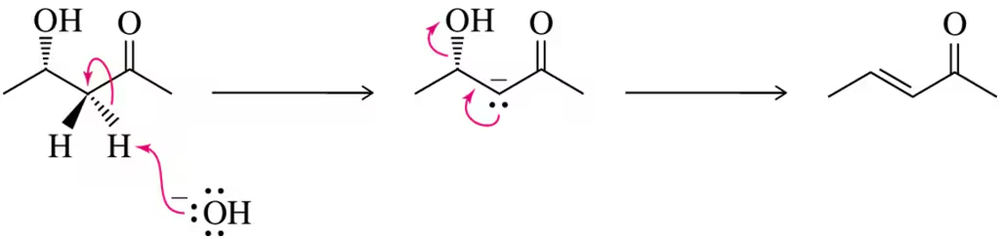
Of the three possible elimination mechanisms (Figure 12.50), this chapter focused on two of them (E1 and E2). The third possibility occurs in situations like the one below. What makes this mechanism favored under these conditions?
Problema 79
In Chapter 8, we learned about the chemistry of terpenes and the interesting reactions they can undergo. One such reaction is the acid-catalyzed conversion of nerol to terpineol. Suggest a mechanism for this transformation
.
Problema 80
Crown ethers are able to solvate cations based on their size. Specifically, 15-crown-5 forms stable complexes with sodium. How would the addition of a crown ether change the rate of an SN2 reaction?