Ch. 13 - Alcohols, Ethers and Related Compounds: Substitution and Elimination
Mullins - Organic Chemistry: A Learner Centered Approach 1st Edition
Mullins1st EditionOrganic Chemistry: A Learner Centered ApproachISBN: 9780137566471Non è quello che usi tu?Cambia libro di testo
Capitolo 12, Problema 58

In Hinkley, the cleanup continues today. In one process PG&E is using to mitigate the chromium(VI) toxicity, ethanol is injected into the soil. How would this reduce the chromium(VI) contamination?

Guida verificata passo dopo passo
1
Understand the chemical nature of chromium(VI): Chromium(VI) is a toxic form of chromium that is highly oxidizing. It is often found in the form of chromate (CrO₄²⁻) or dichromate (Cr₂O₇²⁻) ions.
Recognize the role of ethanol: Ethanol (C₂H₅OH) is an organic compound that can act as a reducing agent. In the presence of ethanol, chromium(VI) can be reduced to chromium(III), which is less toxic and less mobile in the environment.
Identify the reduction reaction: The reduction of chromium(VI) to chromium(III) involves the transfer of electrons from ethanol to chromium(VI). This can be represented by the general equation: Cr 2 ( VI ) + C H 3 CH OH 2 → Cr 3 ( III ) + CO H 2 + H O 2
Consider the environmental impact: By reducing chromium(VI) to chromium(III), the toxicity and mobility of chromium in the soil are decreased, making it safer for the environment and reducing the risk to human health.
Evaluate the effectiveness of ethanol injection: The success of this method depends on factors such as the concentration of ethanol, the presence of other substances in the soil, and the specific conditions of the site. Monitoring and adjustments may be necessary to ensure optimal reduction of chromium(VI).

Risposta video verificata per un problema simile:

Questa soluzione video è stata consigliata dai nostri tutor come utile per risolvere questo problema.
Durata del video:
2m

Concetti chiave

Ecco i concetti essenziali che devi comprendere per rispondere correttamente alla domanda.

Chromium(VI) Toxicity

Chromium(VI), also known as hexavalent chromium, is a highly toxic and carcinogenic form of chromium. It poses significant health risks to humans and the environment, primarily through contamination of water and soil. Understanding its toxicity is crucial for developing effective remediation strategies.
Video consigliato:
Percorso guidato
2:00
The UV-Vis Spectroscopy Example 2

Redox Reactions

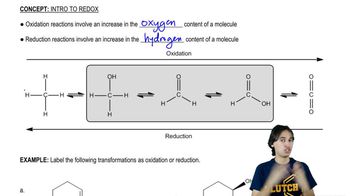
Redox reactions involve the transfer of electrons between substances, leading to changes in oxidation states. In the context of chromium(VI) contamination, ethanol can act as a reducing agent, donating electrons to convert toxic chromium(VI) to the less harmful chromium(III), thereby mitigating its toxicity.
Video consigliato:
06:02
General Features of Redox

Role of Ethanol in Remediation

Ethanol is used in environmental remediation as a reducing agent to facilitate redox reactions. When injected into contaminated soil, ethanol can reduce chromium(VI) to chromium(III), a less toxic form. This process helps decrease the environmental and health risks associated with chromium(VI) contamination.
Video consigliato:
01:50
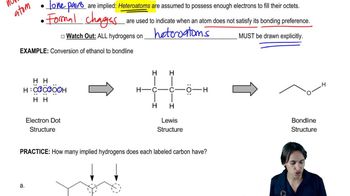
Conversion of ethanol from electron dot to bondline