Domanda del libro di testo
How many sets of equivalent hydrogens are present in the molecule that resulted in this NMR spectrum? [Recall that some signals can be split into multiple peaks—they are still just one signal.]
<IMAGE>
1567
views

 Mullins 1st EditionCh. 15 - Structural Identification 2: Nuclear Magnetic Resonance SpectroscopyProblema 17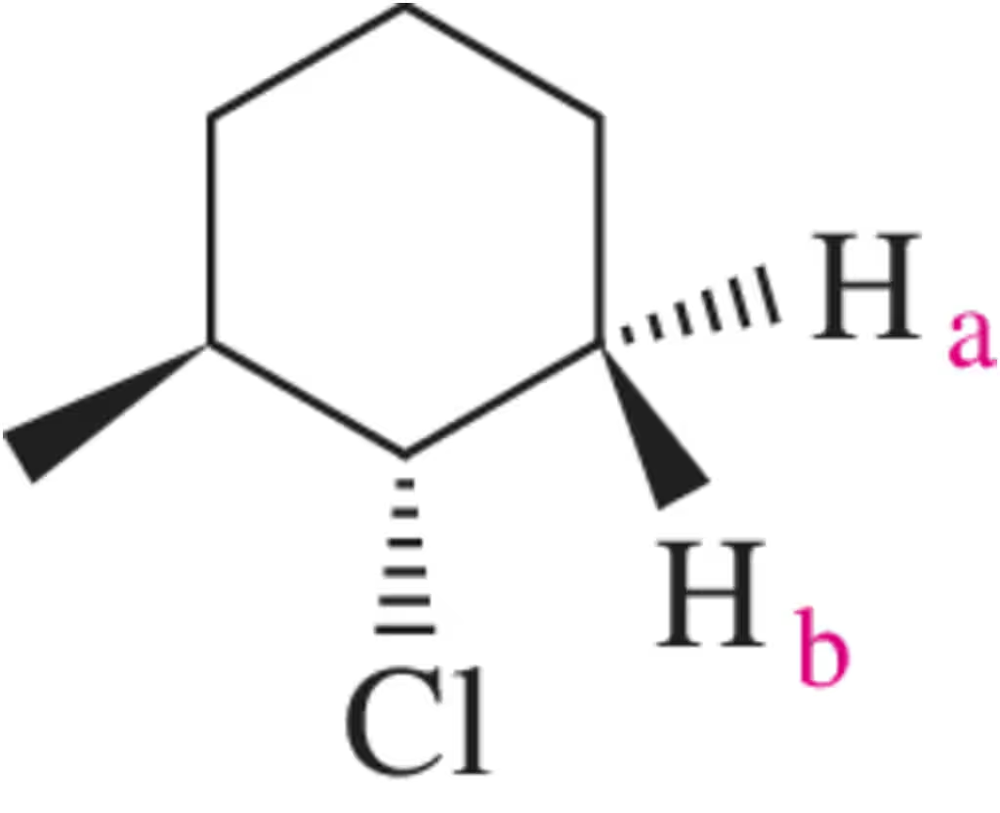
 Guida verificata passo dopo passo
 05:43
05:43
 1:38
1:38 3:11
3:11How many sets of equivalent hydrogens are present in the molecule that resulted in this NMR spectrum? [Recall that some signals can be split into multiple peaks—they are still just one signal.]
<IMAGE>
For the molecules shown, give the number of signals expected and the relative ratio of the signal integrations.
(b)
How many unique ¹H NMR signals would you expect in an NMR spectrum for the following molecules?
(c)
Without worrying about the relative location of the signals (i.e., the chemical shift) or the splitting patterns, draw a spectrum of the following molecule, being sure to indicate the integration of each peak. Label each signal based on the set of equivalent hydrogens to which it corresponds. [We expand on this question in future assessments.]
Without worrying about the relative location of the signals (i.e., the chemical shift) or the splitting patterns, draw a spectrum of the following molecule. Be sure to label each signal based on the set of equivalent hydrogens to which it corresponds.
How many unique ¹H NMR signals would you expect in an NMR spectrum for the following molecules?
(b)