Ch. 21 - Conjugated Systems 1: Stability and Addition Reactions
Mullins - Organic Chemistry: A Learner Centered Approach 1st Edition
Mullins1st EditionOrganic Chemistry: A Learner Centered ApproachISBN: 9780137566471Non è quello che usi tu?Cambia libro di testo
Capitolo 20, Problema 21e

Which of the following molecules would you expect to absorb in the visible region of the electromagnetic spectrum?
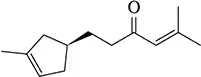
(e) Chemical structure of a conjugated molecule, illustrating potential absorption in the visible spectrum.

Guida verificata passo dopo passo
1
Identify the structural features of the molecule that can lead to absorption in the visible region. Typically, conjugated systems with alternating single and double bonds are responsible for such absorption.
Examine the given structure for conjugation. The molecule contains a conjugated system involving a carbonyl group (C=O) and a double bond (C=C).
Consider the extent of conjugation. The presence of a conjugated system can lower the energy gap between the HOMO and LUMO, allowing absorption of longer wavelengths, potentially in the visible region.
Evaluate the length of the conjugated system. Longer conjugated systems tend to absorb at longer wavelengths. In this molecule, the conjugation is limited to a few bonds.
Conclude whether the conjugation is sufficient for visible light absorption. Generally, more extensive conjugation is required for absorption in the visible region, so assess if the current conjugation is adequate.

Risposta video verificata per un problema simile:

Questa soluzione video è stata consigliata dai nostri tutor come utile per risolvere questo problema.

Concetti chiave

Ecco i concetti essenziali che devi comprendere per rispondere correttamente alla domanda.

Conjugation

Conjugation in organic chemistry refers to the overlap of p-orbitals across adjacent single and multiple bonds, allowing for delocalization of electrons. This delocalization can lower the energy gap between molecular orbitals, enabling absorption of longer wavelengths of light, such as those in the visible spectrum. The molecule in the image shows a conjugated system, which is crucial for its potential to absorb visible light.
Video consigliato:
03:27
Conjugated states

Chromophores

Chromophores are parts of molecules responsible for their color, typically due to the presence of conjugated pi-bond systems. These structures absorb specific wavelengths of light, resulting in the emission or reflection of others, which we perceive as color. In the molecule shown, the conjugated system acts as a chromophore, potentially absorbing visible light.

Electromagnetic Spectrum

The electromagnetic spectrum encompasses all wavelengths of electromagnetic radiation, from gamma rays to radio waves. The visible region, which ranges from approximately 400 to 700 nm, is where human eyes can detect light. Molecules that absorb in this region often have extended conjugation, as seen in the provided structure, which can absorb visible light due to its conjugated system.
Video consigliato:
04:29
Draw Complete NMR Spectrum