Ch. 27 - Carbohydrates, Nucleic Acids, and Lipids
Mullins - Organic Chemistry: A Learner Centered Approach 1st Edition
Mullins1st EditionOrganic Chemistry: A Learner Centered ApproachISBN: 9780137566471Non è quello che usi tu?Cambia libro di testo
Capitolo 26, Problema 40

Maltose, like cellobiose, is composed of two glucose units. What is the difference between maltose and cellobiose?
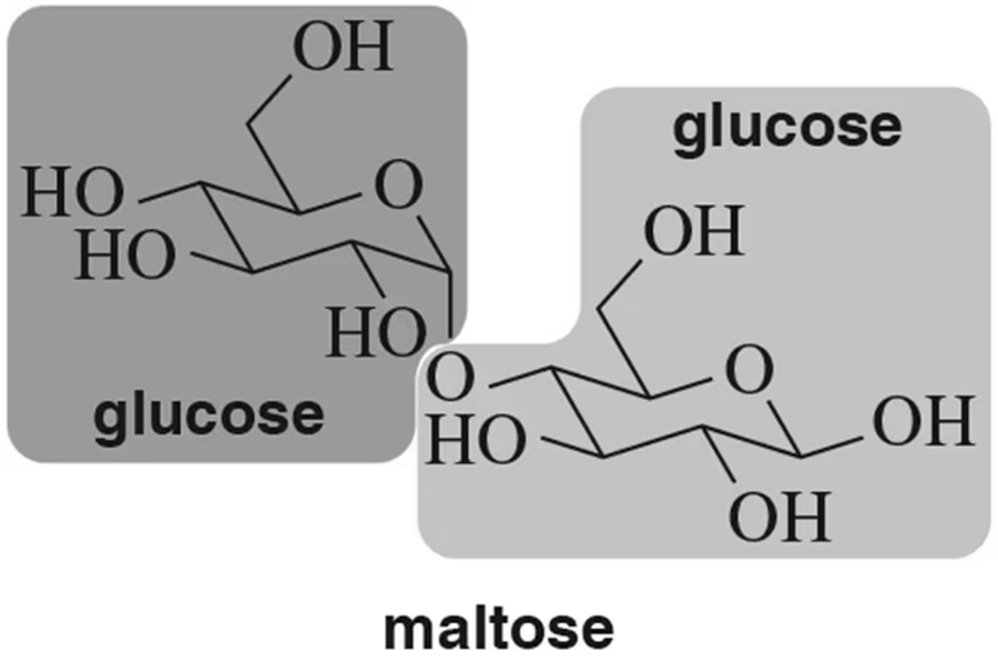
Structural representation of maltose, showing two glucose units and their chemical bonds.

Guida verificata passo dopo passo
1
Identify the structure of maltose: Maltose is a disaccharide composed of two glucose units linked by an α(1→4) glycosidic bond. This means the first glucose unit is in the alpha configuration at the anomeric carbon, and it is connected to the fourth carbon of the second glucose unit.
Identify the structure of cellobiose: Cellobiose is also a disaccharide composed of two glucose units, but they are linked by a β(1→4) glycosidic bond. This means the first glucose unit is in the beta configuration at the anomeric carbon, and it is connected to the fourth carbon of the second glucose unit.
Compare the glycosidic linkages: The key difference between maltose and cellobiose lies in the type of glycosidic bond. Maltose has an α(1→4) linkage, while cellobiose has a β(1→4) linkage.
Understand the implications of the linkage difference: The α and β configurations affect the three-dimensional structure and properties of the disaccharides. The alpha linkage in maltose results in a different orientation compared to the beta linkage in cellobiose, which can affect how these sugars are digested and utilized by organisms.
Summarize the difference: The primary difference between maltose and cellobiose is the configuration of the glycosidic bond between the glucose units: maltose has an α(1→4) linkage, while cellobiose has a β(1→4) linkage.

Risposta video verificata per un problema simile:

Questa soluzione video è stata consigliata dai nostri tutor come utile per risolvere questo problema.
Durata del video:
2m

Concetti chiave

Ecco i concetti essenziali che devi comprendere per rispondere correttamente alla domanda.

Glycosidic Bond

A glycosidic bond is a type of covalent bond that connects two monosaccharides, forming a disaccharide. The bond is formed through a dehydration reaction, where a water molecule is released. The specific type of glycosidic bond (α or β) determines the properties and digestibility of the resulting sugar.
Video consigliato:
06:00
Single bonds, double bonds, and triple bonds.

Maltose Structure

Maltose is a disaccharide composed of two glucose units linked by an α(1→4) glycosidic bond. This structure allows maltose to be easily broken down by enzymes like maltase, making it a readily available source of energy. Maltose is commonly found in malted foods and beverages.
Video consigliato:
03:04
Drawing Resonance Structures

Cellobiose Structure

Cellobiose is also a disaccharide made up of two glucose units, but they are connected by a β(1→4) glycosidic bond. This structural difference makes cellobiose resistant to hydrolysis by human digestive enzymes, as it is primarily found in cellulose, a major component of plant cell walls.
Video consigliato:
03:04
Drawing Resonance Structures