
Ch. 3 - Alkanes and Cycloalkanes: Properties and Conformational Analysis
Mullins - Organic Chemistry: A Learner Centered Approach 1st Edition
Mullins1st EditionOrganic Chemistry: A Learner Centered ApproachISBN: 9780137566471Non è quello che usi tu?Cambia libro di testo
Capitolo 2, Problema 45a

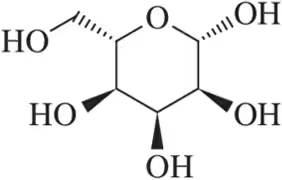
Modify the following line-angle drawings to show all lone pairs.
(a) Line-angle drawing of a hexagonal molecule with hydroxyl groups, indicating where lone pairs should be added.

Guida verificata passo dopo passo
1
Step 1: Identify all atoms in the line-angle drawing. Remember that in line-angle structures, carbon atoms are implied at the vertices and ends of lines, and hydrogen atoms bonded to carbon are not explicitly shown.
Step 2: Determine the valence electrons for each atom. For example, oxygen has 6 valence electrons, nitrogen has 5, and halogens like chlorine have 7. Carbon typically forms 4 bonds, and hydrogen forms 1 bond.
Step 3: Analyze the bonding around each atom. For atoms that do not have a full octet or are not involved in bonding, add lone pairs to satisfy the octet rule. For example, oxygen typically has 2 bonds and 2 lone pairs.
Step 4: Add lone pairs to heteroatoms (non-carbon atoms) such as oxygen, nitrogen, or halogens. Ensure that the total number of electrons around each atom matches its valence electron count.
Step 5: Double-check the structure to ensure that all atoms have the correct number of bonds and lone pairs, and that the octet rule is satisfied for atoms that require it.

Risposta video verificata per un problema simile:

Questa soluzione video è stata consigliata dai nostri tutor come utile per risolvere questo problema.
Durata del video:
2m

Concetti chiave

Ecco i concetti essenziali che devi comprendere per rispondere correttamente alla domanda.

Line-Angle Drawings

Line-angle drawings, also known as skeletal structures, are a simplified way to represent organic molecules. In these drawings, vertices represent carbon atoms, and lines represent bonds between them. Hydrogen atoms attached to carbons are usually omitted for clarity, but understanding these structures is crucial for visualizing molecular geometry and connectivity.
Video consigliato:
02:46
What is angle strain?

Lone Pairs

Lone pairs are pairs of valence electrons that are not involved in bonding and are localized on a single atom. They play a significant role in determining the shape and reactivity of molecules. Recognizing and representing lone pairs in molecular structures is essential for predicting molecular geometry and understanding intermolecular interactions.
Video consigliato:
02:04
Heterocycles - Which lone pairs react?

Molecular Geometry

Molecular geometry refers to the three-dimensional arrangement of atoms within a molecule. It is influenced by the presence of lone pairs and bonding pairs of electrons, which can affect bond angles and overall shape. Understanding molecular geometry is vital for predicting the physical and chemical properties of substances, including polarity and reactivity.
Video consigliato:
07:44
Molecular Geometry Explained.