Ch. 9 - Alkenes 2: Oxidation and Reduction
Mullins - Organic Chemistry: A Learner Centered Approach 1st Edition
Mullins1st EditionOrganic Chemistry: A Learner Centered ApproachISBN: 9780137566471Non è quello che usi tu?Cambia libro di testo
Capitolo 8, Problema 45d(vi)

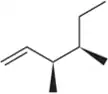
Predict the product(s) that would result when the alkenes are allowed to react under the following conditions: (vi) 1. OsO4 2. NaHSO3
(d) Chemical structure of an alkene with two double bonds, indicating potential sites for halogenation reactions.

Guida verificata passo dopo passo
1
Step 1: Recognize the reaction type. The reagents OsO₄ (osmium tetroxide) followed by NaHSO₃ (sodium bisulfite) indicate a dihydroxylation reaction. This reaction adds two hydroxyl (-OH) groups to the alkene in a syn addition manner.
Step 2: Identify the structure of the alkene. The double bond in the alkene is the reactive site where the addition of hydroxyl groups will occur.
Step 3: Understand the mechanism. OsO₄ reacts with the alkene to form a cyclic osmate ester intermediate. This intermediate ensures that the two hydroxyl groups are added to the same face of the double bond (syn addition).
Step 4: Use NaHSO₃ to cleave the osmate ester. Sodium bisulfite is used in the second step to hydrolyze the osmate ester, releasing the diol (a molecule with two hydroxyl groups) as the final product.
Step 5: Predict the stereochemistry of the product. Since the addition is syn, the two hydroxyl groups will be on the same side of the former double bond. If the alkene is cyclic or has substituents, consider the stereochemical implications of the syn addition.

Risposta video verificata per un problema simile:

Questa soluzione video è stata consigliata dai nostri tutor come utile per risolvere questo problema.
Durata del video:
2m

Concetti chiave

Ecco i concetti essenziali che devi comprendere per rispondere correttamente alla domanda.

Alkene Reactivity

Alkenes are unsaturated hydrocarbons characterized by at least one carbon-carbon double bond. Their reactivity is primarily due to this double bond, which can undergo various addition reactions. Understanding how alkenes react with different reagents is crucial for predicting the products of these reactions.
Video consigliato:
Percorso guidato
2:09
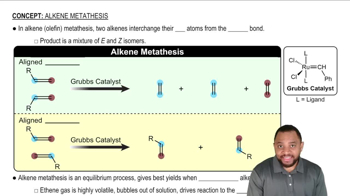
Alkene Metathesis Concept 1

Osmium Tetroxide (OsO₄) Reaction

Osmium tetroxide is a powerful oxidizing agent used in organic chemistry to convert alkenes into vicinal diols (glycols) through syn-dihydroxylation. This reaction involves the addition of hydroxyl groups (–OH) across the double bond, resulting in a compound with two adjacent alcohol groups. The stereochemistry of the product is important, as it retains the configuration of the alkene.
Video consigliato:
05:09
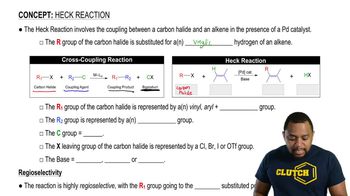
Heck Reaction

Sodium Bisulfite (NaHSO₃) Workup

Sodium bisulfite is often used in organic reactions as a reducing agent and for the purification of reaction products. In the context of the OsO₄ reaction, NaHSO₃ serves to quench the reaction and can help isolate the diol product by forming a stable bisulfite adduct. This step is essential for ensuring that the desired product is obtained in a pure form.
Video consigliato:
03:19
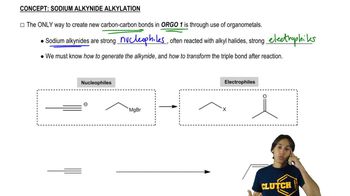
Sodium Alkynide Alkylation