Ch. 9 - Alkenes 2: Oxidation and Reduction
Mullins - Organic Chemistry: A Learner Centered Approach 1st Edition
Mullins1st EditionOrganic Chemistry: A Learner Centered ApproachISBN: 9780137566471Non è quello che usi tu?Cambia libro di testo
Capitolo 8, Problema 45d(viii)

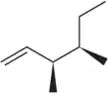
Predict the product(s) that would result when the alkenes are allowed to react under the following conditions: (viii) 1. O3 2. CH3SCH3
(d) Chemical structure of an alkene with double bonds, illustrating hydrogenation reaction conditions.

Guida verificata passo dopo passo
1
Step 1: Recognize the reaction type. The given conditions (1. O₃ and 2. CH₃SCH₃) indicate an ozonolysis reaction, which is used to cleave alkenes at the double bond and form carbonyl compounds.
Step 2: Understand the mechanism. Ozone (O₃) reacts with the alkene to form an unstable intermediate called a molozonide, which rearranges to form an ozonide. The ozonide is then reduced by dimethyl sulfide (CH₃SCH₃) to yield aldehydes and/or ketones.
Step 3: Identify the structure of the alkene. Analyze the given alkene structure to determine the location of the double bond. This will help predict the cleavage points and the resulting fragments.
Step 4: Break the double bond. Split the alkene at the double bond, and add oxygen atoms to each carbon involved in the double bond to form carbonyl groups (C=O).
Step 5: Determine the products. Based on the cleavage and addition of oxygen atoms, identify whether the resulting compounds are aldehydes or ketones. Ensure that the products match the original structure of the alkene.

Risposta video verificata per un problema simile:

Questa soluzione video è stata consigliata dai nostri tutor come utile per risolvere questo problema.
Durata del video:
4m

Concetti chiave

Ecco i concetti essenziali che devi comprendere per rispondere correttamente alla domanda.

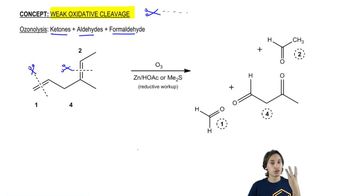
Ozonolysis

Ozonolysis is a reaction involving the cleavage of alkenes using ozone (O₃) to form carbonyl compounds. The process typically occurs in two steps: first, the alkene reacts with ozone to form a molozonide, which rearranges to form ozonide. This ozonide can then be reduced to aldehydes or ketones, depending on the structure of the original alkene.
Video consigliato:
06:30
General properties of ozonolysis.

Thioether Reduction

In the context of organic reactions, thioethers like dimethyl sulfide (CH₃SCH₃) can act as reducing agents. When used in conjunction with ozonolysis, thioethers can help convert the ozonide intermediate into more stable products, often resulting in the formation of alcohols or other functional groups, depending on the reaction conditions.
Video consigliato:
07:12
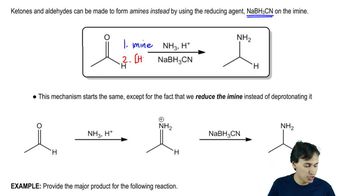
Reductive Amination

Regioselectivity

Regioselectivity refers to the preference of a chemical reaction to yield one structural isomer over others when multiple possibilities exist. In ozonolysis, the regioselectivity of the reaction can influence the types of carbonyl compounds formed, as the position of the double bond in the alkene will determine the sites of cleavage and the resulting products.
Video consigliato:
05:09
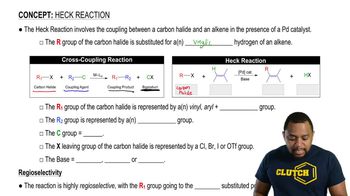
Heck Reaction