Ch. 9 - Alkenes 2: Oxidation and Reduction
Mullins - Organic Chemistry: A Learner Centered Approach 1st Edition
Mullins1st EditionOrganic Chemistry: A Learner Centered ApproachISBN: 9780137566471Non è quello che usi tu?Cambia libro di testo
Capitolo 8, Problema 45e(ix,x)

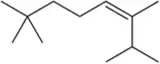
Predict the product(s) that would result when the alkenes are allowed to react under the following conditions: (ix) H2, Pd/C; and (x) D2 , Pd/C.
(e) Chemical structure of an alkene with highlighted hydrogenation sites for reaction prediction.

Guida verificata passo dopo passo
1
Step 1: Analyze the given alkene structure. The molecule contains a double bond, which is the reactive site for the hydrogenation reactions. The double bond is located between two carbon atoms in the chain.
Step 2: Understand the reaction conditions. (ix) H₂, Pd/C is a catalytic hydrogenation reaction where molecular hydrogen (H₂) adds across the double bond in the presence of a palladium catalyst. This results in the conversion of the alkene to an alkane by adding one hydrogen atom to each carbon of the double bond.
Step 3: Predict the product for (ix). The double bond will be completely reduced, and the two carbons involved in the double bond will each gain a single hydrogen atom. The rest of the molecule remains unchanged.
Step 4: Understand the reaction conditions for (x). D₂, Pd/C is similar to the previous reaction, but instead of hydrogen (H₂), deuterium gas (D₂) is used. Deuterium is an isotope of hydrogen, so the double bond will be reduced, and each carbon of the double bond will gain a single deuterium atom instead of hydrogen.
Step 5: Predict the product for (x). The double bond will be completely reduced, and the two carbons involved in the double bond will each gain a single deuterium atom. The rest of the molecule remains unchanged. The final product will be a fully saturated alkane with deuterium atoms at the positions of the original double bond.

Risposta video verificata per un problema simile:

Questa soluzione video è stata consigliata dai nostri tutor come utile per risolvere questo problema.

Concetti chiave

Ecco i concetti essenziali che devi comprendere per rispondere correttamente alla domanda.

Hydrogenation

Hydrogenation is a chemical reaction that involves the addition of hydrogen (H₂) to an alkene or alkyne, converting it into an alkane. This reaction typically requires a catalyst, such as palladium on carbon (Pd/C), which facilitates the breaking of the double or triple bonds. The result is a saturated hydrocarbon, which is generally more stable and less reactive than its unsaturated counterparts.
Video consigliato:
00:48
The definition of hydrogenation.

Deuteration

Deuteration is similar to hydrogenation but involves the addition of deuterium (D₂), an isotope of hydrogen, to an alkene or alkyne. This process also requires a catalyst like Pd/C and results in the formation of a deuterated alkane. Deuteration is often used in research to trace molecular pathways or to study reaction mechanisms due to the unique properties of deuterium compared to regular hydrogen.

Stereochemistry

Stereochemistry refers to the study of the spatial arrangement of atoms in molecules and how this affects their chemical behavior. In reactions involving alkenes, the addition of hydrogen or deuterium can lead to different stereoisomers, depending on the orientation of the reactants and the reaction conditions. Understanding stereochemistry is crucial for predicting the specific products formed during hydrogenation or deuteration, especially in cases where chiral centers are involved.
Video consigliato:
Percorso guidato
1:38
Polymer Stereochemistry Concept 1