Ch.11 - Reactions of Alcohols
Wade - Organic Chemistry 9th Edition
Wade9th EditionOrganic ChemistryISBN: 9780135213728Non è quello che usi tu?Cambia libro di testo
Capitolo 11, Problema 3a,b,c

We have covered several oxidants that use a multi-valent atom (Cr, Cl, S, or I) as their active species, going from a higher oxidation state before the oxidation to a lower oxidation state after oxidizing the alcohol. Draw the Lewis structures of the following atoms, before and after the oxidation of an alcohol to a ketone or aldehyde. How many bonds to oxygen does each atom have before and after the oxidation?
a. the Cr in chromic acid
b. the Cl in sodium hypochlorite
c. the S in the Swern oxidation

Guida verificata passo dopo passo
1
Step 1: Understand the oxidation process. In the oxidation of an alcohol to a ketone or aldehyde, the oxidizing agent undergoes a reduction. This means the multi-valent atom in the oxidizing agent transitions from a higher oxidation state to a lower oxidation state. Familiarize yourself with the specific oxidants mentioned: chromic acid (Cr), sodium hypochlorite (Cl), and the Swern oxidation (S).
Step 2: Draw the Lewis structure of the multi-valent atom in its higher oxidation state (before the oxidation). For chromic acid (Cr), sodium hypochlorite (Cl), and the Swern oxidation (S), depict the atom with its bonds to oxygen and other atoms. Ensure you represent the correct oxidation state and bonding environment for each species.
Step 3: Draw the Lewis structure of the multi-valent atom in its lower oxidation state (after the oxidation). After the alcohol is oxidized to a ketone or aldehyde, the oxidizing agent is reduced. Update the Lewis structure to reflect the new oxidation state and bonding environment for Cr, Cl, and S.
Step 4: Count the number of bonds to oxygen for each atom before and after the oxidation. Carefully examine the Lewis structures you have drawn and tally the oxygen bonds for Cr, Cl, and S in both their higher and lower oxidation states.
Step 5: Compare the number of oxygen bonds before and after the oxidation for each atom. This comparison will help you understand how the bonding environment changes during the oxidation process. Summarize the differences for Cr in chromic acid, Cl in sodium hypochlorite, and S in the Swern oxidation.

Risposta video verificata per un problema simile:

Questa soluzione video è stata consigliata dai nostri tutor come utile per risolvere questo problema.
Durata del video:
7m

Concetti chiave

Ecco i concetti essenziali che devi comprendere per rispondere correttamente alla domanda.

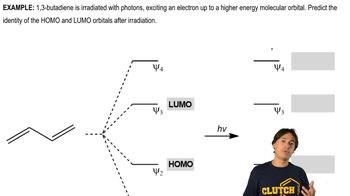
Oxidation States

Oxidation states indicate the degree of oxidation of an atom in a compound, reflecting the number of electrons lost or gained. In organic chemistry, understanding how oxidation states change during reactions, such as the conversion of alcohols to ketones or aldehydes, is crucial. For example, in the oxidation of an alcohol, the carbon atom typically increases its oxidation state as it forms a carbonyl group.
Video consigliato:
03:08
Ground vs. Excited States

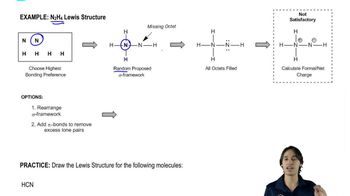
Lewis Structures

Lewis structures are diagrams that represent the bonding between atoms in a molecule and the lone pairs of electrons. They are essential for visualizing the arrangement of electrons and understanding how atoms interact during chemical reactions. Drawing Lewis structures for the oxidants mentioned helps clarify how their oxidation states change and how many bonds to oxygen are formed before and after the oxidation process.
Video consigliato:
04:12
Drawing the Lewis Structure for N2H4.

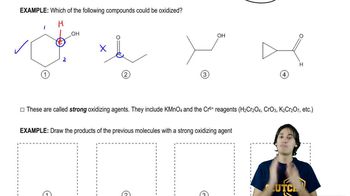
Oxidizing Agents

Oxidizing agents are substances that facilitate the oxidation of other compounds by accepting electrons. In the context of the question, chromic acid, sodium hypochlorite, and the Swern oxidation are examples of oxidizing agents that convert alcohols to ketones or aldehydes. Understanding the role of these agents and their multi-valent atoms is key to predicting the outcome of the oxidation reactions and the changes in bonding.
Video consigliato:
03:40
Strong oxidizing agents