Ch.8 - Reactions of Alkenes
Wade - Organic Chemistry 9th Edition
Wade9th EditionOrganic ChemistryISBN: 9780135213728Non è quello che usi tu?Cambia libro di testo
Capitolo 8, Problema 73

When styrene (vinylbenzene) is commercially polymerized, about 1–3% of 1,4-divinylbenzene is often added to the styrene. The incorporation of some divinylbenzene gives a polymer with more strength and better resistance to organic solvents. Explain how a very small amount of divinylbenzene has a marked effect on the properties of the polymer.

Guida verificata passo dopo passo
1
Step 1: Understand the structure of styrene and 1,4-divinylbenzene. Styrene (vinylbenzene) has a benzene ring with a single vinyl group (-CH=CH2) attached. 1,4-divinylbenzene has a benzene ring with two vinyl groups attached at the 1 and 4 positions.
Step 2: Recognize the role of 1,4-divinylbenzene in polymerization. During polymerization, the vinyl groups in styrene undergo a chain-growth polymerization to form long polymer chains. The presence of 1,4-divinylbenzene introduces additional vinyl groups that can form cross-links between different polymer chains.
Step 3: Explain the concept of cross-linking. Cross-linking occurs when the vinyl groups on 1,4-divinylbenzene react with the growing polymer chains, creating covalent bonds between separate chains. This results in a three-dimensional network structure rather than linear polymer chains.
Step 4: Discuss the impact of cross-linking on polymer properties. The cross-linked structure restricts the movement of polymer chains, making the material more rigid and less prone to deformation. This enhances the strength and resistance to organic solvents of the polymer.
Step 5: Conclude by emphasizing the significance of small amounts of 1,4-divinylbenzene. Even a small percentage of 1,4-divinylbenzene can create enough cross-links to significantly alter the polymer's mechanical and chemical properties, leading to improved performance in commercial applications.

Risposta video verificata per un problema simile:

Questa soluzione video è stata consigliata dai nostri tutor come utile per risolvere questo problema.
Durata del video:
6m

Concetti chiave

Ecco i concetti essenziali che devi comprendere per rispondere correttamente alla domanda.

Polymerization

Polymerization is the chemical process in which small molecules, known as monomers, combine to form a larger, more complex structure called a polymer. In the case of styrene, the polymerization process leads to the formation of polystyrene, a widely used plastic. The addition of a cross-linking agent like divinylbenzene during polymerization can significantly alter the physical properties of the resulting polymer.
Video consigliato:
Percorso guidato
1:06
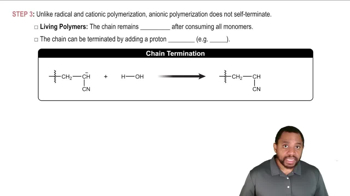
Anionic Polymerization Concept 4

Cross-linking

Cross-linking refers to the formation of chemical bonds between polymer chains, which can enhance the strength and stability of the material. When divinylbenzene is added to styrene, it acts as a cross-linker, creating connections between polystyrene chains. This results in a three-dimensional network structure that improves the mechanical properties and solvent resistance of the polymer.
Video consigliato:
09:51
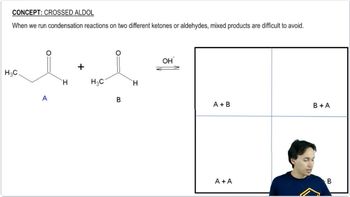
Crossed Aldol

Thermal and Chemical Resistance

Thermal and chemical resistance are critical properties of polymers that determine their performance in various environments. The incorporation of divinylbenzene into the polymer matrix increases the density of cross-links, which enhances the material's ability to withstand heat and exposure to organic solvents. This makes the modified polymer more durable and suitable for applications requiring higher performance under challenging conditions.
Video consigliato:
Percorso guidato
3:11
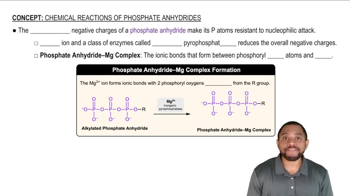
Chemical Reactions of Phosphate Anhydrides Concept 1
Pratica correlata
Domanda del libro di testo

Propose a mechanism for reaction of the first three propylene units in the polymerization of propylene in the presence of a peroxide.

1694
views

Domanda del libro di testo

Ozonolysis can be applied selectively to different types of carbon–carbon double bonds. The compound shown below contains two vinyl ether double bonds, which are electron-rich because of the electron-donating alkoxy groups. Ozone reacts more quickly with electron-rich double bonds and more slowly with hindered double bonds. At −78 °C, this compound quickly adds two equivalents of ozone. Immediate reduction of the ozonide gives a good yield of a single product. Show the expected ozonolyis product, and label the functional groups produced, some of which are not typical from ozonolysis of simple alkenes.

1014
views
Domanda del libro di testo

The cationic polymerization of isobutylene (2-methylpropene) is shown in Section 8-16A. Isobutylene is often polymerized under free-radical conditions. Propose a mechanism for the free-radical polymerization of isobutylene.

1342
views
Domanda del libro di testo

Predict the product of formula C7H13BrO from the reaction of this same unsaturated alcohol with bromine. Propose a mechanism to support your prediction.

1582
views
Domanda del libro di testo

A graduate student attempted to form the iodohydrin of the alkene shown below. Her analysis of the products showed a good yield of an unexpected product. Propose a mechanism to explain the formation of this product.

1003
views
Domanda del libro di testo

Propose mechanisms to explain the opposite regiochemistry observed in the following two reactions.

907
views