Ch 23: The Electric Field
Knight Calc - Physics for Scientists and Engineers 5th Edition
Knight Calc5th EditionPhysics for Scientists and EngineersISBN: 9780137344796Non è quello che usi tu?Cambia libro di testo
Capitolo 23, Problema 13

CALC A 12-cm-long thin rod has the nonuniform charge density λ(x)=(2.0nC/cm)e−∣x∣/(6.0cm)\(\lambda\)(x)=(2.0\,\(\text{nC/cm}\))e^{-|x|/(6.0\,\(\text{cm}\))}, where x is measured from the center of the rod. What is the total charge on the rod? Hint: This exercise requires an integration. Think about how to handle the absolute value sign.

Guida verificata passo dopo passo
1
Step 1: Understand the problem. The charge density λ(x) is given as a function of position along the rod, λ(x) = (2.0 nC/cm)e^(-|x|/(6.0 cm)). To find the total charge on the rod, we need to integrate λ(x) over the length of the rod, which spans from -6 cm to +6 cm (since the rod is 12 cm long and centered at x = 0).
Step 2: Handle the absolute value in the exponent. The absolute value |x| affects the integration because the function changes behavior at x = 0. Split the integral into two parts: one for the range from -6 cm to 0 cm and another for the range from 0 cm to +6 cm. This allows us to remove the absolute value by considering the sign of x in each region.
Step 3: Write the integral for the total charge. The total charge Q is given by Q = ∫[−6 cm to +6 cm] λ(x) dx. After splitting the integral, this becomes Q = ∫[−6 cm to 0 cm] (2.0 nC/cm)e^(x/(6.0 cm)) dx + ∫[0 cm to +6 cm] (2.0 nC/cm)e^(−x/(6.0 cm)) dx.
Step 4: Solve each integral separately. For the first integral (from -6 cm to 0 cm), substitute λ(x) = (2.0 nC/cm)e^(x/(6.0 cm)). For the second integral (from 0 cm to +6 cm), substitute λ(x) = (2.0 nC/cm)e^(−x/(6.0 cm)). Use the standard formula for integrating exponential functions: ∫e^(kx) dx = (1/k)e^(kx), where k is the constant in the exponent.
Step 5: Combine the results of the two integrals. After evaluating both integrals, add their results to find the total charge Q on the rod. Ensure that the units are consistent throughout the calculation (e.g., converting nC/cm to nC if necessary).

Risposta video verificata per un problema simile:

Questa soluzione video è stata consigliata dai nostri tutor come utile per risolvere questo problema.
Durata del video:
2m

Concetti chiave

Ecco i concetti essenziali che devi comprendere per rispondere correttamente alla domanda.

Charge Density

Charge density refers to the amount of electric charge per unit length, area, or volume. In this case, the rod has a linear charge density λ(x), which varies along its length. Understanding how charge density is defined and how it can change with position is crucial for calculating the total charge on the rod.
Video consigliato:
Percorso guidato
8:13
Intro to Density

Integration

Integration is a mathematical process used to find the total accumulation of a quantity, such as charge, over a specified interval. In this problem, integration is necessary to sum the contributions of the varying charge density along the length of the rod. Recognizing how to set up and evaluate the integral is essential for solving the problem.
Video consigliato:
Percorso guidato
11:43
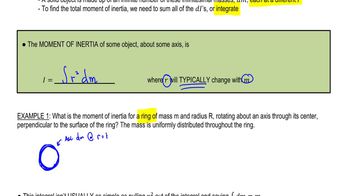
Finding Moment Of Inertia By Integrating

Absolute Value

The absolute value function, denoted as |x|, represents the distance of a number from zero, disregarding its sign. In this context, it is important to handle the absolute value correctly when integrating the charge density, as it affects the limits of integration and the expression for λ(x) based on the position along the rod.
Video consigliato:
Percorso guidato
8:42
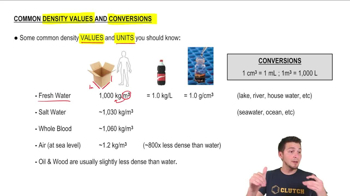
Density Values & Conversions
Pratica correlata
Domanda del libro di testo

Two 10-cm-diameter charged rings face each other, 20 cm apart. The left ring is charged to −20 nC and the right ring is charged to +20 nC. What is the force on a proton at the midpoint?

301
views

Domanda del libro di testo

Two 10-cm-diameter charged disks face each other, 20 cm apart. The left disk is charged to −50 nC and the right disk is charged to +50 nC. a. What is the electric field Ē, both magnitude and direction, at the midpoint between the two disks?

1491
views
Domanda del libro di testo

A 10-cm-long thin glass rod uniformly charged to +10 nC and a 10-cm-long thin plastic rod uniformly charged to −10 nC are placed side by side, 4.0 cm apart. What are the electric field strengths E1 to E3 at distances 1.0 cm, 2.0 cm, and 3.0 cm from the glass rod along the line connecting the midpoints of the two rods?

133
views
Domanda del libro di testo

A small glass bead charged to +6.0 nC is in the plane that bisects a thin, uniformly charged, 10-cm-long glass rod and is 4.0 cm from the rod's center. The bead is repelled from the rod with a force of 840 μN. What is the total charge on the rod?

2497
views
Domanda del libro di testo

Two 10-cm-diameter charged rings face each other, 20 cm apart. The left ring is charged to −20 nC and the right ring is charged to +20 nC. What is the electric field Ē, both magnitude and direction, at the midpoint between the two rings?

73
views
Domanda del libro di testo

Two 10-cm-long thin glass rods uniformly charged to +10 nC are placed side by side, 4.0 cm apart. What are the electric field strengths E1 to E3 at distances 1.0 cm, 2.0 cm, and 3.0 cm to the right of the rod on the left along the line connecting the midpoints of the two rods?

194
views