 뒤로
뒤로Adaptive Immunity: Humoral and Cellular Responses
스터디 가이드 - 스마트 노트
 자료에 맞춘 맞춤형 노트, 핵심 정의, 예시, 맥락을 확장해 제공합니다.
Adaptive Immunity
Overview of Adaptive Immunity
Adaptive immunity is a highly specific defense mechanism that protects the body against particular pathogens. It is characterized by specificity and memory, allowing rapid and effective responses upon re-exposure to the same pathogen.
Specificity: Immunity is directed against a particular pathogen.
Memory: Upon re-exposure, the immune system responds so quickly that illness is often prevented.
Types: Humoral immunity (antibody-mediated, B cells) and cellular immunity (cell-mediated, T cells).
Humoral Immunity
Active and Passive Humoral Immunity
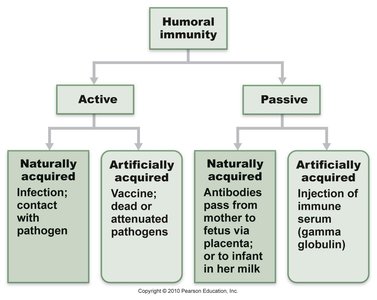
Humoral immunity can be acquired actively or passively, either naturally or artificially.
Active Immunity: The body produces its own antibodies in response to antigen exposure.
Passive Immunity: Antibodies are received from another source.
Type | Method | Example |
|---|---|---|
Active, Naturally acquired | Infection; contact with pathogen | Chickenpox infection |
Active, Artificially acquired | Vaccine; dead or attenuated pathogens | Influenza vaccine |
Passive, Naturally acquired | Antibodies pass from mother to fetus via placenta or to infant in milk | Maternal IgG transfer |
Passive, Artificially acquired | Injection of immune serum (gamma globulin) | Rabies post-exposure prophylaxis |
Antigens and Epitopes
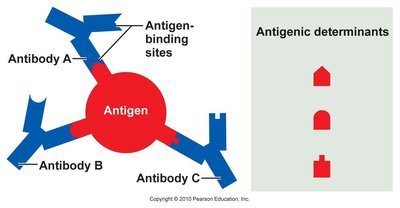
Antigens are substances that trigger an immune response by prompting the generation of antibodies. The immune system recognizes specific regions of antigens called epitopes (antigenic determinants). Antigens are typically complex molecules, with proteins being more antigenic than lipids.
Epitope: The part of an antigen recognized by the immune system; antigens often have multiple epitopes.
Antigenic Determinants: Different shapes on the antigen surface that are recognized by different antibodies.
B Lymphocytes (B cells)
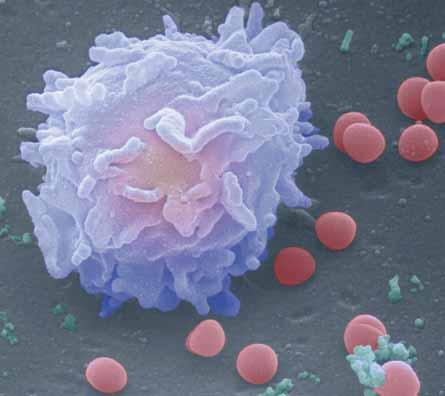
B cells are a type of lymphocyte responsible for humoral immunity.
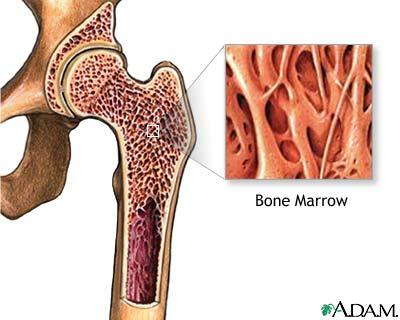
Development: B cells develop in the red bone marrow.
Selection: B cells that react to self-antigens are destroyed to prevent autoimmunity.
Colonization: Mature B cells colonize lymph organs.
Activation: When a B cell encounters its specific antigen, it becomes activated and proliferates.
Antibody Structure
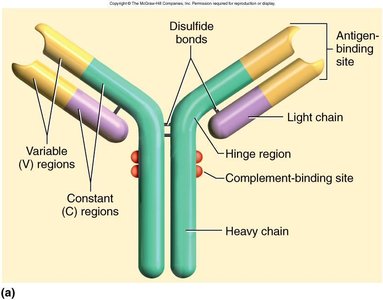
Antibodies, also known as immunoglobulins (Ig), are defensive proteins found in blood plasma and body secretions. Each antibody consists of four polypeptide chains: two heavy and two light chains.
Variable (V) regions: Bind to specific antigens.
Constant (C) regions: Determine the antibody class.
Disulfide bonds: Stabilize the structure.
Complement-binding site: Activates complement system.
Antibody Classes
Antibodies are classified based on their constant regions and structure.
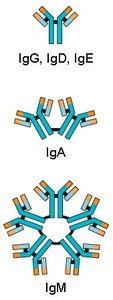
IgG: Monomer; 80% of circulating antibodies; crosses placenta; secondary immune response.
IgD: Monomer; B cell membrane antigen receptor.
IgE: Monomer; on mast cells; stimulates histamine release; attracts eosinophils.
IgA: Monomer in plasma; dimer in mucus, saliva, tears, milk, intestinal secretions; prevents adherence to epithelia.
IgM: Pentamer; 10% in plasma; primary immune response.
Humoral Immunity Responses
The humoral immune response involves the activation of B cells and production of antibodies.
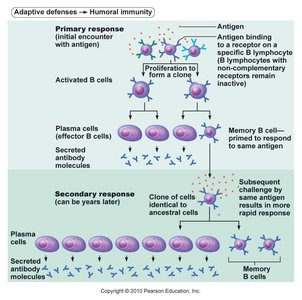
Primary Response: First exposure to antigen activates B cells, leading to production of plasma cells (antibody-secreting) and memory B cells.
Secondary Response: Subsequent exposure to the same antigen triggers a faster and stronger response due to memory B cells.
Antibody Response Kinetics
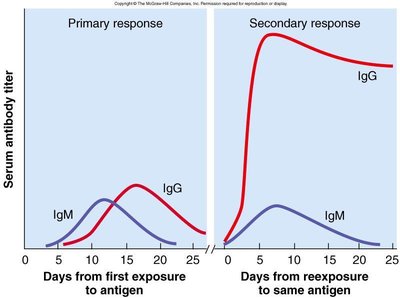
Primary Response: IgM is produced first, followed by IgG.
Secondary Response: IgG is produced rapidly and in greater quantity upon re-exposure.
Antibody Functions
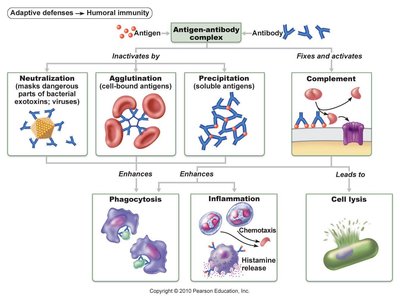
Antibodies neutralize pathogens and toxins, agglutinate cells, precipitate soluble antigens, and activate complement, leading to enhanced phagocytosis, inflammation, and cell lysis.
Neutralization: Masks dangerous parts of bacterial exotoxins and viruses.
Agglutination: Clumps cell-bound antigens.
Precipitation: Aggregates soluble antigens.
Complement Activation: Leads to cell lysis.
Cellular Immunity
T Lymphocytes (T cells)
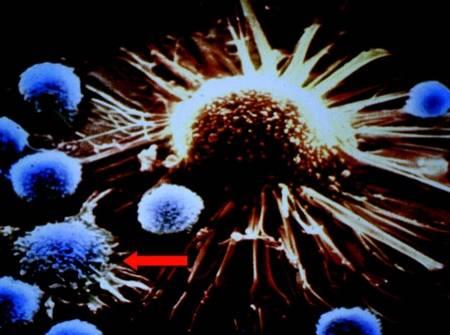
Cellular immunity is mediated by T cells, which attack foreign cells and diseased host cells.
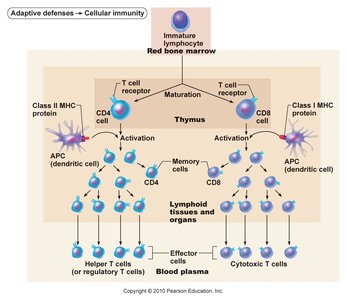
Cytotoxic T cells (Tc, CD8): Carry out direct attack on infected or abnormal cells.
Helper T cells (Th, CD4): Promote Tc and B cell action; secrete interleukins.
Memory T cells (Tm): Provide immunity from future exposure to antigen.
Life Cycle of T cells
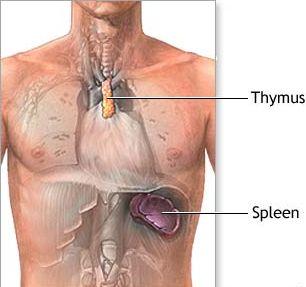
Origin: Stem cells in red bone marrow.
Maturation: Mature in thymus.
Colonization: Populate lymphatic tissues and organs.
Selection: Self-reactive cells are destroyed.
T Cell Activation and Antigen Processing
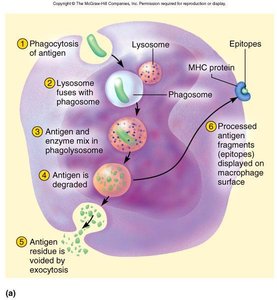
Antigen-Presenting Cells (APCs): Phagocytize antigens, degrade them, and present fragments on their surface with MHC proteins.
MHC (Major Histocompatibility Complex): "ID" tag on cells; MHC I and MHC II.
T cell Activation: Tc or Th cells recognize antigen presented by APCs, leading to proliferation and memory cell formation.
Immune System Disorders
Hypersensitivity (Allergy)
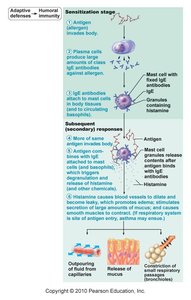
Hypersensitivity is an exaggerated immune response to an antigen, commonly known as an allergy.
Anaphylactic Shock: Acute, severe allergic reaction causing bronchiole constriction, dyspnea, vasodilation, shock, and potentially death. Treatment includes epinephrine.

Autoimmune Diseases
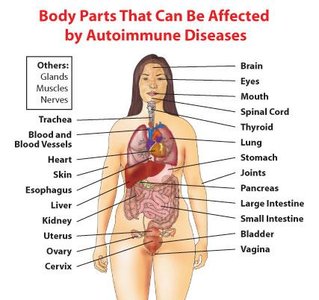
Autoimmune diseases occur when the immune system fails to recognize "self" and attacks the body's own tissues.
Mechanisms: Cross-reactivity of antibodies, changes in self-antigen structure (due to viruses or drugs).
Examples: Type I diabetes mellitus, Lupus, Rheumatoid arthritis.
Acquired Immunodeficiency Diseases (AIDS)
AIDS is caused by the Human Immunodeficiency Virus (HIV), which primarily invades helper T cells (CD4).
Normal TH count: 600–1,200 cells/μL blood; in AIDS, < 200 cells/μL.
Consequences: Increased susceptibility to infections.
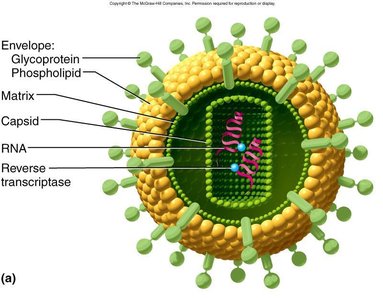
HIV Structure: Contains envelope, matrix, capsid, RNA, and reverse transcriptase.
Summary Table: Humoral vs. Cellular Immunity
Type | Cells Involved | Mechanism | Key Function |
|---|---|---|---|
Humoral Immunity | B cells | Antibody production | Neutralizes pathogens, toxins |
Cellular Immunity | T cells (Tc, Th, Tm) | Direct cell attack, cytokine secretion | Destroys infected/abnormal cells |
