 뒤로
Body Fluids and Fluid Compartments: Structure, Composition, and Movement
스터디 가이드 - 스마트 노트
 자료에 맞춘 맞춤형 노트, 핵심 정의, 예시, 맥락을 확장해 제공합니다.
Body Fluids and Homeostasis
Importance of Water and Electrolyte Balance
Water and electrolyte balance is essential for maintaining homeostasis in the human body. Homeostasis refers to the stable internal environment required for cells to function optimally. The regulation of body fluids and electrolytes ensures that cells receive the necessary nutrients and can remove waste efficiently.
Key Point 1: Homeostasis of cells depends on the homeostasis of body fluids and electrolytes.
Key Point 2: Imbalances can lead to dysfunction in cellular processes and overall health.
Example: Dehydration disrupts electrolyte balance, affecting muscle and nerve function.

Body Composition and Water Content
Water Content in Human Body
The human body is composed of both water and solid components. Water is the most abundant constituent, accounting for approximately 60% of total body mass in adults. The percentage of water varies with age, sex, and health status.
Key Point 1: Newborns have the highest percentage of body water; elderly individuals have the lowest.
Key Point 2: Muscle tissue contains more water (about 70%) compared to adipose (fat) tissue (about 15%).
Key Point 3: Healthy adult males have about 60% body water, females about 55%.
Fluid Compartments in the Human Body
Major Fluid Compartments
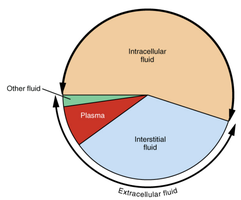
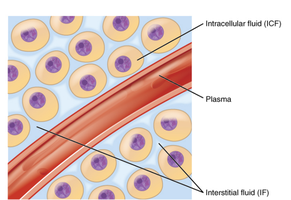
Body fluids are distributed in distinct compartments separated by membranes. The two main compartments are intracellular fluid (ICF) and extracellular fluid (ECF).
Key Point 1: ICF is located within cells and constitutes about 40% of total body weight.
Key Point 2: ECF is outside cells and makes up about 20% of total body weight.
Key Point 3: ECF is further divided into intravascular fluid (plasma) and interstitial fluid.
Subdivisions of Extracellular Fluid
The ECF is subdivided into:
Interstitial fluid (IF): Bathes and surrounds cells; about 16% of total body weight.
Intravascular fluid (IVF or plasma): Found within blood vessels; about 4% of total body weight.
Transcellular fluid: Specialized fluids such as cerebrospinal fluid, synovial fluid, urine, and eye humors.
Composition of Body Fluids
Electrolyte Distribution
The composition of body fluids varies between compartments, particularly in terms of electrolytes and proteins.
ICF: High in potassium (K+), phosphate (HPO42-), and proteins.
ECF: High in sodium (Na+), chloride (Cl-), and bicarbonate (HCO3-).
Blood plasma: Similar to interstitial fluid but contains more proteins, especially albumin.
Compartment | Major Cations | Major Anions | Proteins |
|---|---|---|---|
ICF | K+ | HPO42-, protein- | High |
ECF (Interstitial) | Na+ | Cl-, HCO3- | Low |
ECF (Plasma) | Na+ | Cl-, HCO3- | High (albumin) |
Barriers Between Fluid Compartments
Cellular Membrane
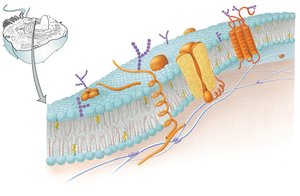
The cellular membrane separates the ICF from the interstitial fluid. It is selectively permeable, allowing water to pass freely but requiring channels for electrolytes and other molecules.
Key Point 1: Water moves freely across the membrane.
Key Point 2: Electrolytes require specific channels or transporters.
Capillary Membrane
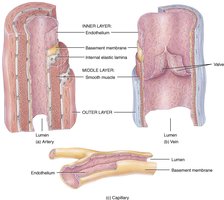
The capillary membrane separates blood plasma from interstitial fluid. It consists of a single layer of squamous epithelial cells and a basement membrane, allowing exchange of water, electrolytes, gases, and nutrients, but restricting proteins and cells.
Key Point 1: Water and electrolytes pass freely.
Key Point 2: Proteins and cells do not pass through the capillary membrane.
Movement of Fluids
Mechanisms of Fluid Movement
Fluid movement between compartments occurs via osmosis, diffusion, and filtration. The direction and rate of movement depend on concentration gradients and membrane permeability.
Osmosis: Movement of water from areas of low solute concentration to high solute concentration.
Diffusion: Movement of solutes from high to low concentration.
Filtration: Movement of fluid across membranes due to pressure differences.
Summary Table: Fluid Compartments and Properties
Compartment | Location | Percentage of Body Weight | Main Components |
|---|---|---|---|
Intracellular Fluid (ICF) | Inside cells | ~40% | K+, proteins, phosphate |
Interstitial Fluid (IF) | Between cells | ~16% | Na+, Cl-, HCO3- |
Intravascular Fluid (Plasma) | Blood vessels | ~4% | Na+, Cl-, proteins (albumin) |
Transcellular Fluid | Specialized spaces | <1% | CSF, synovial fluid, urine, eye humors |
Conclusion
Understanding the structure, composition, and movement of body fluids is fundamental to anatomy and physiology. Proper regulation of these compartments is vital for cellular function and overall health.
