 뒤로
Chapter 10: The Endocrine System – Guided Study Notes
스터디 가이드 - 스마트 노트
 자료에 맞춘 맞춤형 노트, 핵심 정의, 예시, 맥락을 확장해 제공합니다.
Endocrine System Overview
Functions of the Endocrine System
The endocrine system is a network of glands that produce and release hormones to regulate various bodily functions. It plays a crucial role in maintaining homeostasis, growth, metabolism, reproduction, and response to stress.
Regulation of metabolism: Controls how the body uses energy.
Growth and development: Influences physical and sexual maturation.
Homeostasis: Maintains internal balance of water, electrolytes, and nutrients.
Reproduction: Regulates reproductive cycles and processes.
Response to stress: Coordinates the body's reaction to physical and emotional stressors.
Comparison: Nervous System vs. Endocrine System
Similarities and Differences
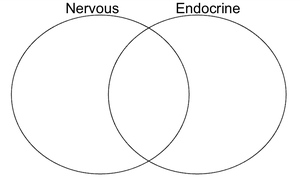
The nervous and endocrine systems are the two main regulatory systems in the body. Both coordinate and integrate activities of cells and organs, but they differ in their mechanisms and speed of action.
Nervous System: Uses electrical impulses and neurotransmitters; fast, short-term responses.
Endocrine System: Uses hormones released into the bloodstream; slower, long-lasting effects.
Both: Maintain homeostasis, regulate physiological processes, and communicate signals throughout the body.
Hormones and Hormone Action
Definition and Mechanism
A hormone is a chemical messenger produced by endocrine glands and released into the bloodstream to act on distant target cells with specific receptors. Hormones regulate various physiological processes by binding to receptors and triggering cellular responses.
Target cell: A cell with receptors specific to a particular hormone.
Receptor: A protein on or in a cell that binds to a hormone and initiates a response.
Types of Hormone Receptors
Hormones interact with two main types of receptors:
Membrane-bound receptors: Located on the cell surface; used by water-soluble hormones (e.g., peptides, catecholamines).
Intracellular receptors: Located inside the cell; used by lipid-soluble hormones (e.g., steroids, thyroid hormones).
Hypothalamic Control of Endocrine Function
The hypothalamus is the highest level of endocrine control. It links the nervous and endocrine systems by producing releasing and inhibiting hormones that regulate the pituitary gland.
Controls pituitary hormone secretion.
Integrates neural and hormonal signals.
Regulates homeostasis, stress response, and growth.
Endocrine Glands and Hormones
Characteristics of Endocrine Glands
Endocrine glands are ductless organs that secrete hormones directly into the bloodstream. They include the pituitary, thyroid, parathyroid, adrenal glands, pancreas, and others.
Ductless: Hormones released into blood, not through ducts.
Highly vascularized: Rich blood supply for rapid hormone distribution.
Specificity: Each gland produces specific hormones with distinct functions.
Location, Hormones, and Functions
The following table summarizes the main endocrine glands, their hormones, and functions:
Gland | Hormone | Stimulus for Release | Target Tissue/Organ | General Effect |
|---|---|---|---|---|
Anterior Pituitary | ACTH | CRH from hypothalamus | Adrenal cortex | Stimulates cortisol release |
Anterior Pituitary | FSH | GnRH from hypothalamus | Ovaries/testes | Stimulates gamete production |
Anterior Pituitary | GH | GHRH from hypothalamus | Most tissues | Promotes growth |
Anterior Pituitary | LH | GnRH from hypothalamus | Ovaries/testes | Stimulates sex hormone production |
Anterior Pituitary | PRL | TRH from hypothalamus | Mammary glands | Promotes milk production |
Posterior Pituitary | ADH | Increased blood osmolarity | Kidneys | Promotes water reabsorption |
Posterior Pituitary | Oxytocin | Neural stimulation | Uterus, mammary glands | Stimulates contractions, milk ejection |
Thyroid | Thyroid hormone | TSH from pituitary | Most tissues | Increases metabolism |
Thyroid | Calcitonin | High blood calcium | Bones | Lowers blood calcium |
Parathyroid | PTH | Low blood calcium | Bones, kidneys | Raises blood calcium |
Adrenal Cortex | Aldosterone | Low blood pressure | Kidneys | Increases sodium retention |
Adrenal Cortex | Cortisol | ACTH from pituitary | Most tissues | Stress response, metabolism |
Adrenal Cortex | Androgens | ACTH from pituitary | Various tissues | Sex characteristics |
Adrenal Medulla | Epinephrine/Norepinephrine | Sympathetic stimulation | Heart, muscles | Fight-or-flight response |
Pancreas | Insulin | High blood glucose | Most tissues | Lowers blood glucose |
Pancreas | Glucagon | Low blood glucose | Liver | Raises blood glucose |
Stress Responses
Sympathetic vs. Endocrine Stress Response
The body responds to stress via two main pathways:
Sympathetic (fight-or-flight): Rapid response via nervous system; releases epinephrine/norepinephrine from adrenal medulla.
Endocrine (hypothalamic-pituitary-adrenal axis): Slower, sustained response; releases cortisol from adrenal cortex.
Diabetes Mellitus
Type 1 vs. Type 2 Diabetes
Diabetes mellitus is a disorder of blood glucose regulation. The two main types differ in cause and treatment:
Type 1 Diabetes: Autoimmune destruction of pancreatic beta cells; no insulin production; requires insulin therapy.
Type 2 Diabetes: Insulin resistance; cells do not respond to insulin properly; managed with diet, exercise, and sometimes medication.
Key Equations
Blood glucose regulation can be represented as:
Summary Table: Endocrine System Key Points
Term | Definition |
|---|---|
Hormone | Chemical messenger released by endocrine glands |
Target cell | Cell with specific receptor for a hormone |
Receptor | Protein that binds a hormone and triggers a response |
Homeostasis | Maintenance of stable internal environment |
Example: Insulin lowers blood glucose after a meal; glucagon raises blood glucose during fasting.
Additional info: Academic context was added to expand brief points and fill in missing details for clarity and completeness.
