 뒤로
Chapter 21: The Immune System – Innate and Adaptive Body Defenses
스터디 가이드 - 스마트 노트
 자료에 맞춘 맞춤형 노트, 핵심 정의, 예시, 맥락을 확장해 제공합니다.
Immunity and the Immune System
Overview of Immunity
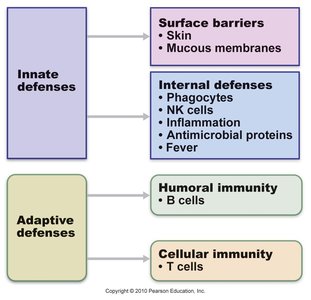
The immune system is responsible for resistance to disease and is a functional system rather than an organ system. It consists of two intrinsic defense systems: innate (nonspecific) and adaptive (specific) defenses.
Innate defenses: Respond quickly and include surface barriers and internal defenses.
Adaptive defenses: Respond specifically to pathogens and require priming.
Innate (Nonspecific) Defenses
Surface Barriers
Surface barriers such as skin and mucous membranes are the first line of defense, providing a physical and chemical barrier to pathogens.
Skin: Keratin resists acids, bases, enzymes, and toxins.
Mucosae: Provide mechanical barriers similar to skin.
Protective chemicals: Skin acidity, lysozyme, defensins, lipids in sebum, and dermicidin in sweat inhibit or destroy microorganisms.
Respiratory modifications: Mucus-coated hairs and cilia trap and remove pathogens.
Internal Defenses: Cells and Chemicals
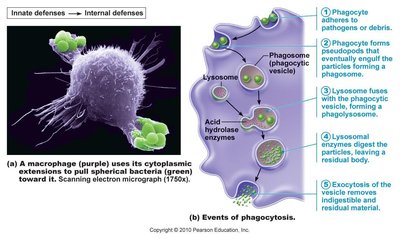
If pathogens breach surface barriers, internal defenses are activated. These include phagocytes, natural killer (NK) cells, antimicrobial proteins, fever, and inflammation.
Phagocytes: Neutrophils and macrophages engulf and destroy pathogens.
NK cells: Attack cells lacking "self" markers and induce apoptosis.
Antimicrobial proteins: Interferons and complement proteins hinder pathogen reproduction.
Fever: Elevated body temperature inhibits pathogen growth and speeds tissue repair.
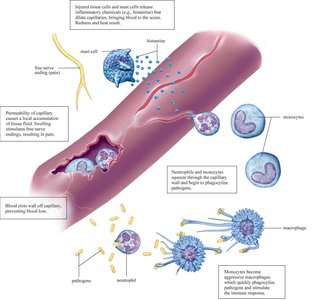
Inflammation: Prevents spread, disposes of debris, alerts adaptive immunity, and sets stage for repair.
Inflammatory Response
Inflammation is triggered by injury and involves the release of chemicals that cause redness, heat, swelling, and pain. Increased capillary permeability leads to edema, and clotting factors form a fibrin mesh to isolate the area.
Cardinal signs: Redness, heat, swelling, pain, and sometimes impairment of function.
Phagocyte mobilization: Steps include leukocytosis, margination, diapedesis, and chemotaxis.
Antimicrobial Proteins
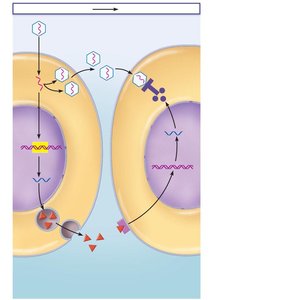
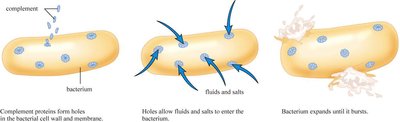
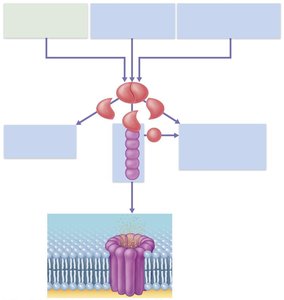
Interferons are released by virus-infected cells to warn neighboring cells and activate immune responses. Complement proteins destroy pathogens by cell lysis and enhance inflammation.
Adaptive (Specific) Defenses
Characteristics of Adaptive Immunity
The adaptive immune system is antigen-specific, systemic, and has memory. It consists of two overlapping arms: humoral (antibody-mediated) and cellular (cell-mediated) immunity.
Humoral immunity: B cells produce antibodies that target extracellular pathogens.
Cellular immunity: T cells target infected or abnormal cells directly.
Antigens and Antigenic Determinants
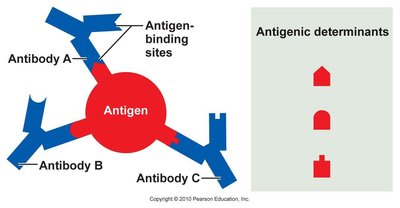
Antigens are substances that provoke an immune response. Only certain parts, called antigenic determinants, are immunogenic and bind to antibodies or lymphocyte receptors.
Cells of the Adaptive Immune System
Three main cell types are involved: B lymphocytes (humoral immunity), T lymphocytes (cellular immunity), and antigen-presenting cells (APCs).
B cells: Mature in bone marrow; produce antibodies.
T cells: Mature in thymus; include helper, cytotoxic, and regulatory T cells.
APCs: Dendritic cells, macrophages, and activated B cells present antigens to T cells.
Lymphocyte Development, Maturation, and Activation
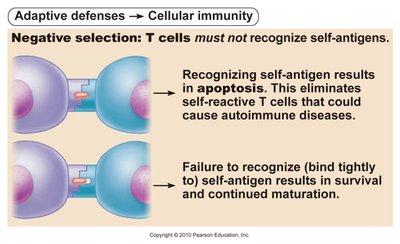
Lymphocytes originate in red bone marrow, mature in bone marrow (B cells) or thymus (T cells), and are "educated" for immunocompetence and self-tolerance. Negative selection eliminates self-reactive T cells.
Clonal Selection and Memory
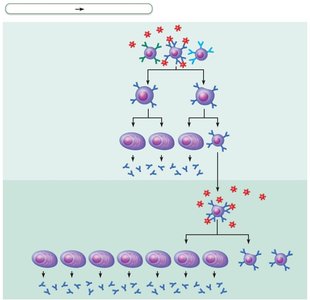
Upon antigen encounter, lymphocytes undergo clonal selection, proliferate, and differentiate into effector and memory cells. Memory cells enable a faster response upon subsequent exposure.
Humoral Immunity
Primary and Secondary Responses
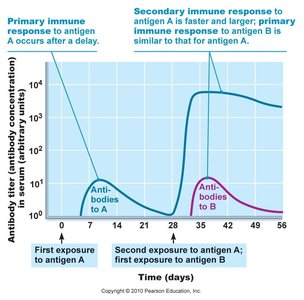
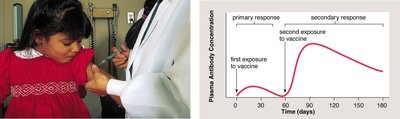
The primary immune response occurs upon first exposure to an antigen, with a lag period and gradual antibody production. The secondary response is faster and stronger due to memory cells.
Active and Passive Humoral Immunity
Active immunity: B cells produce antibodies in response to infection or vaccination.
Passive immunity: Readymade antibodies are introduced (e.g., maternal antibodies, injection of serum).
Antibody Structure and Classes
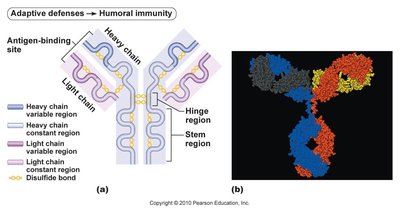
Antibodies (immunoglobulins) are Y-shaped proteins with variable and constant regions. There are five classes: IgG, IgA, IgM, IgE, and IgD.
Mechanisms of Antibody Action
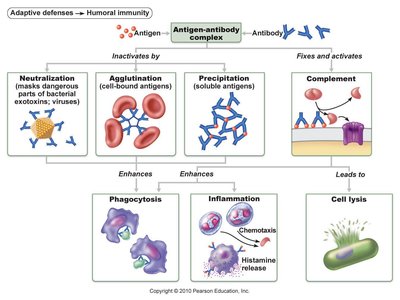
Antibodies inactivate and tag antigens for destruction by neutralization, agglutination, precipitation, and complement fixation.
Monoclonal Antibodies
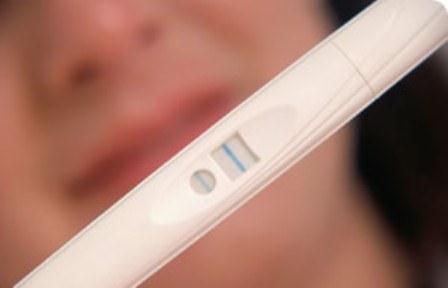
Monoclonal antibodies are produced by hybridomas (fusion of tumor cell and B cell) and are used in research, diagnostics, and treatment.
Cellular Immunity
T Cell Types and Functions
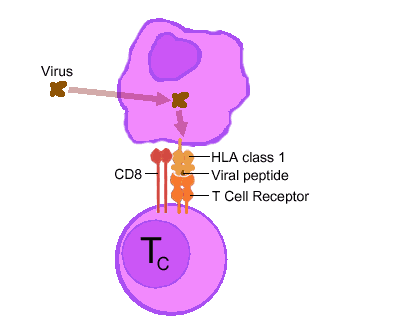
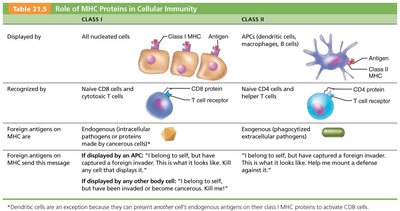
T cells defend against intracellular antigens. CD4 cells become helper or regulatory T cells, while CD8 cells become cytotoxic T cells. Helper T cells activate both humoral and cellular arms.
MHC Proteins and Antigen Presentation
T cells recognize antigens only when presented on MHC proteins. Class I MHC is on all nucleated cells; Class II MHC is on APCs.
Homeostatic Imbalances of Immunity
Immunodeficiencies
Immunodeficiencies can be congenital or acquired, resulting in abnormal function or production of immune cells.
Autoimmune Diseases
Autoimmune diseases occur when the immune system attacks self-tissues, producing autoantibodies and sensitized T cells.
Hypersensitivities (Allergies)
Hypersensitivity reactions are immune responses to harmless antigens, causing tissue damage. Types include immediate, subacute, and delayed hypersensitivities.
Developmental Aspects of the Immune System
Immune System Development and Aging
Immune system stem cells develop in the liver and spleen early in life, then in bone marrow. With age, immune function declines, increasing susceptibility to disease.
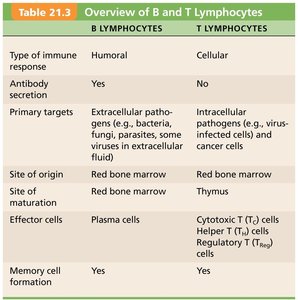
Summary Table: Overview of B and T Lymphocytes
Type of Immune Response | B Lymphocytes | T Lymphocytes |
|---|---|---|
Antibody Secretion | Yes | No |
Primary Targets | Extracellular pathogens | Intracellular pathogens and cancer cells |
Site of Origin | Red bone marrow | Red bone marrow |
Site of Maturation | Bone marrow | Thymus |
Effector Cells | Plasma cells | Cytotoxic, Helper, Regulatory T cells |
Memory Cell Formation | Yes | Yes |
