 뒤로
뒤로Chemistry Comes Alive: Foundations for Anatomy & Physiology
스터디 가이드 - 스마트 노트
 자료에 맞춘 맞춤형 노트, 핵심 정의, 예시, 맥락을 확장해 제공합니다.
Chemistry Comes Alive
Introduction to Chemistry in Physiology
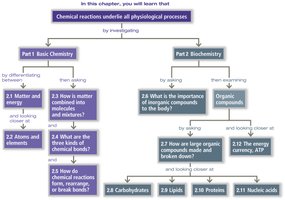
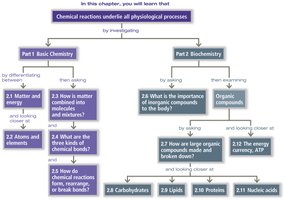
Chemistry forms the basis of all physiological processes in the human body. Understanding chemical principles is essential for comprehending how cells, tissues, and organs function.
Basic Chemistry: Covers matter, energy, atoms, molecules, and chemical bonds.
Biochemistry: Focuses on the chemical composition and reactions of living matter, including organic and inorganic compounds.
Matter and Energy
States of Matter and Types of Energy
Matter is anything that has mass and occupies space. It exists in three states: solid, liquid, and gas. Energy is the capacity to do work and can be converted between forms, though some is lost as heat.
States of Matter: Solid (definite shape and volume), Liquid (definite volume, changeable shape), Gas (changeable shape and volume).
Types of Energy: Kinetic (in action), Potential (stored), Chemical (in bonds), Electrical (charged particles), Mechanical (moving matter), Radiant (waves).
Energy Conversion: Energy conversion is inefficient; some energy is lost as heat, contributing to body temperature.
Composition of Matter
Elements and Atoms
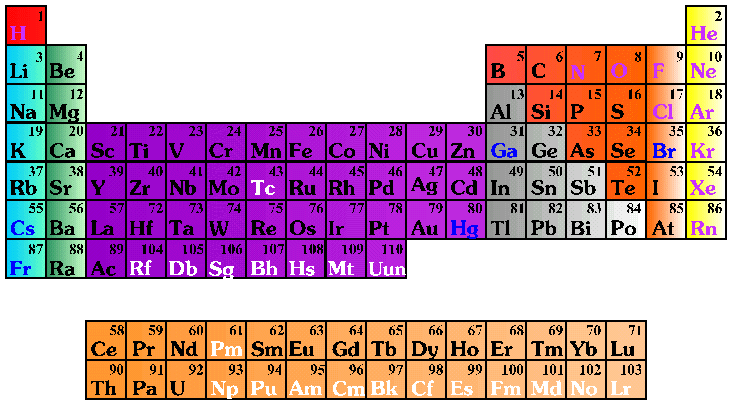
Elements are unique substances that cannot be broken down by ordinary chemical means. Atoms are the smallest units of elements, composed of protons, neutrons, and electrons.
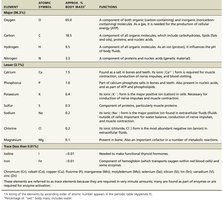
Major Elements: Oxygen, Carbon, Hydrogen, Nitrogen (96% of body mass).
Lesser Elements: Calcium, Phosphorus, Potassium, Sulfur, Sodium, Chlorine, Magnesium, Iron (3.9% of body mass).
Trace Elements: Required in minute amounts for functional purposes.
Element | Symbol | Approx. % Body Mass | Function |
|---|---|---|---|
Oxygen | O | 65.0 | Component of water and organic molecules; needed for cellular energy production |
Carbon | C | 18.5 | Component of all organic molecules |
Hydrogen | H | 9.5 | Component of water and most organic molecules |
Nitrogen | N | 3.2 | Component of proteins and nucleic acids |
Calcium | Ca | 1.5 | Found in bones and teeth; required for muscle contraction |
Phosphorus | P | 1.0 | Component of nucleic acids and ATP |
Potassium | K | 0.4 | Necessary for nerve impulse conduction |
Sulfur | S | 0.3 | Component of proteins |
Sodium | Na | 0.2 | Major extracellular cation |
Chlorine | Cl | 0.2 | Major extracellular anion |
Magnesium | Mg | 0.1 | Present in bones; important for metabolic reactions |
Iron | Fe | 0.1 | Component of hemoglobin |
Atomic Structure
Subatomic Particles and Models
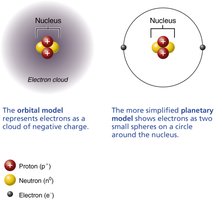
Atoms consist of a nucleus containing protons and neutrons, with electrons orbiting the nucleus. The number of protons determines the atomic number and the element's identity.
Protons: Positive charge, located in nucleus.
Neutrons: No charge, located in nucleus.
Electrons: Negative charge, orbiting nucleus.
Isotopes: Atoms with variable neutron numbers.
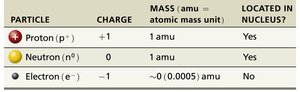
Particle | Charge | Mass (amu) | Located in Nucleus? |
|---|---|---|---|
Proton (p+) | +1 | 1 | Yes |
Neutron (n0) | 0 | 1 | Yes |
Electron (e-) | -1 | ~0 (0.0005) | No |
Molecules, Compounds, Mixtures, and Solutions
Definitions and Examples
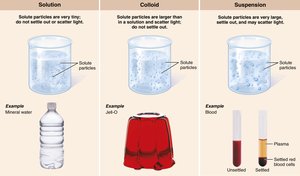
Molecules are formed by two or more atoms held together by chemical bonds. Compounds are molecules composed of different kinds of atoms. Mixtures are physical combinations of substances, while solutions are homogeneous mixtures.
Molecule: O2 (oxygen gas)
Compound: H2O (water), CO2 (carbon dioxide)
Mixture: Blood, cytosol
Solution: Sugar dissolved in water
Colloid: Jell-O, cytosol
Suspension: Sand in water, blood
Chemical Bonds
Types of Chemical Bonds
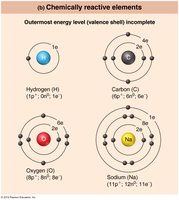
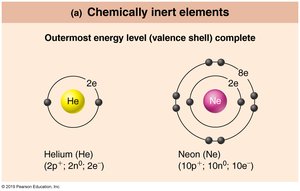
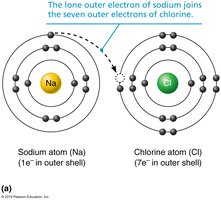
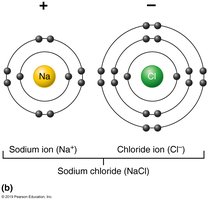
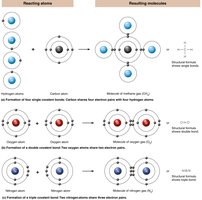
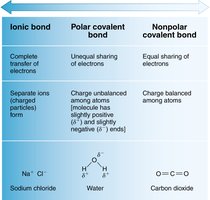
Chemical bonds are formed by interactions between electrons in the outermost energy levels (valence shells) of atoms. The main types are ionic, covalent, and hydrogen bonds.
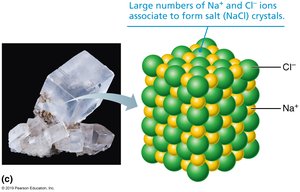
Ionic Bonds: Formed by transfer of electrons; results in charged ions (cations and anions).
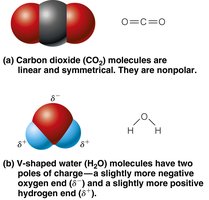
Covalent Bonds: Formed by sharing electrons; can be polar (unequal sharing) or nonpolar (equal sharing).
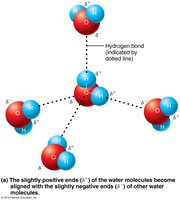
Hydrogen Bonds: Weak attractions between electropositive hydrogen and electronegative atoms; important for water properties and molecular structure.
Chemical Reactions
Types and Patterns of Chemical Reactions
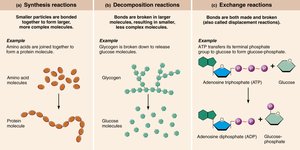
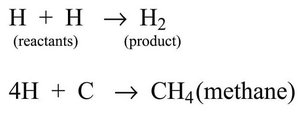
Chemical reactions involve the formation, rearrangement, or breaking of chemical bonds. They are represented by chemical equations and classified as synthesis, decomposition, or exchange reactions.
Synthesis (Combination): Building larger molecules from smaller ones.
Decomposition: Breaking down larger molecules into smaller ones.
Exchange (Displacement): Parts of molecules are exchanged.
Biochemistry: Organic and Inorganic Compounds
Organic vs. Inorganic Compounds
Biochemistry studies the chemical composition and reactions of living matter. Organic compounds contain carbon and are typically large, while inorganic compounds do not contain carbon.
Organic Compounds: Carbohydrates, lipids, proteins, nucleic acids.
Inorganic Compounds: Water, salts, acids, bases.
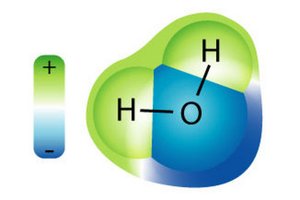
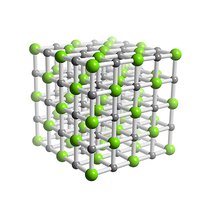
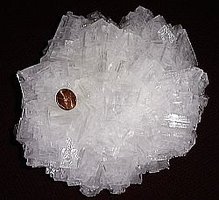
Inorganic Compounds: Water, Salts, Acids, and Bases
Properties and Functions
Water is the most important inorganic compound in living organisms, making up 60–80% of cell volume. Salts, acids, and bases are vital for physiological functions and maintaining homeostasis.
Water: High heat capacity, high heat of vaporization, polar solvent, reactivity, cushioning.
Salts: Ionic compounds, electrolytes, important for nerve and muscle function.
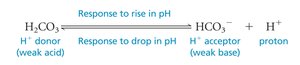
Acids and Bases: Acids release H+ (proton donors), bases release OH- (proton acceptors).
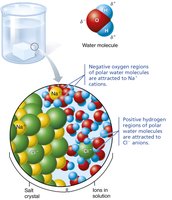
Acid-Base Balance and Buffers
pH Scale and Buffer Systems
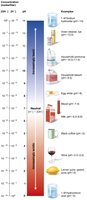
The pH scale measures the concentration of hydrogen ions in a solution. Buffers help maintain pH stability in body fluids by converting strong acids or bases into weak ones.
Acidic Solutions: pH 0–6.99, higher H+ concentration.
Basic (Alkaline) Solutions: pH 7.01–14, lower H+ concentration.
Neutral Solutions: pH 7.00, equal H+ and OH- concentrations.
Buffer Systems: Carbonic acid-bicarbonate system resists pH changes in blood.
Organic Compounds: Macromolecules
Structure and Function
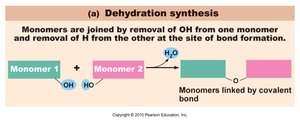
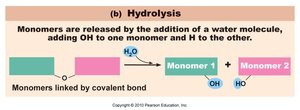
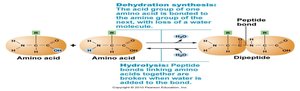
Organic macromolecules are unique to living systems and include carbohydrates, lipids, proteins, and nucleic acids. They are often polymers formed by dehydration synthesis and broken down by hydrolysis.
Carbohydrates: Energy storage and structural support.
Lipids: Energy storage, membrane structure, signaling.
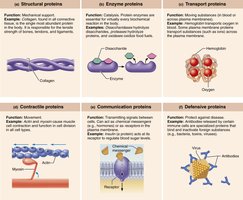
Proteins: Structure, function, enzymes.
Nucleic Acids: Genetic information and expression.
Carbohydrates
Classification and Functions
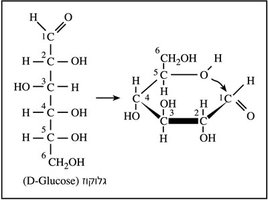
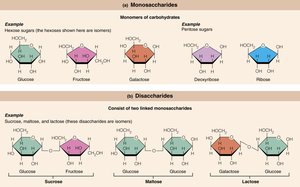
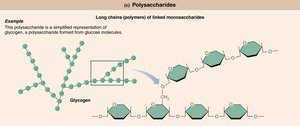
Carbohydrates are composed of carbon, hydrogen, and oxygen in a 1:2:1 ratio. Their primary function is to supply cellular energy. They are classified as monosaccharides, disaccharides, and polysaccharides.
Monosaccharides: Simple sugars (glucose, galactose).
Disaccharides: Double sugars (lactose, sucrose).
Polysaccharides: Polymers of simple sugars (glycogen).
Lipids
Types and Functions
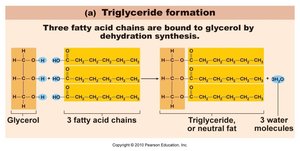
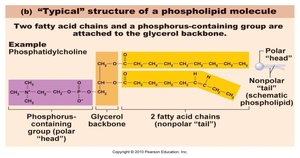
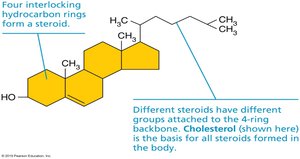
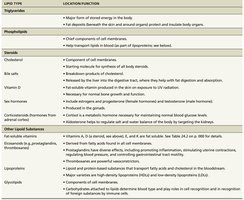
Lipids are hydrophobic molecules composed of carbon, hydrogen, and oxygen. They include triglycerides, phospholipids, steroids, and eicosanoids, each with distinct functions in the body.
Triglycerides: Energy storage, insulation, protection.
Phospholipids: Membrane structure, amphipathic properties.
Steroids: Hormones, membrane structure (cholesterol).
Eicosanoids: Signaling molecules (prostaglandins).
Proteins
Structure and Levels of Organization
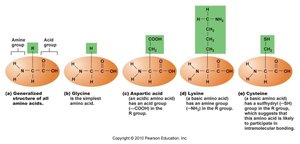
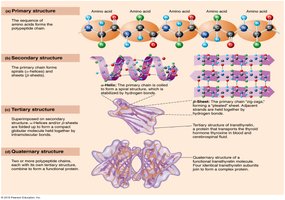
Proteins are polymers of amino acids, each containing an amino group, carboxyl group, and a unique R group. Protein structure is organized into four levels: primary, secondary, tertiary, and quaternary.
Primary Structure: Sequence of amino acids.
Secondary Structure: Alpha helices and beta sheets.
Tertiary Structure: Folding of secondary structures.
Quaternary Structure: Multiple polypeptide chains.
Fibrous Proteins: Structural, water-insoluble.
Globular Proteins: Functional, water-soluble.
Protein Denaturation
Effects of Environmental Changes
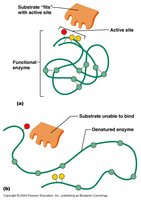
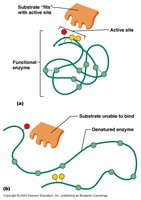
Protein denaturation involves the loss of structure and function due to changes in pH or temperature. It is reversible if conditions are restored, but irreversible if the structure is severely damaged.
Denaturation: Disruption of active sites, loss of function.
Reversibility: Possible if conditions return to normal.
Irreversibility: Permanent loss of structure (e.g., cooked egg).
Enzymes
Biological Catalysts
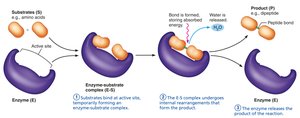
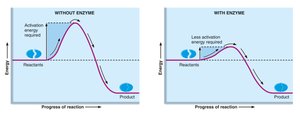
Enzymes are globular proteins that act as biological catalysts, lowering activation energy and increasing reaction speed. They are specific to substrates and often require cofactors or coenzymes.
Holoenzyme: Apoenzyme (protein) + cofactor (vitamin/coenzyme).
Mechanism: Enzyme binds substrate, forms product at lower activation energy, releases product.
Enzyme Names: Usually end in -ase (e.g., hydrolase, oxidase).
Nucleic Acids
DNA and RNA Structure and Function
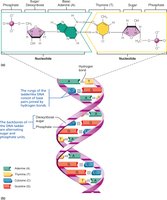
Nucleic acids are polymers of nucleotides, each containing a nitrogenous base, pentose sugar, and phosphate group. DNA and RNA are the two major classes, responsible for genetic information and protein synthesis.
DNA: Double-stranded, contains A, G, C, T; stores genetic information.
RNA: Single-stranded, contains A, G, C, U; involved in protein synthesis.

Adenosine Triphosphate (ATP)
Cellular Energy Currency
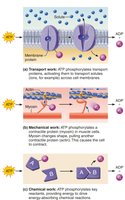
ATP is an adenine-containing nucleotide with three phosphate groups. It is the primary source of immediately usable energy for cellular processes.
Phosphorylation: Transfer of phosphate groups to energize molecules.
ATP Cycle: ATP → ADP → AMP; energy released during phosphate bond breakage.
Summary and Take-Home Messages
Physiology requires an understanding of chemistry: atoms, energy, bonds, and chemical reactions.
Mixtures, solutions, colloids, and suspensions are important for cellular function.
Water is essential for biological activity and homeostasis.
Buffers maintain pH stability in body fluids.
Carbohydrates, lipids, proteins, and nucleic acids are key macromolecules for structure, energy, and function.
Enzymes lower activation energy, facilitating biochemical reactions.
DNA and RNA are responsible for genetic information and protein synthesis.
ATP is the energy currency of the cell.
