 뒤로
Eukaryotic Microorganisms: Protozoa and Fungi in Human Disease
스터디 가이드 - 스마트 노트
 자료에 맞춘 맞춤형 노트, 핵심 정의, 예시, 맥락을 확장해 제공합니다.
Eukaryotic Microorganisms
Parasites and Hosts
Eukaryotic microorganisms include a variety of parasites that live at the expense of their host organisms. Parasitic infections account for a significant proportion of global mortality, with approximately 25% of deaths worldwide attributed to these infections.
Definitive host: The organism in which the adult, sexual stage of the parasite occurs.
Intermediate host: The organism that harbors the immature, asexual stage of the parasite.
Protozoa: Classification by Motility
Protozoa are single-celled eukaryotes classified based on their mode of locomotion. Understanding their motility is essential for identifying and studying their role in human disease.
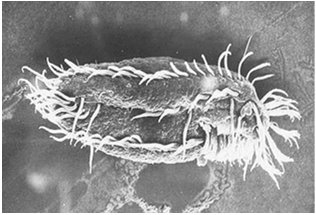
Ciliated protozoa: Move using hair-like structures called cilia.
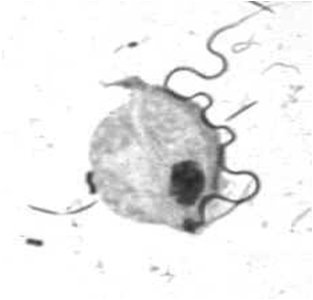
Flagellated protozoa: Move using whip-like structures called flagella.
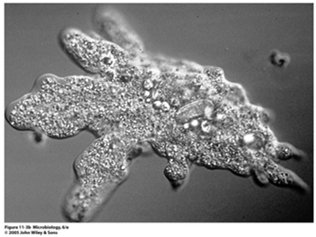
Amoebas: Move by extending pseudopods (false feet).
Non-motile protozoa: Lack active movement mechanisms.
Protozoan Diseases
Giardiasis
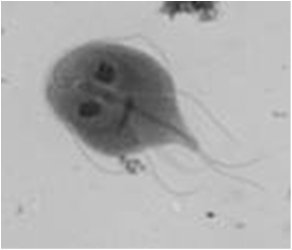
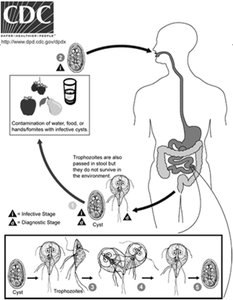
Giardiasis is a common protozoan disease caused by Giardia lamblia, an ancient eukaryote first observed by Leeuwenhoek. It is a flagellated protozoan with two distinct forms:
Trophozoite: The active, motile form found in the intestines of mammals.
Cyst: The inactive, resistant, and infective form passed in feces and capable of persisting in water.
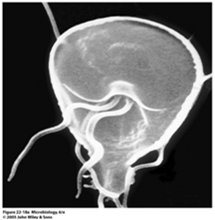
Reservoirs: Contaminated water and infected mammals (including humans, dogs, cats, cattle, beavers, and deer).
Transmission: Fecal-oral route via contaminated water, food, or direct fecal contact (e.g., diapers, hands). The infective dose can be as low as 10 cysts.
Pathogenicity: Giardia uses an adhesive disk to attach to the intestinal wall and feeds on mucus, causing symptoms such as copious, frothy diarrhea, weight loss, and sulfurous flatulence.
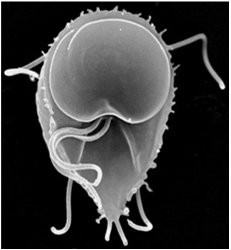
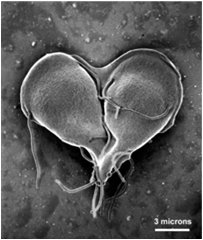
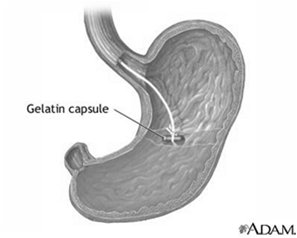
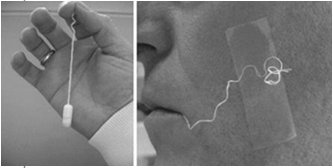
Diagnosis: Fecal sample microscopy to detect cysts and trophozoites, though they may be difficult to find. The string test is another diagnostic method, where a gelatin capsule attached to a string is swallowed and later retrieved for analysis.
Treatment: Oral medication; often self-limiting but can be chronic in immunocompromised individuals.
Prevention: Avoid contaminated water, practice handwashing, and treat water by boiling or filtering (cysts are resistant to chlorine/iodine).
Distribution: Approximately 7% prevalence in the U.S. (many asymptomatic carriers), 20-30% in developing countries, with outbreaks common in daycare settings.
Toxoplasmosis
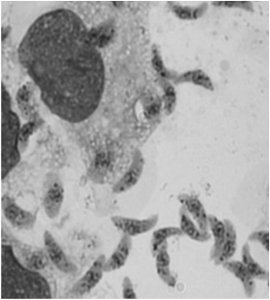
Toxoplasmosis is caused by Toxoplasma gondii, a non-motile protozoan. The domestic cat is the definitive host, while other animals (humans, mice, cows, pigs) serve as intermediate hosts.
Transmission: Humans acquire infection by ingesting cat fecal material or consuming undercooked meat or unwashed produce. The latter is the most common route in the U.S.
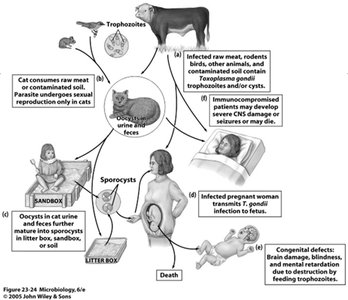
Pathogenesis: The organism spreads to many tissues and is often walled off by host defenses, persisting for years, especially in the brain. If infection occurs during pregnancy, it can cross the placenta and cause congenital defects.
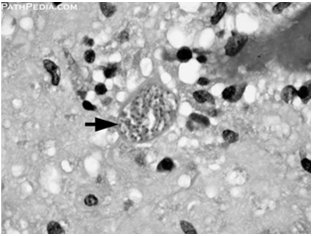
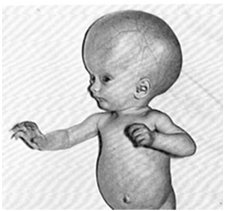
Symptoms: Usually mild, with swollen lymph nodes. In pregnancy, infection can cause miscarriage or birth defects (cognitive impairment, vision loss, seizures). Immunocompromised individuals may experience reactivation, leading to encephalitis or death.
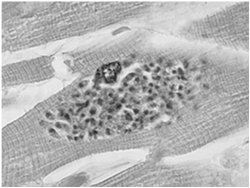
Diagnosis: Blood test for antibodies or direct observation of parasites in blood/tissues.
Treatment: No treatment for congenital cases; medications available for infected persons.
Prevention: Avoid raw meat and cat litter, especially if pregnant. If pregnant and antibody-positive, the risk is reduced.
In cats: Most are asymptomatic, treated with antibiotics, and only shed cysts for a few days in their life. If antibody-positive, cats are immune and noninfectious; cysts are not found on fur.

Fungi and Human Disease
Classification of Human Fungal Diseases
Fungal diseases in humans are classified based on the depth of infection:
Superficial: Affect skin, hair, and nails.
Subcutaneous: Occur below the skin.
Systemic: Invade internal organs; often opportunistic in immunocompromised individuals.
Ringworm (Dermatophytosis)
Ringworm is caused by dermatophytes, a group of fungi affecting various body sites. The term "tinea" refers to the specific location:
Tinea capitis: Scalp
Tinea unguium: Nails
Tinea cruris: Groin ("jock itch")
Tinea pedis: Feet ("athlete's foot")
Tinea barbae: Beard ("barber's itch")
Reservoirs: Common in animals and infected people.
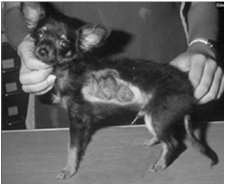
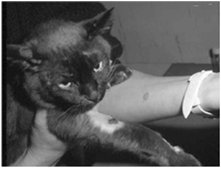
Transmission: Contact with contaminated objects (fomites) such as combs, shoes, clothing, nail clippers, and shower stalls.
Pathogenesis: Fungi contaminate minor scrapes, causing superficial infection.
Symptoms: Vary from red, scaly, itchy patches to bald spots and thickened nails.
Diagnosis: Based on skin appearance and microscopic examination of skin scrapings.
Treatment: Topical antifungal ointments; oral medication for widespread or nail infections.
Prevention: Avoid contact with contaminated objects.
