 뒤로
Fluid, Electrolyte, and Acid-Base Balance: Study Notes for Anatomy & Physiology
스터디 가이드 - 스마트 노트
 자료에 맞춘 맞춤형 노트, 핵심 정의, 예시, 맥락을 확장해 제공합니다.
Fluid, Electrolyte, and Acid-Base Balance
Body Water Content and Distribution
Water is the most abundant component of the human body, playing a critical role in physiological processes. The percentage of water in the body varies with age, sex, and body composition.
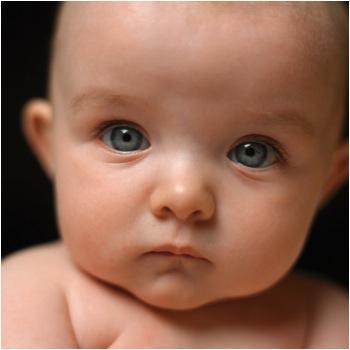
At birth: A baby's weight is approximately 75% water.
Adult men: 55-60% water.
Adult women: Slightly less water due to higher adipose tissue content, which contains little water.
Fluid Compartments
Body water is distributed between intracellular and extracellular compartments:
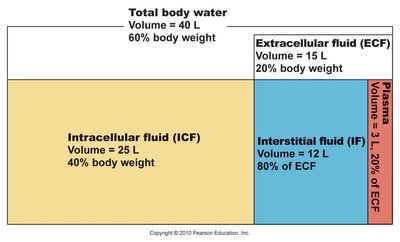
Intracellular fluid (ICF): Fluid within cells, about 40% of body weight.
Extracellular fluid (ECF): Fluid outside cells, about 20% of body weight, including interstitial fluid and plasma.
Interstitial fluid (IF): Fluid between cells, 80% of ECF.
Plasma: Fluid component of blood, 20% of ECF.
Water Movement and Fluid Balance
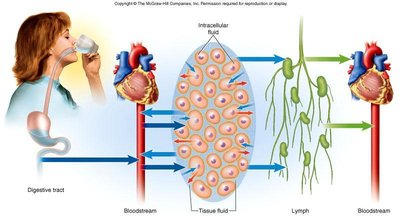
Water moves between compartments to maintain homeostasis, influenced by electrolytes and osmotic gradients.
Electrolytes are the principal determinants of water distribution and total water content.
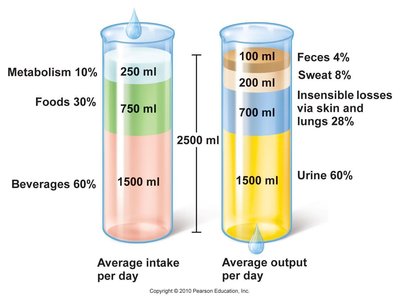
Water intake and output must be balanced to prevent dehydration or fluid overload.
Water Loss and Environmental Factors
Water loss varies with environmental conditions and activity:
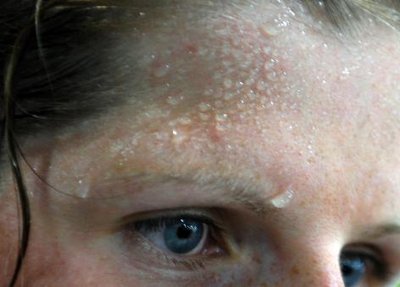
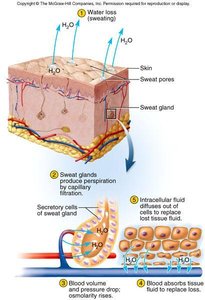
Hot air or heavy work: Increased perspiration.
Cold, dry air or heavy work: Increased respiratory water loss.
Vasoconstriction: Conserves heat, increases blood pressure, decreases ADH, increases urine output.

Dehydration, Thirst, and Rehydration
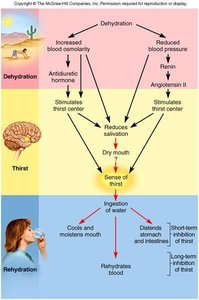
Dehydration occurs when water loss exceeds intake, leading to increased blood osmolarity and decreased blood volume and pressure. The body responds by activating thirst mechanisms.
Thirst center in the hypothalamus is stimulated.
Salivation is inhibited via sympathetic signals.
Rehydration restores blood osmolarity and volume.
Satiation Mechanisms
Thirst is inhibited by both short-term and long-term mechanisms:
Short-term: Cooling and moistening of the mouth, distension of stomach and intestine.
Long-term: Rehydration of blood decreases blood osmolarity, increases saliva, and stops thirst.
Regulation of Water Output
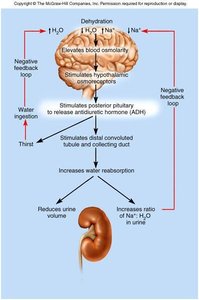
Water output is regulated primarily by sodium (Na+) levels and the action of antidiuretic hormone (ADH).
Na+ reabsorption or excretion: Water follows sodium, affecting urine volume.
ADH: Most influential in regulating urine concentration; secretion is stimulated by dehydration.
Disorders of Water Balance
Fluid Deficiency
Fluid deficiency can result from volume depletion (hypovolemia) or dehydration:
Volume depletion: Total body water decreases, osmolarity remains normal (e.g., hemorrhage, burns, vomiting, diarrhea).
Dehydration: Total body water decreases, osmolarity rises (e.g., lack of drinking water, diabetes, sweating, diuretics).
Infants are more vulnerable to dehydration.
Serious effects include circulatory shock, neurological dysfunction, and infant mortality.

Fluid Excess
Fluid excess is less common due to effective kidney regulation:
Volume excess: Both Na+ and water are retained (e.g., aldosterone hypersecretion, renal failure).
Hypotonic hydration (water intoxication): More water than Na+ is retained or ingested, leading to hypotonic blood and cellular swelling.
Serious effects include pulmonary and cerebral edema.

Electrolytes
Electrolytes are ions that play essential roles in metabolism, cell membrane potentials, osmolarity, and water distribution.
Major cations: Na+, K+, Ca2+, H+
Major anions: Cl-, HCO3-, PO43-
Acid-Base Balance
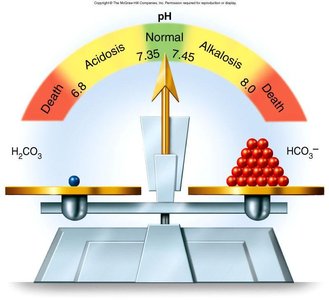
Acid-base balance is vital for homeostasis, as metabolic processes continually produce acids. Enzymes are pH-sensitive, and the normal pH range of extracellular fluid (ECF) is 7.35 to 7.45.
Acids lower pH.
Bases raise pH.
Metabolism produces acids such as lactic, phosphoric, fatty, ketones, and carbonic acids.
Disorders of Acid-Base Balance
Acid-base disorders are classified as respiratory or metabolic:
Respiratory acidosis: Excess CO2 (hypercapnia).
Respiratory alkalosis: Low CO2 (hypocapnia).
Metabolic acidosis: Increased production of organic acids (e.g., lactic acid, ketones), ingestion of acidic drugs, or loss of base.
Metabolic alkalosis: Overuse of bicarbonates or loss of acid (e.g., chronic vomiting).
Respiratory Control of pH
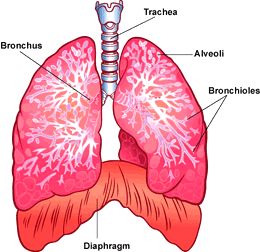
The respiratory system adjusts ventilation to regulate pH:
Hypercapnia: Increased ventilation expels CO2 and raises pH.
Hypocapnia: Reduced ventilation allows CO2 to accumulate and lowers pH.
Renal Control of pH
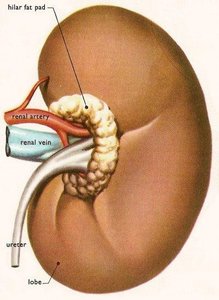
The kidneys provide a slow but powerful buffer system for acid-base balance:
Acidosis: Increased H+ secretion.
Alkalosis: Increased bicarbonate secretion.
Renal mechanisms are effective for imbalances lasting days or longer.
Summary Table: Fluid Compartments
Compartment | Volume (L) | % Body Weight |
|---|---|---|
Intracellular Fluid (ICF) | 25 | 40% |
Extracellular Fluid (ECF) | 15 | 20% |
Interstitial Fluid (IF) | 12 | 80% of ECF |
Plasma | 3 | 20% of ECF |
Summary Table: Major Electrolytes
Cation | Anion |
|---|---|
Na+ | Cl- |
K+ | HCO3- |
Ca2+ | PO43- |
H+ |
Key Equations
Osmolarity:
pH:
Additional info: Expanded explanations and tables were added for completeness and clarity, based on standard Anatomy & Physiology textbook content.
