 뒤로
The Endocrine System: Hormones, Glands, and Regulation
스터디 가이드 - 스마트 노트
 자료에 맞춘 맞춤형 노트, 핵심 정의, 예시, 맥락을 확장해 제공합니다.
The Endocrine System
Overview of Endocrine Communication
The endocrine system is a major regulatory system in the body, responsible for the production and release of hormones that coordinate and regulate various physiological processes. Hormones are chemical messengers secreted by endocrine glands and transported through the bloodstream to target organs.
Mechanisms of Intercellular Communication
Direct and Paracrine Communication
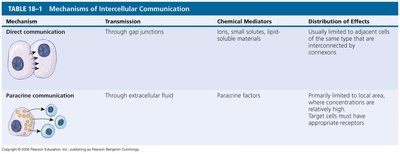
Direct Communication: Occurs through gap junctions, allowing ions, small solutes, and lipid-soluble materials to pass directly between adjacent cells. This mechanism is usually limited to cells of the same type that are interconnected by connexons.
Paracrine Communication: Involves the release of paracrine factors into the extracellular fluid, affecting nearby cells. The effects are primarily local, and target cells must have appropriate receptors.
Classification of Hormones
Hormone Classes and Examples
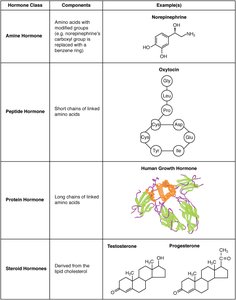
Hormones can be classified based on their chemical structure:
Hormone Class | Components | Examples |
|---|---|---|
Amine Hormone | Amino acids with modified groups (e.g., norepinephrine) | Norepinephrine |
Peptide Hormone | Short chains of linked amino acids | Oxytocin |
Protein Hormone | Long chains of linked amino acids | Human Growth Hormone |
Steroid Hormones | Derived from cholesterol | Testosterone, Progesterone |
The Pituitary Gland and Hypothalamus
Anatomy and Histology
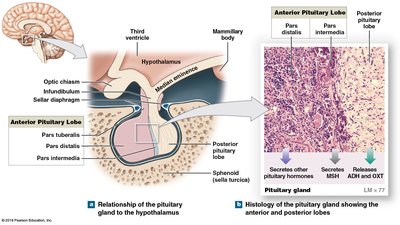
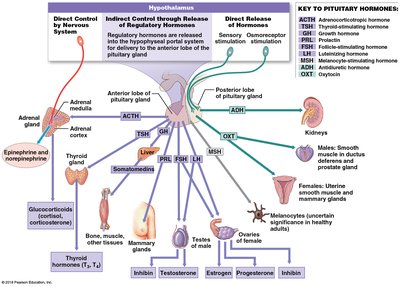
The pituitary gland, located at the base of the brain, is closely associated with the hypothalamus. It consists of two main lobes: the anterior pituitary (adenohypophysis) and the posterior pituitary (neurohypophysis). The anterior lobe secretes hormones such as ACTH, TSH, GH, PRL, FSH, and LH, while the posterior lobe releases ADH and oxytocin.
Regulation of Endocrine Organs
Typical Patterns of Regulation
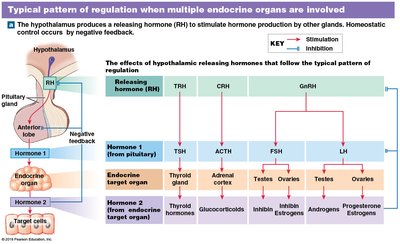
The hypothalamus regulates the anterior pituitary through releasing hormones (RH), which in turn stimulate the secretion of hormones from target endocrine glands. This process is controlled by negative feedback mechanisms to maintain homeostasis.
Example: The hypothalamus releases TRH (thyrotropin-releasing hormone), which stimulates the anterior pituitary to release TSH (thyroid-stimulating hormone), leading to the production of thyroid hormones by the thyroid gland.
Hypothalamic and Pituitary Hormones
Major Hormones and Target Organs
The hypothalamus and pituitary gland coordinate the release of several key hormones that regulate various target organs throughout the body. These hormones include:
ACTH (Adrenocorticotropic hormone): Stimulates the adrenal cortex to release glucocorticoids.
TSH (Thyroid-stimulating hormone): Stimulates the thyroid gland to produce thyroid hormones.
GH (Growth hormone): Stimulates growth in tissues such as bone and muscle.
PRL (Prolactin): Stimulates milk production in mammary glands.
FSH (Follicle-stimulating hormone) and LH (Luteinizing hormone): Regulate reproductive processes in ovaries and testes.
ADH (Antidiuretic hormone): Promotes water reabsorption in the kidneys.
OXT (Oxytocin): Stimulates uterine contractions and milk ejection.
Growth Hormone Regulation
Feedback Mechanisms
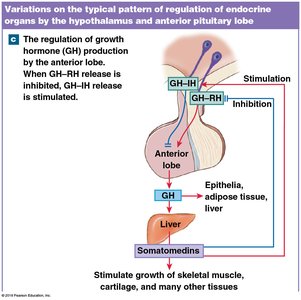
Growth hormone (GH) secretion is regulated by the hypothalamus through the release of growth hormone-releasing hormone (GH-RH) and growth hormone-inhibiting hormone (GH-IH). GH stimulates the liver to produce somatomedins, which promote growth in skeletal muscle, cartilage, and other tissues. Negative feedback from somatomedins inhibits further GH release.
Summary Table: Mechanisms of Intercellular Communication
Mechanism | Transmission | Chemical Mediators | Distribution of Effects |
|---|---|---|---|
Direct communication | Through gap junctions | Ions, small solutes, lipid-soluble materials | Usually limited to adjacent cells of the same type that are interconnected by connexons |
Paracrine communication | Through extracellular fluid | Paracrine factors | Primarily limited to local area, where concentrations are relatively high; target cells must have appropriate receptors |
Key Terms
Hormone: A chemical messenger secreted by endocrine glands that regulates physiological processes.
Endocrine gland: A gland that releases hormones directly into the bloodstream.
Negative feedback: A regulatory mechanism in which a change in a physiological variable triggers a response that counteracts the initial change.
Target cell: A cell with receptors specific for a particular hormone.
