 뒤로
The Endocrine System: Structure, Function, and Hormonal Regulation
스터디 가이드 - 스마트 노트
 자료에 맞춘 맞춤형 노트, 핵심 정의, 예시, 맥락을 확장해 제공합니다.
The Endocrine System
Overview of the Endocrine System
The endocrine system is a network of glands that secrete hormones directly into the bloodstream to regulate various physiological processes. These hormones control growth, metabolism, development, tissue function, and homeostasis. The system includes major glands such as the pituitary, thyroid, parathyroid, adrenal, pancreas, gonads, and pineal gland.
Hormones and Their Functions
Growth Hormone (GH, Somatotropin)
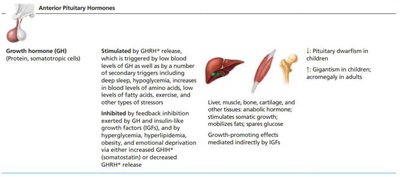
Growth hormone is produced by the anterior pituitary and is essential for growth, metabolism, and energy homeostasis. It acts directly on the liver, adipose tissue, and skeletal muscle, and indirectly promotes growth via insulin-like growth factor 1 (IGF-1).
Direct effects: Stimulates protein synthesis, increases fat breakdown, and raises blood glucose.
Indirect effects: IGF-1 stimulates bone and tissue growth.
Clinical relevance: Deficiency leads to dwarfism; excess causes gigantism/acromegaly.
Adrenocorticotropic Hormone (ACTH, Corticotropin)
ACTH stimulates the adrenal cortex to produce cortisol and adrenal androgens. It is crucial for stress and immune responses.
Target: Adrenal cortex (zona fasciculata for cortisol, zona reticularis for androgens).
Functions: Regulates metabolism, immune suppression, and blood pressure.
Clinical relevance: Excess leads to Cushing's disease.
Thyroid-Stimulating Hormone (TSH, Thyrotropin)
TSH regulates thyroid gland growth and thyroid hormone production (T3 and T4). It is released in response to TRH from the hypothalamus.
Target: Thyroid gland (follicular cells).
Functions: Stimulates production of T3 and T4, which increase metabolic rate and affect nearly all cells.
Clinical relevance: Hypothyroidism causes myxedema; hyperthyroidism can mimic Graves' disease.

Antidiuretic Hormone (ADH, Vasopressin)
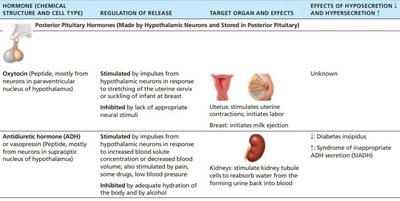
ADH regulates water balance and blood pressure by acting on the kidneys and vascular smooth muscle.
Target: Kidneys (increase water reabsorption), vascular smooth muscle (vasoconstriction).
Functions: Prevents dehydration, maintains blood pressure.
Clinical relevance: Deficiency causes diabetes insipidus.

Endocrine Glands and Their Locations
Pineal Gland
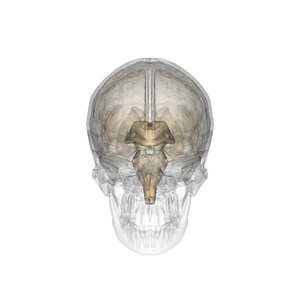
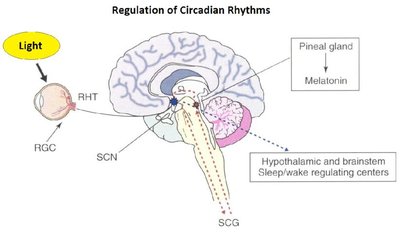
The pineal gland is located near the center of the brain and secretes melatonin, which regulates sleep and circadian rhythms. Melatonin release is stimulated by darkness and inhibited by light.
Function: Regulates sleep/wake cycles.
Target: Brain and other tissues.
Thyroid Gland
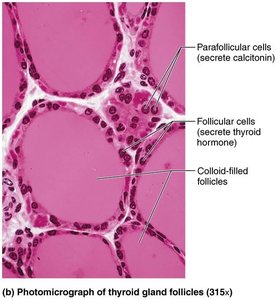
The thyroid gland is located in the anterior neck and contains follicular cells (secrete T3 and T4) and parafollicular cells (secrete calcitonin).
Follicular cells: Produce thyroid hormones (T3 and T4).
Parafollicular cells: Produce calcitonin, which lowers blood calcium.
Thyroid Hormones: Structure and Function
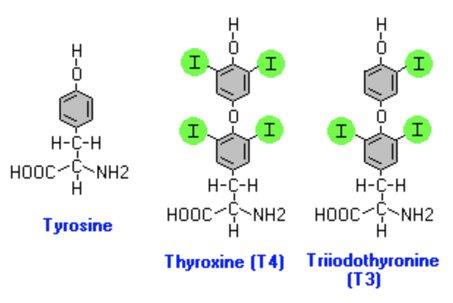
Thyroid hormones are derived from tyrosine and require iodine for synthesis. T4 (thyroxine) and T3 (triiodothyronine) differ in the number of iodine atoms.
T4: Four iodine atoms, produced by the thyroid gland.
T3: Three iodine atoms, formed by deiodination of T4 in tissues.
Functions: Increase basal metabolic rate, regulate growth, and support cardiovascular function.
Parathyroid Gland
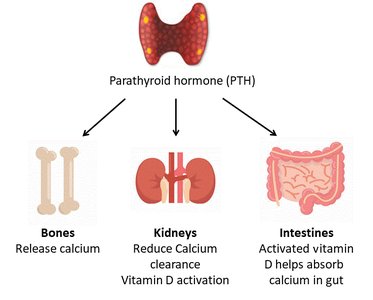
The parathyroid glands are located posterior to the thyroid gland and secrete parathyroid hormone (PTH), which is essential for calcium homeostasis.
Bone: Stimulates osteoclasts to release calcium.
Kidneys: Increases calcium reabsorption and activates vitamin D.
Intestines: Increases calcium absorption via activated vitamin D.
Thymus
The thymus is a lymphoid organ located in the mediastinum. It secretes thymulin, thymopoietin, and thymosin, which regulate T lymphocyte development and immune function.
Function: Maturation of T cells for adaptive immunity.
Adrenal Glands
The adrenal glands are located atop the kidneys and consist of two regions: the cortex and medulla. The cortex has three zones, each producing different hormones:
Zona glomerulosa: Produces mineralocorticoids (aldosterone).
Zona fasciculata: Produces glucocorticoids (cortisol).
Zona reticularis: Produces gonadocorticoids (androgens).
The adrenal medulla secretes catecholamines (epinephrine and norepinephrine) for the fight-or-flight response.
Pancreas
The pancreas is both an exocrine and endocrine organ. The endocrine portion consists of pancreatic islets:
Alpha cells: Secrete glucagon (raises blood glucose).
Beta cells: Secrete insulin (lowers blood glucose).
Delta cells: Secrete somatostatin (inhibits glucagon and insulin).
Gonads: Ovaries and Testes
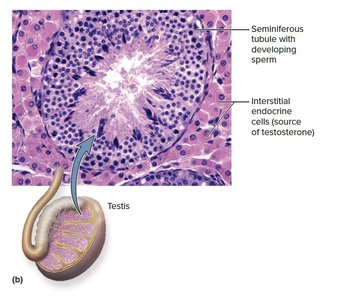
The gonads (ovaries and testes) have both gamete-producing and endocrine functions. Ovaries secrete estrogens and progesterone; testes produce testosterone.
Ovaries: Estrogens (estradiol) and progesterone regulate female secondary sex characteristics, menstrual cycle, and pregnancy.
Testes: Testosterone regulates male secondary sex characteristics, libido, and sperm production.
Hormonal Regulation and Feedback
Synergism and Hormonal Interactions
Hormones often act synergistically, amplifying their effects. For example, glucagon, growth hormone, catecholamines, and cortisol all increase blood glucose levels.
Synergism: Combined hormone action exceeds the sum of individual effects.
Summary Table: Endocrine Glands and Hormones
Gland | Hormone | Target Tissue | Stimulus for Release | Function |
|---|---|---|---|---|
Pineal | Melatonin | Brain | Darkness | Regulates circadian rhythm |
Anterior Pituitary | GH | Liver, muscle, bone | GHRH, low blood glucose | Growth, metabolism |
Anterior Pituitary | ACTH | Adrenal cortex | CRH, stress | Cortisol, androgens |
Anterior Pituitary | TSH | Thyroid gland | TRH, cold | T3/T4 production |
Posterior Pituitary | ADH | Kidneys | High blood osmolality | Water reabsorption |
Thyroid | T3/T4 | All cells | TSH | Metabolic rate |
Parathyroid | PTH | Bone, kidney, intestine | Low blood calcium | Increase blood calcium |
Adrenal Cortex | Aldosterone | Kidneys | Angiotensin II, K+ | Na+/K+ balance |
Adrenal Cortex | Cortisol | All cells | ACTH | Stress response |
Adrenal Medulla | Epinephrine | Heart, muscle | Sympathetic stimulation | Fight-or-flight |
Pancreas | Insulin | Muscle, adipose | High blood glucose | Lower blood glucose |
Pancreas | Glucagon | Liver | Low blood glucose | Raise blood glucose |
Ovaries | Estrogen | Various | FSH, LH | Female characteristics |
Testes | Testosterone | Various | LH | Male characteristics |
Clinical Applications
Hypothyroidism
Symptoms include cold intolerance, fatigue, weight gain, and goiter (enlarged thyroid due to sustained TSH stimulation from iodine deficiency).
Hormone Deficiencies and Disorders
GH deficiency: Dwarfism
ACTH excess: Cushing's disease
TSH deficiency: Hypothyroidism
ADH deficiency: Diabetes insipidus
Additional Information
Iodine: Essential for thyroid hormone synthesis; must be obtained from diet.
Kidneys: Produce calcitriol, erythropoietin, and renin (regulate calcium, red blood cell production, and blood pressure).
