 뒤로
Tissues and Membranes: Structure, Function, and Clinical Relevance
스터디 가이드 - 스마트 노트
 자료에 맞춘 맞춤형 노트, 핵심 정의, 예시, 맥락을 확장해 제공합니다.
Tissues and Membranes
Terminology and Word Roots
Understanding medical terminology is essential for studying anatomy and physiology. Many terms are derived from Greek and Latin roots, prefixes, and suffixes that describe tissue types, cell functions, and pathological conditions.
aden/o: gland
blast/o: immature cell
carcin/o: cancer, cancerous
chondr/o: cartilage
cyt/o: cell
fibr/o: fibers
hist/o, histi/o: tissue
oste/o: bone
plas/o: formation, development
-blast: immature
-cyte: cell
-oma: mass, tumor
-plasia, -plasm: formation, growth
meta-: beyond (e.g., metastasis)
Abbreviations: bx (biopsy), CA (cancer), chem (chemotherapy), CIS (carcinoma in situ), NED (no evidence of disease), prot (protocol)
Types of Tissues
Tissues are groups of cells with similar structure and function, combined to form organs and membranes. The four basic types are epithelial, connective, muscle, and nervous tissue.
Epithelial Tissue
Epithelial tissue covers surfaces, lines cavities, and forms glands. Cells are tightly joined, avascular, and attached to connective tissue via a basement membrane. Classification is based on cell layers and cell shape.
Simple: one layer
Stratified: multiple layers
Squamous: flat cells
Cuboidal: cube-shaped cells
Columnar: tall, narrow cells
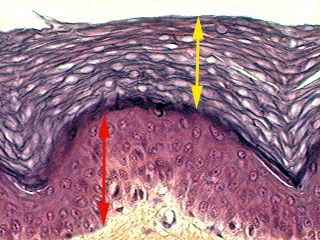
Stratified Squamous Epithelium
Multiple layers of closely packed cells, with the outermost layer flattened. Found in the epidermis and mucous membranes, providing protection against microorganisms.
Function: Protection (barrier)
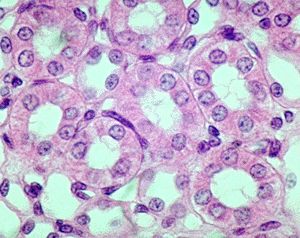
Simple Cuboidal Epithelium
Single layer of cube-shaped cells, often forming tubules (glands). Specialized for secretion.
Function: Secretion
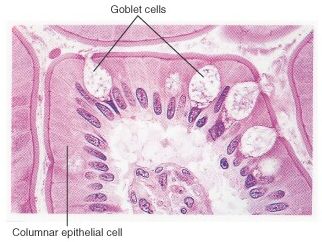
Simple Columnar Epithelium
Single layer of elongated, cylindrical cells lining the stomach, intestines, respiratory, and female reproductive tracts. Specialized for secretion and absorption.
Goblet Cells: Produce mucus for lubrication
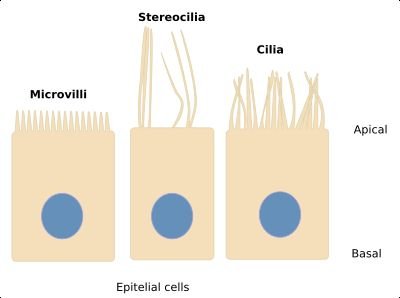
Cilia: Move substances over cell surface
Microvilli: Increase surface area for absorption
Pseudostratified Columnar Epithelium
Appears multi-layered due to irregular placement of nuclei, but is actually a single layer. Lines air passages and male reproductive system.
Function: Secretion and movement of mucus
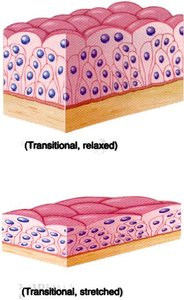
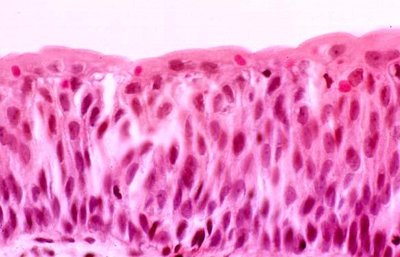
Transitional Epithelium
Stratified sheet with varying cell shapes, capable of stretching. Found in the bladder.
Function: Allows stretching under tension
Intercellular Connections
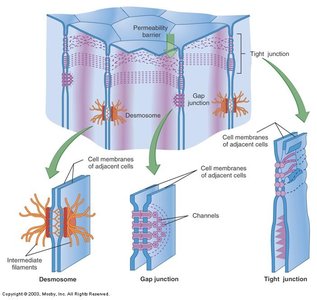
Specialized junctions connect epithelial cells:
Desmosomes: Anchoring junctions for mechanical stress
Gap Junctions: Channels for communication
Tight Junctions: Impermeable barriers
Connective Tissue
Connective tissue is the most abundant and varied tissue, providing support, protection, and transport. It consists of cells and an extracellular matrix made of fibers (collagen, elastin, reticular) and ground substance.
Fibrous (loose, dense)
Bone
Cartilage
Blood
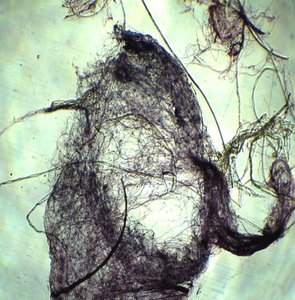
Loose Fibrous: Areolar Tissue
Contains tissue fluid, collagen, and elastin. Fibroblasts and macrophages are present. Acts as packing material under skin and mucous membranes.
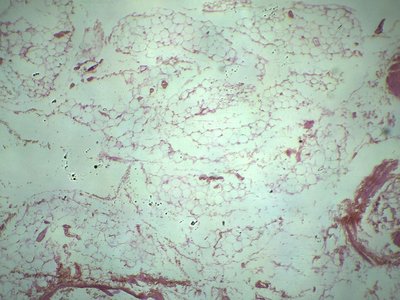
Loose Fibrous: Adipose Tissue
Mainly fat cells, stores energy, insulates, and cushions organs.
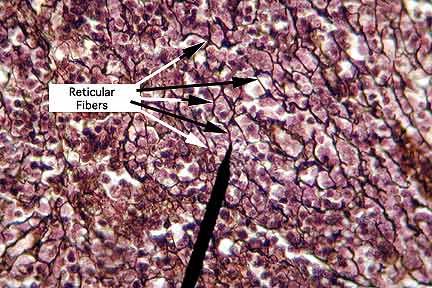
Loose Fibrous: Reticular Tissue
Three-dimensional web of reticular fibers, holds blood cells. Found in bone marrow, spleen, and lymph nodes.
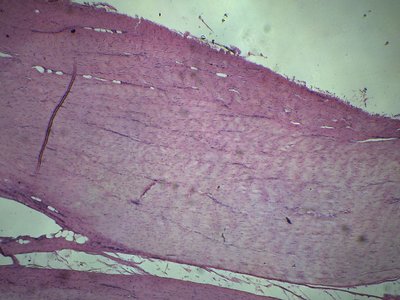
Dense Fibrous Tissue
Primarily collagen fibers and fibroblasts, providing strength and flexibility. Found in tendons, ligaments, and dermis.
Bone Tissue
Hard matrix with few cells. Osteoblasts form bone, osteocytes are mature bone cells. Two types: compact (dense, stores calcium, supports body) and spongy (contains red marrow, forms blood cells).
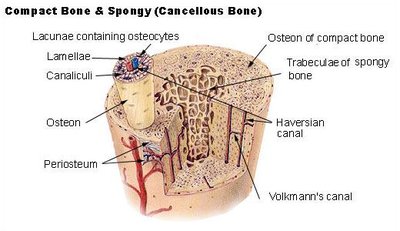
Spongy Bone
Located within the hollow center of compact bone, contains red bone marrow and reticular fibers.
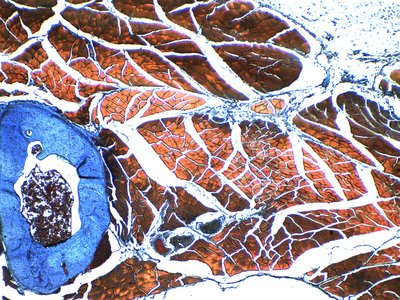
Cartilage
Strong, flexible matrix with few cells. Chondroblasts are active, chondrocytes are mature. Types include hyaline, fibrocartilage, and elastic cartilage.
Hyaline: Shiny, translucent, ends of bones
Fibrocartilage: Strongest, found in knee and vertebrae
Elastic: Flexible, found in ears
Blood
Liquid matrix, no fibers. Contains various cells produced in red bone marrow. Functions in transport and protection.
Muscle Tissue
Muscle tissue is specialized for contraction and movement. Contains contractile fibers and is well vascularized.
Skeletal Muscle: Striated, voluntary, attaches to bone, produces movement and heat
Cardiac Muscle: Striated, involuntary, found in heart, contracts to pump blood
Smooth Muscle: Non-striated, involuntary, forms walls of blood vessels and hollow organs
Nervous Tissue
Nervous tissue transmits impulses for sensation, movement, regulation, learning, and memory. Main cell is the neuron, supported by glial cells.
Neuron: Cell body (nucleus), axon (away from cell body), dendrites (toward cell body)
Membranes
Membranes are combinations of tissues forming thin sheets. Types include:
Cutaneous: Skin, stratified squamous epithelium over dense connective tissue
Serous: Moist membrane lining closed cavities and covering organs; secretes serous fluid
Mucous: Lines tracts opening to exterior; moist, traps particles, lubricates
Synovial: Lines spaces between bones and joints; secretes synovial fluid
Tissue Repair and Aging
Tissue Repair Steps
Inflammation: Capillaries become permeable, clot forms
Organization: Granulation tissue restores blood supply, fibroblasts generate collagen
Regeneration or Fibrosis: Tissue replaced by same type (regeneration) or scar tissue (fibrosis)
Effects of Aging
Tissue repair slows
Tissue becomes thinner, loses elasticity
Glands less active
Bones weaken
Muscle and nervous tissue atrophy
Neoplasms and Cancer
A neoplasm is a mass arising from normal tissue. Benign tumors grow slowly and are not cancerous; malignant tumors (cancer) grow rapidly, can metastasize, and are life-threatening.
Carcinomas: From epithelial tissue (90%)
Sarcomas: From connective tissue (5%)
Mixed Tissue Tumors: From both (rare)
Cancer Staging
Stage | Description |
|---|---|
Stage 0 | Abnormal cells present, not spread (carcinoma in situ) |
Stage I-III | Cancer present, higher number = larger tumor/more spread |
Stage IV | Cancer has spread to distant parts |
Warning Signals of Cancer
Change in bowel/bladder habits
Sore that does not heal
Unusual bleeding/discharge
Lump in breast or other body part
Chronic indigestion/difficulty swallowing
Obvious changes in wart/mole
Persistent coughing/hoarseness
Cancer Treatments and Prevention
Surgery: Remove or prevent
Radiation Therapy: Target tumor
Chemotherapy: Drugs target rapidly dividing cells
Immunotherapy: Stimulate immune system
Prevention: Self-exams, regular physicals, healthy lifestyle, avoid risk factors
