Ch. 24 Nutrition, Metabolism, and Energy Balance
Marieb - Human Anatomy & Physiology 11th Edition
Marieb, Hoehn11th EditionHuman Anatomy & PhysiologyISBN: 9780136874034당신이 사용하는 게 아니라요?교과서 변경
24장, 문제 2

The formation of glucose from glycogen is:
a. gluconeogenesis
b. glycogenesis
c. glycogenolysis
d. glycolysis

검증된 단계별 안내
1
Understand the key terms in the question: Glycogen is a stored form of glucose in the liver and muscles, and the question asks about the process of breaking it down to form glucose.
Review the definitions of the answer choices: (a) Gluconeogenesis refers to the formation of glucose from non-carbohydrate sources like amino acids or glycerol. (b) Glycogenesis is the process of forming glycogen from glucose. (c) Glycogenolysis is the breakdown of glycogen into glucose. (d) Glycolysis is the breakdown of glucose into pyruvate to produce energy.
Eliminate the incorrect options based on their definitions: Gluconeogenesis (a) and glycolysis (d) do not involve glycogen. Glycogenesis (b) is the opposite process of forming glycogen, not breaking it down.
Focus on the correct term: Glycogenolysis (c) is the process where glycogen is broken down into glucose-1-phosphate and then converted into glucose-6-phosphate, which can be used in metabolic pathways.
Conclude that the correct answer is the term describing the breakdown of glycogen to form glucose, which is glycogenolysis.

비슷한 문제에 대한 검증된 영상 답변:

이 영상 해법은 위 문제에 도움이 된다고 튜터들이 추천한 것입니다.
영상 길이:
2m

주요 개념

질문에 올바르게 답하기 위해 반드시 이해해야 하는 핵심 개념들은 다음과 같습니다.

Glycogenolysis

Glycogenolysis is the biochemical process through which glycogen, a stored form of glucose in the liver and muscles, is broken down into glucose molecules. This process is crucial for maintaining blood glucose levels during fasting or intense exercise, providing energy when needed. It involves the enzymatic cleavage of glycogen, releasing glucose-1-phosphate, which can then be converted to glucose-6-phosphate for energy production.

Glycogenesis

Glycogenesis is the synthesis of glycogen from glucose, primarily occurring in the liver and muscle tissues. This process is essential for storing excess glucose, which can be mobilized later during periods of low blood sugar. Glycogenesis involves several enzymatic steps, including the conversion of glucose to glucose-6-phosphate and its subsequent polymerization into glycogen.

Gluconeogenesis

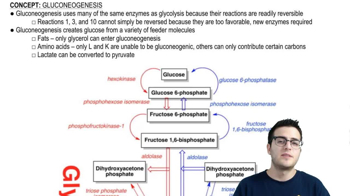
Gluconeogenesis is the metabolic pathway that generates glucose from non-carbohydrate precursors, such as amino acids and glycerol. This process is vital during prolonged fasting or intense exercise when glucose levels are low. Unlike glycogenolysis, which breaks down glycogen, gluconeogenesis synthesizes glucose, ensuring a continuous supply for vital functions, particularly in the brain and red blood cells.
추천 영상:
가이드 코스
08:55
Gluconeogenesis 1