Ch. 24 Nutrition, Metabolism, and Energy Balance
Marieb - Human Anatomy & Physiology 11th Edition
Marieb, Hoehn11th EditionHuman Anatomy & PhysiologyISBN: 9780136874034당신이 사용하는 게 아니라요?교과서 변경
24장, 문제 1

Which of the following reactions would liberate the most energy?
a. Complete oxidation of a molecule of sucrose to CO₂ and water
b. Conversion of a molecule of ADP to ATP
c. Respiration of a molecule of glucose to lactic acid
d. Conversion of a molecule of glucose to carbon dioxide and water

검증된 단계별 안내
1
Step 1: Understand the concept of energy liberation in biochemical reactions. Energy is released during the breakdown of molecules, and the amount of energy depends on the completeness of the reaction and the type of molecule being metabolized.
Step 2: Analyze option (a): Complete oxidation of sucrose to CO₂ and water. Sucrose is a disaccharide composed of glucose and fructose. Complete oxidation involves breaking all bonds in the molecule, releasing a significant amount of energy as ATP and heat.
Step 3: Analyze option (b): Conversion of ADP to ATP. This process involves phosphorylation, which stores energy rather than liberating it. It is an energy-requiring process rather than an energy-liberating one.
Step 4: Analyze option (c): Respiration of glucose to lactic acid. This is anaerobic respiration, which is less efficient and releases less energy compared to complete oxidation. Only a small amount of ATP is generated in this process.
Step 5: Analyze option (d): Conversion of glucose to CO₂ and water. This is aerobic respiration, which involves complete oxidation of glucose. It releases a large amount of energy, similar to option (a), but glucose is a simpler molecule compared to sucrose, so the energy liberated is slightly less than in option (a).

비슷한 문제에 대한 검증된 영상 답변:

이 영상 해법은 위 문제에 도움이 된다고 튜터들이 추천한 것입니다.
영상 길이:
2m

주요 개념

질문에 올바르게 답하기 위해 반드시 이해해야 하는 핵심 개념들은 다음과 같습니다.

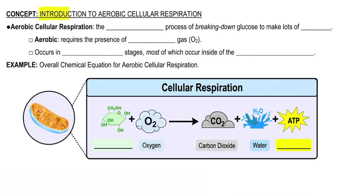
Cellular Respiration

Cellular respiration is a metabolic process that converts biochemical energy from nutrients into adenosine triphosphate (ATP), and releases waste products. It typically involves the complete oxidation of glucose or other substrates, resulting in the production of carbon dioxide and water, and is crucial for energy production in living organisms.
추천 영상:
가이드 코스
03:38
Introduction to Cellular Respiration

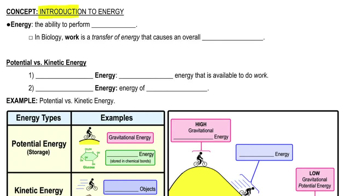
Energy Yield of Reactions

Different biochemical reactions yield varying amounts of energy. For instance, the complete oxidation of glucose releases significantly more energy compared to the conversion of ADP to ATP, which is a relatively low-energy process. Understanding the energy yield helps in comparing the efficiency of different metabolic pathways.
추천 영상:
가이드 코스
4:58
Introduction to Energy

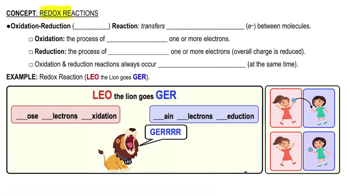
Oxidation-Reduction Reactions

Oxidation-reduction (redox) reactions are chemical reactions that involve the transfer of electrons between two substances. In the context of cellular respiration, the oxidation of glucose involves the loss of electrons, which are transferred to oxygen, ultimately leading to the production of energy. This concept is essential for understanding how energy is liberated during metabolic processes.
추천 영상:
가이드 코스
04:46
Redox Reactions