 뒤로
Biodiversity, Biogeography, and the Diversity of Prokaryotes and Viruses
스터디 가이드 - 스마트 노트
 자료에 맞춘 맞춤형 노트, 핵심 정의, 예시, 맥락을 확장해 제공합니다.
Biodiversity and Its Importance
Types of Biodiversity
Biodiversity refers to the variety of life in all its forms, levels, and combinations. It is a central concept in ecology and conservation biology, encompassing several distinct types:
Species Diversity: The number of different species (species richness) and their relative abundance (evenness) within a community. Different species play unique roles in ecosystems.
Phylogenetic Diversity: The evolutionary distinctiveness of a community, measured by genetic differences and the most recent common ancestry on a phylogenetic tree.
Functional Diversity: The diversity of functional groups within a community, reflecting ecological roles and adaptations.
Example: A rainforest with many plant species (species diversity), some of which are distantly related (phylogenetic diversity), and that perform different ecological functions (functional diversity).
Biodiversity and Ecosystem Functioning
Biodiversity is crucial for maintaining ecosystem functioning and stability. Higher biodiversity generally enhances productivity and resilience.
Productivity: Plant biodiversity increases ecosystem productivity through resource use efficiency, facilitation (e.g., legumes fixing nitrogen), and the chance inclusion of highly productive species.
Stability: Biodiversity supports ecosystem resilience (recovery after disturbance) and resistance (ability to remain unchanged during disturbance).
Example: Diverse plant communities recover faster from droughts and resist pest outbreaks better than less diverse ones.
Ecosystem Services
Types of Ecosystem Services
Ecosystem services are the direct and indirect benefits humans derive from ecosystems. They are a key concept in conservation biology, often assigned economic value.
Provisioning Services: Direct benefits from harvesting raw materials (e.g., lumber, food).
Regulating Services: Indirect benefits from natural processes (e.g., flood control, climate regulation).
Cultural Services: Benefits from human interaction with ecosystems (e.g., tourism, recreation).
Supporting Services: Indirect processes that enable other services (e.g., primary production, nutrient cycling, pollination).
Example: Wetlands provide flood control (regulating), fish (provisioning), and recreational opportunities (cultural).
Biogeography and the Latitudinal Diversity Gradient
Latitudinal Diversity Gradient
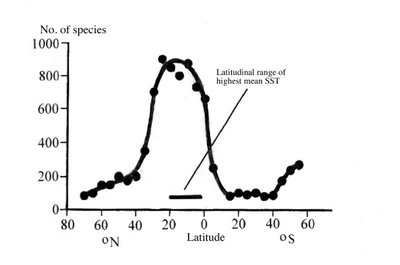
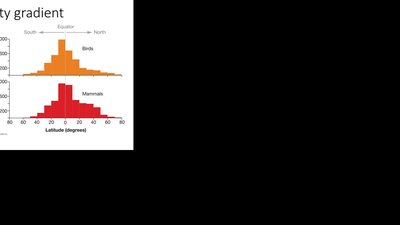
The latitudinal diversity gradient describes the pattern of higher species diversity near the equator and lower diversity toward the poles. This pattern is observed across many taxa.
Major drivers: Temperature and precipitation.
Hypotheses:
Energy Hypothesis: More solar energy in the tropics increases net primary production, supporting more species.
Earth History Hypothesis: Tropical areas are older and have had more time for speciation.
Evolutionary History Hypothesis: Low seasonality in the tropics leads to faster generation times and higher speciation rates.
Ecological Interactions Hypothesis: Lack of seasonality increases specialization, allowing more species to coexist.
Example: Tropical rainforests have higher species richness than temperate forests.
Species-Area Relationship and Island Biogeography
Larger regions support more species, and the equilibrium theory of island biogeography predicts regional diversity based on immigration and extinction rates.
Immigration rates: Higher for islands closer to a source of species.
Extinction rates: Lower for larger islands.
Equilibrium point: Where immigration and extinction rates intersect, predicting the number of species.
Historical Biogeography and Macroevolution
Historical Biogeography
Historical biogeography examines how past events, such as continental drift and dispersal, have shaped species distributions.
Vicariance: Speciation due to habitat splitting (e.g., continental drift).
Dispersal: Movement of species across barriers after continental drift.
Example: Similar biota in North America and Eurasia due to past land bridges.
Biodiversity Changes Over Time
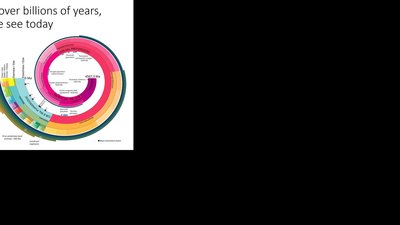
Biodiversity is dynamic, with rates of diversification varying by taxonomic group. Extinction events, both background and mass extinctions, have shaped the diversity of life.
Background extinction: Regular, low-rate extinction.
Mass extinction: Rapid extinction of many species (e.g., End-Permian event).
Current extinction: Driven by human activities (habitat loss, overexploitation, invasive species, pollution, climate change).
Fossil Record and Phylogenies in Studying Macroevolution
The fossil record and phylogenetic trees provide evidence for macroevolution, showing that species change over time and are related by common ancestry.
Fossilization process: Organism dies, is buried, tissues dissolve, sediments fill in, fossil forms.
Biases: Habitat, morphological, temporal, and abundance biases affect which species are fossilized.
Evidence: Geologic time, extinction, transitional features, vestigial traits, observed changes, homologies, geographic distribution, speciation.
The Precambrian and the Diversity of Prokaryotes
Major Events of the Precambrian
The Precambrian covers about 90% of Earth's history and includes three eons:
Hadean: Formation of oceans, major geological changes, no life.
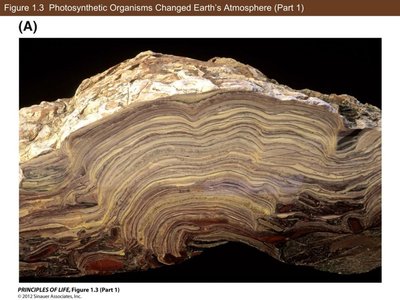
Archean: Origin of life (3.8–3.6 billion years ago), first photosynthetic cells, cyanobacteria, low oxygen atmosphere.
Proterozoic: First eukaryotes (2.2–1.7 billion years ago), prokaryotic and unicellular life dominated.
Example: Cyanobacteria fossils and oxygenic photosynthesis changed Earth's atmosphere.
Bacteria, Archaea, and Viruses
Antibiotics and Virulence
Antibiotics: Chemicals that kill bacteria or slow their growth; produced by bacteria and fungi as defense.
Virulence: The ability of a pathogen to cause disease; higher virulence means more severe disease.
Gram-Positive vs. Gram-Negative Bacteria
Gram-positive: Thick peptidoglycan cell wall, no outer membrane, stains purple.
Gram-negative: Thin peptidoglycan cell wall, has outer membrane, stains pink/red.
Bacteria vs. Archaea
Both: Prokaryotic, lack membrane-bound nucleus, generally unicellular.
Bacteria: Cell wall contains peptidoglycan, many pathogens.
Archaea: Cell wall lacks peptidoglycan, unique molecular machinery, no known human pathogens.
Cyanobacteria and Earth's Oxygen
Cyanobacteria: Perform oxygenic photosynthesis, releasing oxygen and enabling aerobic respiration.
Aerobic respiration: Uses oxygen to produce ATP.
Anaerobic respiration: Does not use oxygen as final electron acceptor.
Genetic Recombination in Bacteria
Transformation: Uptake of free DNA from environment.
Transduction: Virus transfers DNA between cells.
Conjugation: Direct DNA transfer between cells.
Viruses
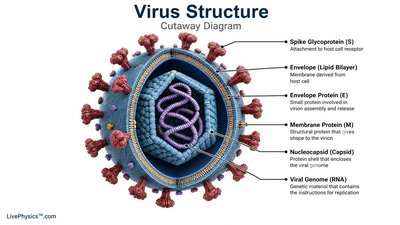
Viruses are infectious agents that require host cells to reproduce. They are not considered alive because they lack cellular structure and independent metabolism.
Structure: Genetic material (DNA or RNA), protein coat (capsid), sometimes a lipid envelope.
Characteristics: Not cells, cannot reproduce independently, use host-cell machinery, can mutate and evolve.
Vaccines vs. Antiviral Drugs vs. Antibiotics
Vaccines: Prepare immune system to prevent or reduce disease.
Antiviral drugs: Interfere with viral replication.
Antibiotics: Kill bacteria or slow their growth.
Fossil Record and Biases
Fossilization Process and Biases
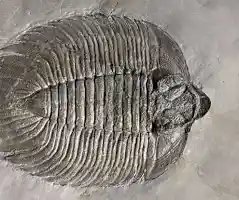
Fossilization: Organism dies, is buried, tissues dissolve, sediments fill in, fossil forms.
Habitat bias: Fossils more likely in sediment-rich environments.
Morphological bias: Hard structures fossilize more easily.
Temporal bias: Newer fossils more common.
Abundance bias: Common species more likely to fossilize.
Phylogenetic Relationships and Domains of Life
Three Domains of Life
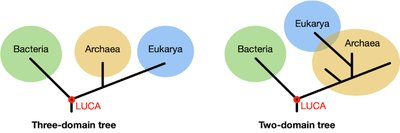
Life is classified into three domains: Bacteria, Archaea, and Eukarya. Each domain is a monophyletic group, meaning it includes all descendants of a common ancestor.
Bacteria: Outgroup, prokaryotic, unicellular.
Archaea: Prokaryotic, unicellular, more closely related to Eukarya.
Eukarya: Eukaryotic, can be unicellular or multicellular.
Prokaryotes vs. Eukaryotes
All cells: Have genetic material (DNA), plasma membrane, ribosomes.
Prokaryotes (Bacteria and Archaea): Unicellular, lack membrane-bound nucleus.
Eukaryotes (Plants, animals, fungi, protists): Can be unicellular or multicellular, have membrane-bound nucleus.
Example: Most protists are unicellular eukaryotes, while bacteria and archaea are always unicellular prokaryotes.
