 뒤로
Cell Anatomy and Membrane Transport: Study Guide for General Biology
스터디 가이드 - 스마트 노트
 자료에 맞춘 맞춤형 노트, 핵심 정의, 예시, 맥락을 확장해 제공합니다.
Cell Types and Their Structures
Prokaryotic and Eukaryotic Cells
Cells are classified into two fundamental types based on their morphology and evolutionary history: prokaryotic and eukaryotic. Prokaryotes lack a membrane-bound nucleus, while eukaryotes possess one. Organisms are further divided into three domains: Bacteria (prokaryotic), Archaea (prokaryotic), and Eukarya (eukaryotic).
Prokaryotic cells: Simple, unicellular organisms without a nucleus or membrane-bound organelles. They contain at least one chromosome and many ribosomes for protein synthesis.
Eukaryotic cells: Possess a membrane-bound nucleus and specialized organelles, allowing compartmentalization of cellular functions.
Components of Prokaryotic Cells
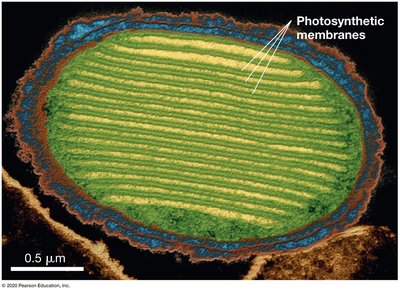
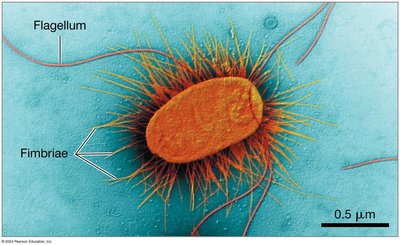
Prokaryotic cells have distinctive structures and functions, including internal photosynthetic membranes in some species, a protective cell wall, and external appendages for movement and attachment.
Internal photosynthetic membranes: Convert sunlight to chemical energy; observed as infoldings of the plasma membrane in photosynthetic bacteria.
Cell wall: Provides shape and rigidity; in bacteria, primarily composed of peptidoglycan.
Flagella: Long filaments for movement.
Fimbriae: Needle-like projections for attachment.
Eukaryotic Cell Anatomy
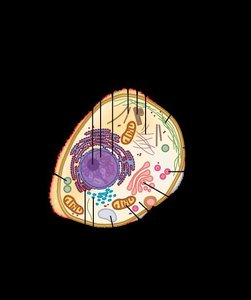
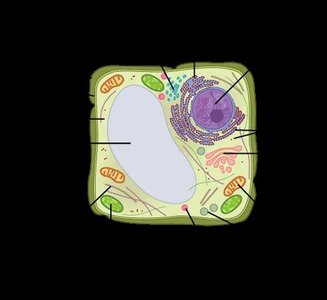
Eukaryotic cells contain a membrane-bound nucleus and various organelles, each with specialized functions. The plasma membrane, cytoplasm, cytoskeleton, vesicles, vacuoles, and nucleus are key components.
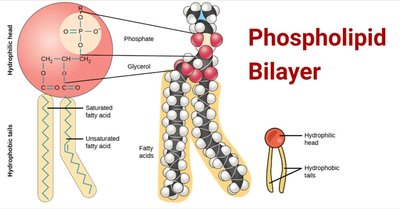
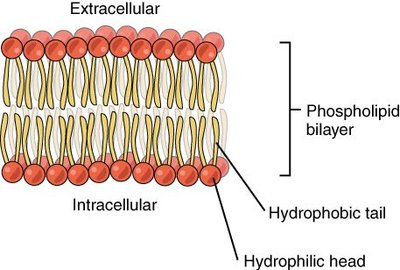
Plasma membrane: Phospholipid bilayer with embedded proteins, separating internal contents from the environment.
Cytoplasm: Region between plasma membrane and nuclear envelope; site of metabolic reactions.
Cytoskeleton: Network of protein fibers for shape, organelle positioning, and movement.
Vesicles and vacuoles: Membrane-bound sacs for storage and transport; central vacuole in plants regulates water and provides structural support.
Nucleus: Houses DNA (chromatin), directs ribosome and protein synthesis; nuclear envelope is a double membrane.
Nucleolus: Site of ribosomal RNA synthesis and ribosome assembly.
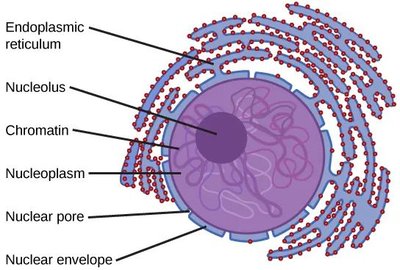
The Endomembrane System
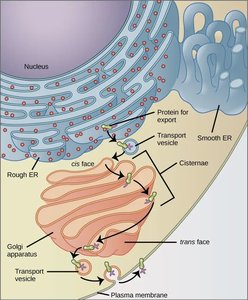
The endomembrane system is a group of membranes and organelles in eukaryotic cells that modify, package, and transport lipids and proteins. It includes the endoplasmic reticulum (ER), Golgi apparatus, lysosomes, and transport vesicles.
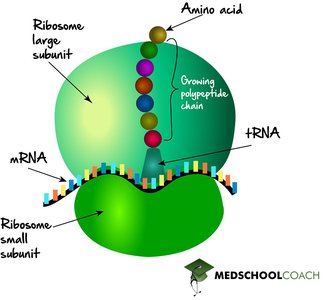
Endoplasmic reticulum (ER): Rough ER (RER) has ribosomes for protein synthesis; smooth ER (SER) synthesizes lipids.
Golgi apparatus: Series of flattened sacs for protein and lipid modification, sorting, and packaging.
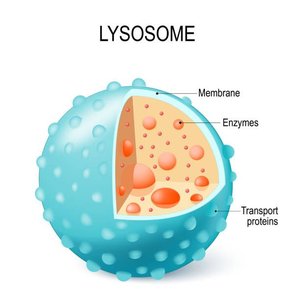
Lysosomes: Contain digestive enzymes for breakdown of cellular waste.
Peroxisomes: Carry out oxidation reactions and detoxify poisons.
Mitochondria and Chloroplasts
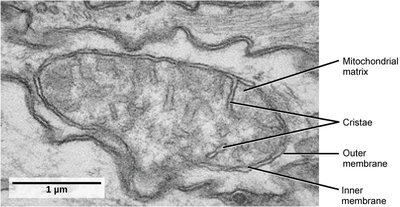
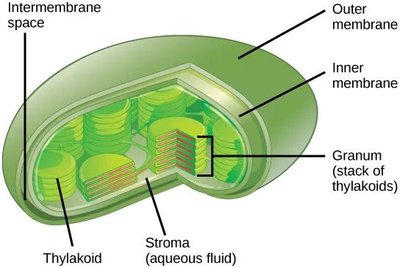
Mitochondria and chloroplasts are energy-related organelles. Mitochondria produce ATP, the cell's main energy molecule, while chloroplasts carry out photosynthesis in plants and algae.
Mitochondria: Double-membraned organelle with inner membrane folds (cristae) for ATP production.
Chloroplasts: Contain thylakoids and stroma; site of photosynthesis.
Endosymbiosis Theory
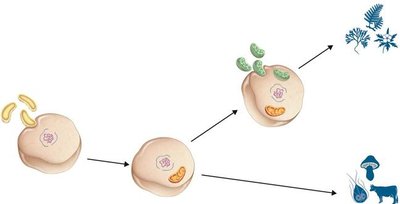
The endosymbiosis theory proposes that mitochondria and chloroplasts originated as free-living bacteria engulfed by ancestral eukaryotes, leading to a mutually beneficial relationship. Both organelles contain their own DNA and ribosomes, and can divide independently of the cell.
Cell Walls and Comparison of Animal vs. Plant Cells
Cell walls are rigid coverings that protect, support, and shape cells. Plant cell walls are made of cellulose, bacterial cell walls of peptidoglycan, and fungal cell walls of chitin. Animal cells lack cell walls.
Cell Membranes and Membrane Transport
Fluid Mosaic Model of Membranes
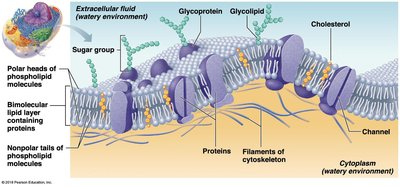
The plasma membrane is described by the fluid mosaic model, consisting of a phospholipid bilayer with embedded proteins, cholesterol, and carbohydrates. This structure allows selective permeability and dynamic movement of components.
Phospholipid bilayer: Two layers of phospholipids with hydrophilic heads facing outward and hydrophobic tails inward.
Proteins: Scattered throughout, serving as channels, carriers, and receptors.
Carbohydrates: Attached to lipids (glycolipids) or proteins (glycoproteins) for cell recognition.
Passive Transport
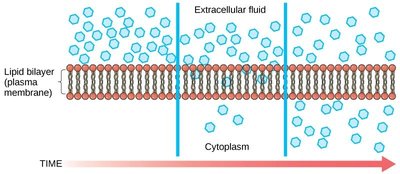
Passive transport involves the movement of substances across membranes without energy input, driven by concentration gradients. Types include diffusion, osmosis, and facilitated diffusion.
Diffusion: Movement of molecules from high to low concentration until equilibrium is reached.
Osmosis: Diffusion of water across a semipermeable membrane.
Tonicity: Describes solute concentration in solutions: hypotonic (lower solute), hypertonic (higher solute), isotonic (equal solute).
Facilitated diffusion: Requires protein channels for transport of specific solutes.
Active Transport
Active transport mechanisms require cellular energy (usually ATP) to move substances against their concentration gradients or to transport large molecules. Types include ion pumps, endocytosis, and exocytosis.
Ion pumps: Membrane proteins that move ions against gradients, e.g., sodium-potassium pump.
Endocytosis: Uptake of large particles or fluids by engulfing them in vesicles; includes phagocytosis and pinocytosis.
Exocytosis: Release of substances from the cell by fusion of vesicles with the plasma membrane.
Secondary active transport: Uses electrochemical gradients established by primary active transport to move other molecules.
Transport Type | Energy Requirement | Direction | Example |
|---|---|---|---|
Diffusion | No | High to low concentration | O2, CO2 |
Osmosis | No | Water movement | Water across cell membrane |
Facilitated Diffusion | No | High to low concentration | Glucose via channel protein |
Active Transport | Yes (ATP) | Low to high concentration | Sodium-potassium pump |
Endocytosis | Yes (ATP) | Into cell | Phagocytosis |
Exocytosis | Yes (ATP) | Out of cell | Secretion of hormones |
Key Terms and Concepts
Phospholipid bilayer: Fundamental structure of cell membranes.
Selective permeability: Property allowing some substances to cross while blocking others.
ATP (Adenosine Triphosphate): Main energy carrier in cells.
Electrochemical gradient: Combination of concentration and electrical gradients across a membrane.
