 뒤로
Cellular Respiration and Fermentation: A Comprehensive Study Guide
스터디 가이드 - 스마트 노트
 자료에 맞춘 맞춤형 노트, 핵심 정의, 예시, 맥락을 확장해 제공합니다.
Cellular Respiration and Fermentation
Overview of Cellular Respiration
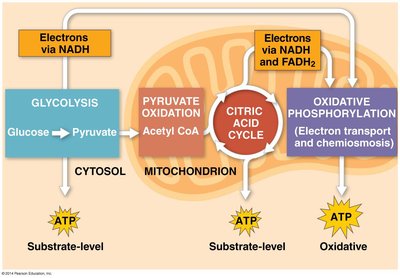
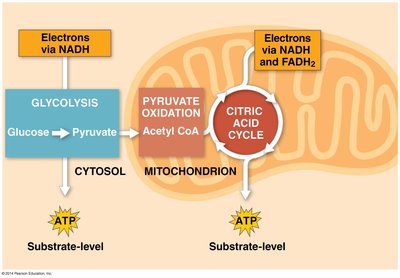
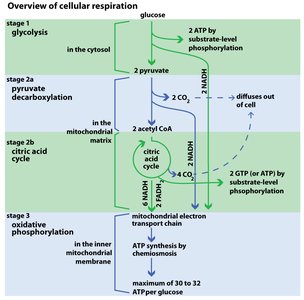
Cellular respiration is a multi-step metabolic pathway that converts glucose into ATP, the energy currency of the cell. It consists of glycolysis, pyruvate oxidation, the citric acid (Krebs) cycle, and oxidative phosphorylation. Each step occurs in specific cellular locations and involves distinct biochemical processes.
Glycolysis: Occurs in the cytoplasm; breaks down glucose into two pyruvate molecules.
Pyruvate Oxidation: Converts pyruvate into acetyl-CoA in the mitochondrial matrix.
Citric Acid Cycle (Krebs Cycle): Completes the oxidation of acetyl-CoA, generating NADH, FADH2, ATP, and CO2.
Oxidative Phosphorylation: Uses electron transport chain (ETC) and chemiosmosis to produce most ATP.
Glycolysis
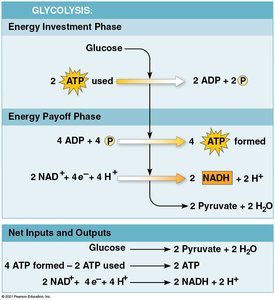
Glycolysis is the first stage of cellular respiration, occurring in the cytosol. It involves ten enzyme-catalyzed steps that convert one glucose molecule (6C) into two pyruvate molecules (3C each). Glycolysis does not require oxygen and produces a small amount of ATP and NADH.
Energy Investment Phase: 2 ATP are used to phosphorylate glucose and convert it to fructose-1,6-bisphosphate.
Energy Payoff Phase: 4 ATP are produced (net gain of 2 ATP), 2 NADH are generated, and 2 pyruvate molecules are formed.
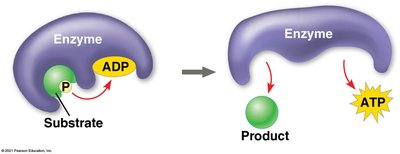
Substrate-level phosphorylation: ATP is formed directly by transferring a phosphate group from a substrate to ADP.

Key Steps in Glycolysis
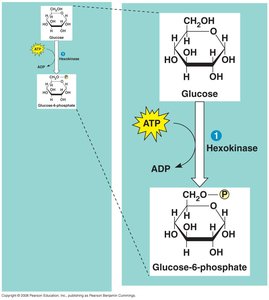
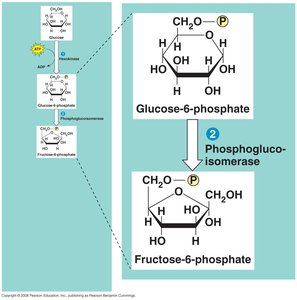
Step 1: Hexokinase phosphorylates glucose to glucose-6-phosphate (uses ATP).
Step 2: Phosphoglucoisomerase converts glucose-6-phosphate to fructose-6-phosphate.
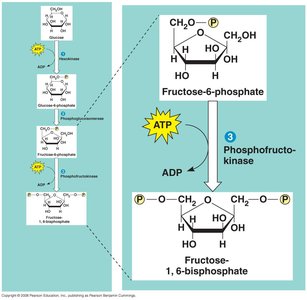
Step 3: Phosphofructokinase phosphorylates fructose-6-phosphate to fructose-1,6-bisphosphate (uses ATP).
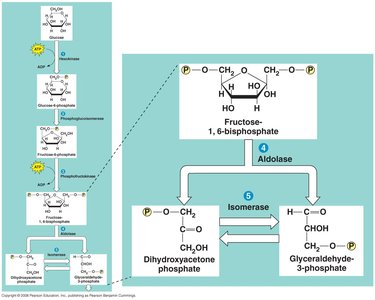
Step 4: Aldolase splits fructose-1,6-bisphosphate into two 3C molecules.
Step 5: Isomerase converts dihydroxyacetone phosphate to glyceraldehyde-3-phosphate (G3P).
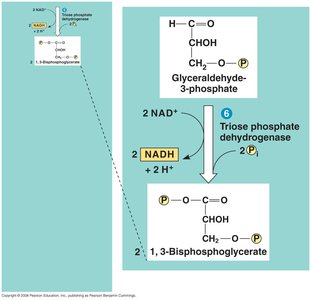
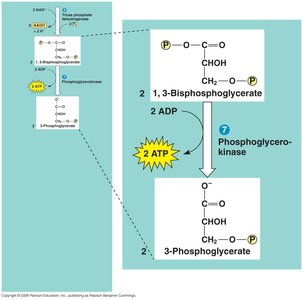
Step 6: Triose phosphate dehydrogenase produces NADH and 1,3-bisphosphoglycerate.
Step 7: Phosphoglycerokinase generates ATP and 3-phosphoglycerate.
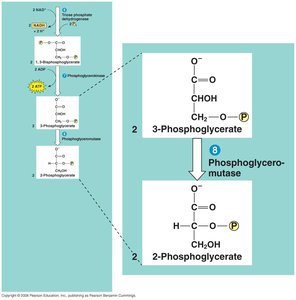
Step 8: Phosphoglyceromutase converts 3-phosphoglycerate to 2-phosphoglycerate.
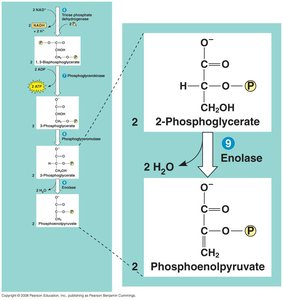
Step 9: Enolase forms phosphoenolpyruvate (PEP).
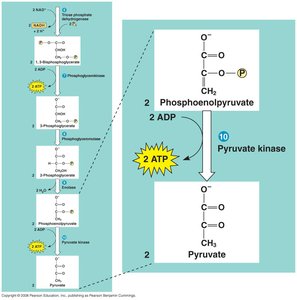
Step 10: Pyruvate kinase produces ATP and pyruvate.
Pyruvate Oxidation (Decarboxylation)
After glycolysis, pyruvate is transported into the mitochondrial matrix, where it undergoes oxidation and decarboxylation. This process produces acetyl-CoA, NADH, and CO2, preparing the substrate for entry into the citric acid cycle.
Carboxyl group removed: Produces CO2.
Oxidation: Electrons transferred to NAD+, forming NADH.
Coenzyme A attachment: Forms acetyl-CoA, a highly reactive molecule.
Yield per glucose: 2 CO2, 2 NADH, 2 acetyl-CoA.
Citric Acid Cycle (Krebs Cycle)
The citric acid cycle occurs in the mitochondrial matrix and completes the oxidation of acetyl-CoA. It is a cyclic pathway involving eight enzyme-catalyzed steps, generating NADH, FADH2, ATP, and CO2.
Acetyl-CoA (2C) joins oxaloacetate (4C): Forms citrate (6C).
Oxaloacetate is regenerated: Ensures cycle continuity.
Each turn: 2 CO2, 3 NADH, 1 FADH2, 1 ATP (per pyruvate).
Per glucose: Cycle occurs twice, doubling the products.
Oxidative Phosphorylation
Oxidative phosphorylation is the final stage of cellular respiration, occurring in the inner mitochondrial membrane. It includes the electron transport chain (ETC) and chemiosmosis, which together produce the majority of ATP.
ETC: Series of protein complexes (I-IV) that transfer electrons from NADH and FADH2 to oxygen, the terminal electron acceptor.
Proton gradient: H+ ions are pumped into the intermembrane space, creating a proton-motive force.
ATP synthase: Protons flow back into the matrix through ATP synthase, driving ATP production.
Oxygen: Essential as the final electron acceptor; forms water.
ATP Accounting and Energy Yield
The complete oxidation of glucose through cellular respiration yields a maximum of 32 ATP molecules. Energy is harnessed at each stage, with most ATP produced during oxidative phosphorylation.
Glycolysis: Net 2 ATP (substrate-level phosphorylation).
Citric Acid Cycle: 2 ATP (substrate-level phosphorylation).
Oxidative Phosphorylation: 28-32 ATP (oxidative phosphorylation).
Efficiency: Only about 34% of energy from glucose is captured in ATP; the rest is lost as heat.

Anaerobic Respiration and Fermentation
When oxygen is unavailable, cells can generate ATP through anaerobic respiration or fermentation. Anaerobic respiration uses an ETC with terminal electron acceptors other than oxygen, while fermentation regenerates NAD+ without an ETC.
Anaerobic respiration: Occurs in prokaryotes; uses sulfate or nitrate as terminal electron acceptors.
Fermentation: Occurs in yeast and animal muscle cells; produces alcohol (ethanol) or lactic acid.
ATP yield: Fermentation yields only 2 ATP per glucose; anaerobic respiration yields 21-24 ATP per glucose.
Goal: Regenerate NAD+ to allow glycolysis to continue.
Types of Fermentation
Alcoholic fermentation: Pyruvate is converted to ethanol and CO2 (yeast).
Lactic acid fermentation: Pyruvate is converted to lactic acid (muscle cells, bacteria).
Classification of Organisms
Aerobes: Require oxygen for respiration.
Anaerobes: Require an oxygen-free environment.
Obligate: Must live in a specific environment (obligate anaerobes or aerobes).
Facultative: Can function under both aerobic and anaerobic conditions.
Catabolic Versatility
Cells can metabolize various macromolecules besides glucose. These include disaccharides, polysaccharides, proteins, and fats, which enter the respiration pathway at different points.
Carbohydrates: Hydrolyzed to monosaccharides; enter glycolysis.
Proteins: Hydrolyzed to amino acids; converted to intermediates of glycolysis and Krebs cycle.
Fats: Glycerol enters glycolysis; fatty acids undergo β-oxidation to form acetyl-CoA, NADH, and FADH2.
Regulation of Respiration
Cellular respiration is regulated by feedback inhibition and stimulation, primarily through the enzyme phosphofructokinase. This allosteric enzyme controls the commitment of glucose to glycolysis.
Inhibitors: ATP and citrate inhibit phosphofructokinase.
Stimulator: AMP stimulates phosphofructokinase.
Key Vocabulary
Glycolysis
Substrate-level phosphorylation
Pyruvate
Acetyl-CoA
Oxaloacetate
Oxidative phosphorylation
Electron transport chain (ETC)
Proton gradient
Proton-motive force
ATP synthase
Terminal electron acceptor
Anaerobic respiration
Fermentation (lactic acid vs alcohol)
Obligate anaerobes
Facultative anaerobes
Cellular Respiration Formula
The overall equation for cellular respiration is:
Summary of Key Concepts
Cellular respiration involves redox reactions, electron carriers, and energy transfer.
Each stage has specific starting materials, products, and locations.
ETC harnesses energy to move H+ across the membrane, creating a proton-motive force for ATP synthesis.
ATP synthase utilizes the proton gradient to make ATP.
Absence of oxygen halts ETC and all respiration processes.
Anaerobic respiration and fermentation differ in their use of ETC and ATP yield.
Other macromolecules can be used in respiration, entering at various points.
Phosphofructokinase is the key regulatory enzyme, affected by ATP, citrate, and AMP.
