 뒤로
Cellular Respiration: Mechanisms, Measurement, and Applications
스터디 가이드 - 스마트 노트
 자료에 맞춘 맞춤형 노트, 핵심 정의, 예시, 맥락을 확장해 제공합니다.
Cellular Respiration
Overview of Cellular Respiration
Cellular respiration is a fundamental metabolic process by which cells convert biochemical energy from nutrients into adenosine triphosphate (ATP), releasing waste products. This process is essential for both prokaryotic and eukaryotic organisms to perform cellular work and maintain homeostasis. In eukaryotes, the majority of respiration occurs in the mitochondria. There are two main types of respiration: aerobic respiration (requires oxygen) and anaerobic respiration (does not require oxygen).
General Equation for Aerobic Respiration:
ATP: The main energy currency of the cell, used to power various cellular processes.
Mitochondria: The organelle where aerobic respiration primarily occurs in eukaryotes.
O2 Consumption as a Measure of Metabolic Rate
Quantitative Measurement of Respiration
Respiration rate can be measured by quantifying oxygen consumption, which reflects the metabolic rate of an organism. Oxygen acts as the final electron acceptor in the electron transport chain, making its consumption a direct indicator of aerobic metabolic activity.
Units of Measurement: Respiration rates are commonly measured in milliliters of O2 consumed per hour per gram of organism mass (ml O2/h/g).
Experimental Organism: The rat (Rattus norvegicus) is used to measure oxygen consumption and compare metabolic rates across species.
Animal | Average Mass (g) | ml O2/h/g |
|---|---|---|
Hamster | 80-120 | 2.3 |
Dog | 3,200-54,000 | 0.32 |
Man | 67,500-88,600 | 0.22 |
Elephant | 2,050,000-6,000,000 | 0.07 |
Observation: Smaller animals generally have higher metabolic rates per gram than larger animals.
Experimental Design and Rationale
Measurement Apparatus: A respiration chamber with a U-bend water manometer is used to detect oxygen consumption by observing water movement.
Potassium Hydroxide (KOH) Pellets: These absorb CO2 produced during respiration, ensuring that only O2 consumption is measured by preventing CO2 from affecting water levels.
Key Point: The use of KOH isolates oxygen consumption as the variable measured, since CO2 would otherwise increase pressure and confound results.
CO2 Production in Plant Embryos
Respiration in Germinating Seeds
Plant embryos, such as germinating seeds, also perform aerobic respiration to generate ATP required for growth. The process releases CO2, which can be detected using chemical indicators.
Phenol Red Indicator: Remains red in neutral/basic conditions; turns yellow in acidic conditions due to CO2 dissolving in water and forming carbonic acid.
Experimental Comparison: Germinated seeds (active respiration) vs. boiled germinated seeds (denatured enzymes, no respiration).
Sample | Coloration |
|---|---|
Germinated | Yellow (CO2 present) |
Germinated-Boiled | Red (no CO2 produced) |
Conclusion: Only living, metabolically active seeds produce CO2 during respiration.
Fermentation (Anaerobic Process in Yeast)
Pathways and Measurement of Fermentation
When oxygen is unavailable, some eukaryotic cells (e.g., yeast) switch to fermentation to generate ATP. Fermentation allows glycolysis to continue by regenerating NAD+ from NADH. The two main types are lactic acid fermentation and alcoholic fermentation (producing ethanol and CO2).
Alcoholic Fermentation Equation:
Substrate Utilization: Yeast can ferment simple sugars (e.g., glucose) more efficiently than complex carbohydrates (e.g., starch), which must first be hydrolyzed to glucose.
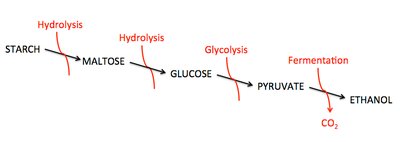
Experimental Design: Compare CO2 production in yeast cultures with 1% glucose, 1% starch, and water (control).
Time (min) | diH2O | 1% Glucose | 1% Starch |
|---|---|---|---|
0 | 0 | 0 | 0 |
20 | 0 | High CO2 | Low/Moderate CO2 |
Conclusion: Glucose supports the highest rate of fermentation, starch less so (due to the need for hydrolysis), and water does not support fermentation.
Mitochondria: The Organelle of Respiration
Structure and Function of Mitochondria
Mitochondria are double-membraned organelles responsible for aerobic respiration in eukaryotic cells. They contain their own DNA and are often referred to as the "powerhouse of the cell." Their structure is specialized for efficient ATP production.
Outer Membrane: Encloses the organelle and separates it from the cytoplasm.
Inner Membrane: Highly folded into cristae, increasing surface area for the electron transport chain and ATP synthesis.
Matrix: The innermost compartment, containing enzymes for the citric acid cycle (Krebs cycle).
Intermembrane Space: The region between the inner and outer membranes, important for proton gradient formation.
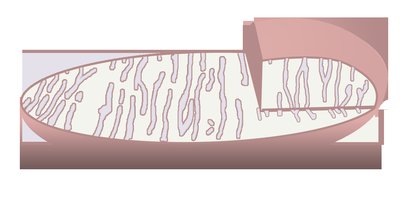
Function: Site of the citric acid cycle, electron transport chain, and oxidative phosphorylation, leading to the production of the majority of cellular ATP.
Discussion Points
Starch vs. Glucose: Starch is a polysaccharide that must be hydrolyzed to glucose before it can be metabolized by yeast, resulting in slower fermentation compared to direct glucose use.
Size and Respiration Rate: Smaller organisms typically have higher metabolic rates per gram due to greater surface area-to-volume ratios and higher energy demands.
Phenol Red Results: Germinating peas turn phenol red yellow (CO2 produced), while boiled peas do not (no respiration).
Seed Germination and Water: Seeds require water to activate metabolic processes; without water, germination and respiration do not occur.
