 뒤로
Chapter 43: The Immune System – Structure, Function, and Mechanisms
스터디 가이드 - 스마트 노트
 자료에 맞춘 맞춤형 노트, 핵심 정의, 예시, 맥락을 확장해 제공합니다.
The Immune System: Overview
Reconnaissance, Recognition, and Response
The immune system protects animals from a wide variety of pathogens. Two major types of defense mechanisms have evolved: innate immunity and acquired (adaptive) immunity.
Innate immunity: Present from birth, provides nonspecific defense against pathogens.
Acquired immunity: Develops after exposure to specific pathogens, providing targeted responses.
Both systems work together to recognize and respond to threats.
Innate Immunity
External Defenses
Innate immunity includes physical and chemical barriers that prevent pathogen entry.
Skin: Acts as a tough, physical barrier.
Mucous membranes: Produce mucus to trap microbes and particles.
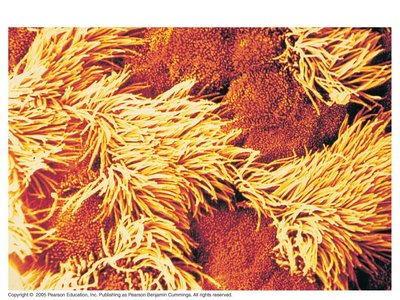
Ciliated epithelial cells: Sweep mucus and trapped microbes out of the respiratory tract.
Secretions: Skin secretions create an acidic environment (pH 3–5) and contain proteins like lysozyme, which digests bacterial cell walls.
Internal Cellular and Chemical Defenses
Once pathogens breach external barriers, internal defenses are activated.
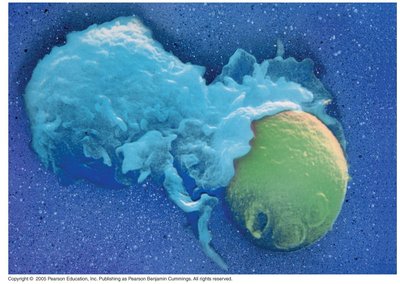
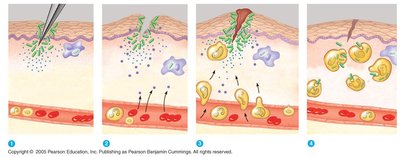
Phagocytic cells: White blood cells (phagocytes) ingest and destroy pathogens.
Natural killer (NK) cells: Attack virus-infected and cancerous cells, triggering apoptosis.
Antimicrobial proteins: Complement system (about 30 proteins) causes lysis of invaders and triggers inflammation; interferons inhibit viral reproduction.
Phagocytosis Mechanism
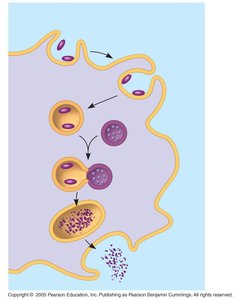
Phagocytes attach to pathogens via surface receptors, engulf them, and destroy them in lysosomes.
Macrophages: Large phagocytes found in tissues and lymphatic organs.
Neutrophils: Most abundant white blood cells, rapidly respond to infection.
Lymphatic System
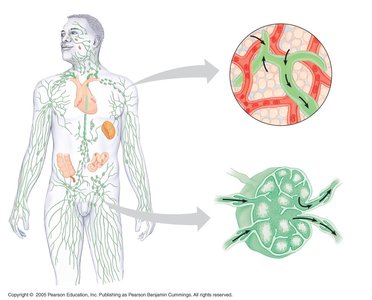
The lymphatic system is a network of vessels and organs that help defend against pathogens.
Lymph nodes: Masses of lymphocytes and macrophages filter lymph.
Spleen, tonsils, adenoids: Organs involved in immune responses.
Inflammatory Response
Local inflammation is triggered by chemicals (e.g., histamine) released from injured cells, causing increased blood flow, redness, heat, swelling, and recruitment of phagocytes.
Fever: Systemic response that can be beneficial in fighting infection.
Acquired (Adaptive) Immunity
Antigen Recognition
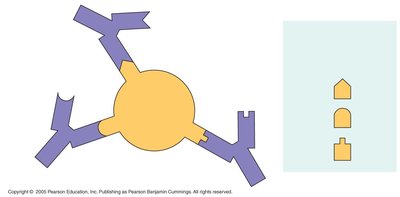
Acquired immunity is mediated by lymphocytes that recognize specific antigens.
Antigen: Foreign molecule recognized by lymphocytes.
Epitope: Specific region of an antigen recognized by a lymphocyte or antibody.
Lymphocytes: B Cells and T Cells
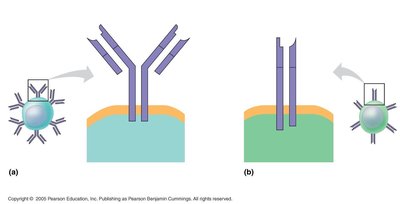
B cells and T cells are the main types of lymphocytes, each with unique antigen receptors.
B cell receptors: Bind to intact antigens; secreted antibodies (immunoglobulins) are similar in structure.
T cell receptors: Bind to antigen fragments presented by MHC molecules on cell surfaces.
Major Histocompatibility Complex (MHC)
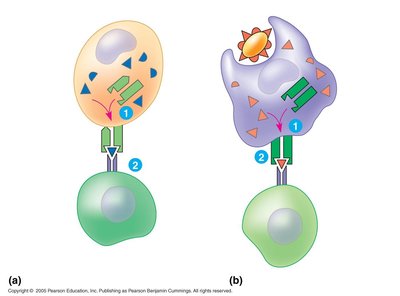
MHC molecules present antigen fragments to T cells, enabling immune recognition.
Class I MHC: Found on most nucleated cells; present antigens to cytotoxic T cells.
Class II MHC: Found on dendritic cells, macrophages, and B cells; present antigens to helper T cells.
Lymphocyte Development and Diversity
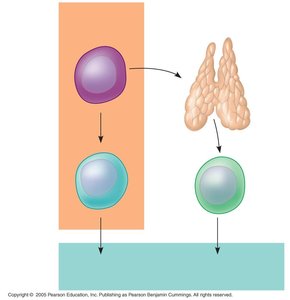
Lymphocytes originate from stem cells in bone marrow and differentiate into B or T cells based on their maturation site.
B cells: Mature in bone marrow.
T cells: Mature in thymus.
Diversity: Generated by random gene rearrangement, producing millions of unique antigen receptors.
Clonal Selection and Memory
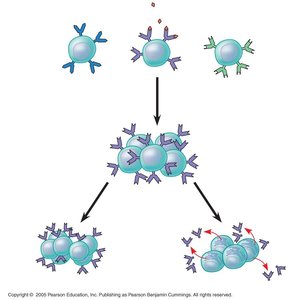
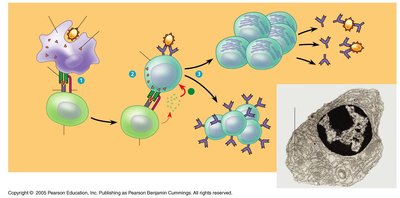
When a lymphocyte binds its specific antigen, it proliferates and differentiates into effector and memory cells (clonal selection).
Primary response: Initial activation and proliferation.
Secondary response: Faster, stronger response due to memory cells.
Humoral and Cell-Mediated Immunity
Humoral Immune Response
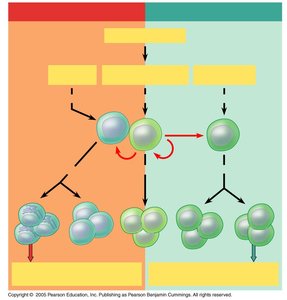
B cells produce antibodies that neutralize pathogens and toxins in extracellular fluids.
Plasma cells: Effector B cells that secrete antibodies.
Memory B cells: Provide long-term immunity.
Helper T Cells
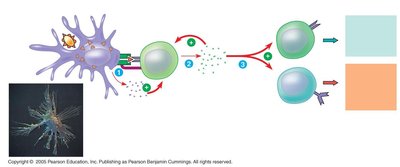
Helper T cells activate both humoral and cell-mediated responses by secreting cytokines.
CD4 protein: Binds class II MHC, stabilizing interaction.
Cytokines: Stimulate B cells and cytotoxic T cells.
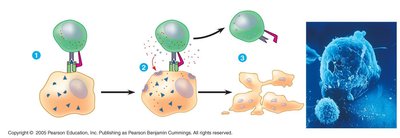
Cytotoxic T Cells
Cytotoxic T cells destroy infected and cancerous cells by recognizing antigens presented by class I MHC and releasing proteins that induce apoptosis.
CD8 protein: Enhances interaction with target cells.
Perforin and granzymes: Induce cell death.
B Cells and Antibody Production
B cell activation is aided by helper T cells and cytokines, leading to clonal selection and antibody secretion.
Plasma cells: Secrete large quantities of antibodies.
Memory B cells: Provide rapid response upon re-exposure.
Antibody Classes
There are five major classes of antibodies, each with distinct functions and distributions.
Class | Structure | Function | Distribution |
|---|---|---|---|
IgM | Pentamer | Neutralization, agglutination, complement activation | First produced after exposure |
IgG | Monomer | Opsonization, neutralization, agglutination | Most abundant, crosses placenta |
IgA | Dimer | Localized defense in mucous membranes | Tears, saliva, mucus, breast milk |
IgE | Monomer | Triggers allergic reactions | Mast cells, basophils |
IgD | Monomer | Antigen receptor on naive B cells | B cell surface |

Antibody-Mediated Disposal of Antigens
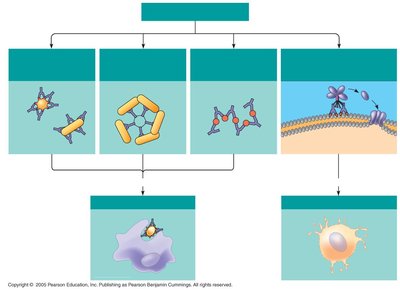
Antibodies bind to antigens, facilitating their elimination by phagocytosis and complement-mediated lysis.
Neutralization: Blocks pathogen binding to host cells.
Agglutination: Clumps pathogens for easier removal.
Precipitation: Removes soluble antigens.
Complement activation: Leads to cell lysis.
Immunization and Transplantation
Active and Passive Immunity
Immunity can be acquired actively (infection or vaccination) or passively (transfer of antibodies).
Active immunity: Long-lasting, develops after exposure or vaccination.
Passive immunity: Immediate, short-term protection (e.g., maternal antibodies, antivenin).
Blood Groups and Transfusions
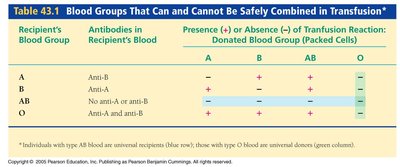
Blood group antigens determine compatibility for transfusions. Incompatible transfusions can cause destruction of transfused cells.
Recipient's Blood Group | Antibodies in Recipient's Blood | A | B | AB | O |
|---|---|---|---|---|---|
A | Anti-B | + | - | - | + |
B | Anti-A | - | + | - | + |
AB | None | + | + | + | + |
O | Anti-A and Anti-B | - | - | - | + |
Rh Factor and Pregnancy
The Rh antigen can cause complications when an Rh-negative mother carries Rh-positive fetuses, leading to immune reactions in subsequent pregnancies.
Summary
The immune system is a complex network of cells, proteins, and organs that protect the body from pathogens. It consists of innate and acquired mechanisms, each with specialized cells and responses. Understanding these processes is essential for studying disease, immunization, and transplantation.
