 뒤로
Ecology and the Biosphere: Structure, Climate, and Biomes
스터디 가이드 - 스마트 노트
 자료에 맞춘 맞춤형 노트, 핵심 정의, 예시, 맥락을 확장해 제공합니다.
Ecology: The Study of Interactions
Discovering Ecology
Ecology is the scientific study of the interactions between organisms and their environment, both living (biotic) and nonliving (abiotic). These interactions determine the distribution and abundance of organisms. Ecological research is organized hierarchically, from individual organisms to the entire biosphere.
Key Point 1: Ecology investigates questions such as what environmental factors limit the geographic distribution of species and what factors affect population size.
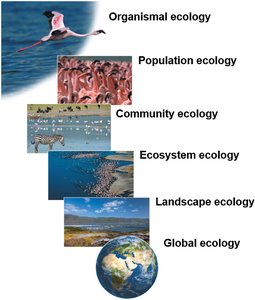
Key Point 2: Ecologists study interactions at multiple levels: organismal, population, community, ecosystem, landscape, and global.
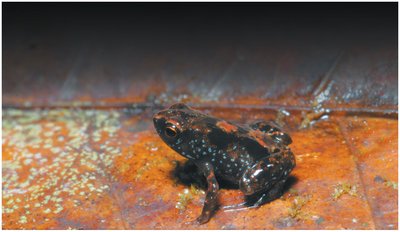
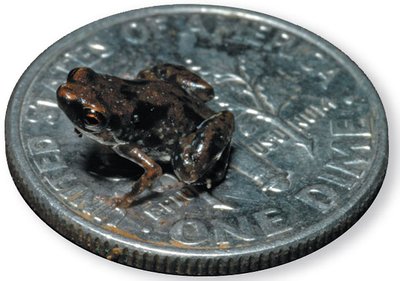
Example: The discovery of new frog species in Papua New Guinea raises questions about their distribution and population dynamics.
Hierarchy of Ecological Research
Ecological research is structured into several levels, each focusing on different aspects of interactions and processes:
Organismal Ecology: Studies how an organism’s structure, physiology, and behavior meet environmental challenges.
Population Ecology: Examines factors affecting population size and dynamics over time.
Community Ecology: Investigates interspecific interactions and their effects on community structure.
Ecosystem Ecology: Focuses on energy flow and chemical cycling between organisms and their environment.
Landscape Ecology: Explores exchanges of energy, materials, and organisms across multiple ecosystems.
Global Ecology: Studies the biosphere, the sum of all ecosystems, and the influence of energy and materials on organisms worldwide.
Earth’s Climate: Patterns and Influences
Climate and Its Components
Climate is defined as the long-term prevailing weather conditions in an area. The four major physical components of climate are temperature, precipitation, sunlight, and wind. These factors interact to create global and regional climate patterns.
Key Point 1: Solar energy and Earth’s movement in space are primary determinants of global climate patterns.
Key Point 2: The warming effect of the sun establishes temperature variations, air and water circulation, and evaporation.
Latitudinal Variation in Sunlight Intensity
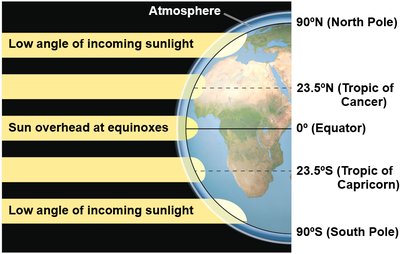
The angle at which sunlight strikes Earth affects its intensity, with the strongest sunlight in the tropics (between 23.5° north and south latitude). This variation influences temperature and climate across latitudes.
Key Point: Sunlight is most direct at the equator, leading to higher temperatures and more intense light.
Global Air Circulation and Precipitation Patterns
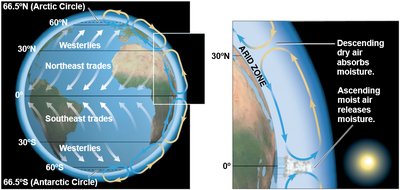
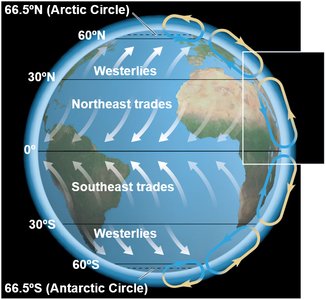
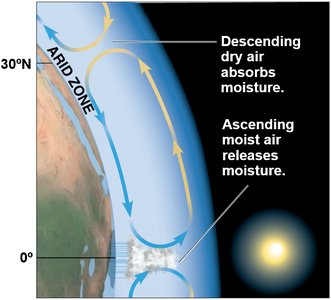
Global air circulation and precipitation patterns are major determinants of climate. Warm, wet air rises in the tropics, releasing precipitation, while dry, descending air creates arid climates near 30° north and south. Wind patterns are shaped by these circulation processes.
Key Point: Trade winds and westerlies are predictable global wind patterns resulting from air circulation.
Seasonality and Local Climate Effects
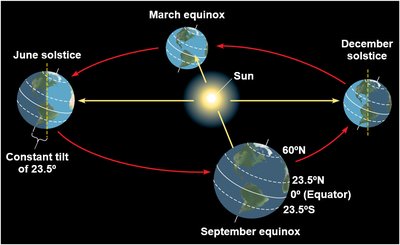
Seasonal variations in day length, solar radiation, and temperature increase toward the poles, caused by the tilt of Earth’s axis and its orbit around the sun. Local climate is also influenced by bodies of water and mountain ranges.
Key Point: The changing angle of the sun and wind patterns affect local environments, such as wet and dry seasons at certain latitudes.
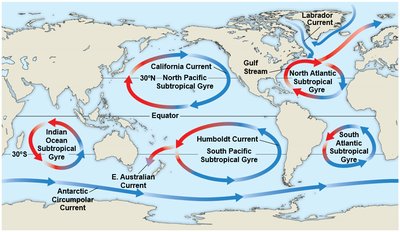
Key Point: Ocean currents and large bodies of water moderate climate, while mountains create rain shadows and affect sunlight exposure.
Ecological Factors Limiting Distribution
Abiotic and Biotic Factors
The distribution of species is limited by both abiotic (nonliving) and biotic (living) factors. Abiotic factors include temperature, water, oxygen, salinity, sunlight, and soil. Biotic factors include interactions such as predation, competition, mutualism, and parasitism.
Key Point: Ecologists study how these factors influence where species occur and why they are found in certain habitats.
Example: The distribution of the saguaro cactus is affected by temperature, water availability, and interspecific interactions.
Summary Table: Levels of Ecological Research
Level | Focus |
|---|---|
Organismal Ecology | Adaptations of individual organisms |
Population Ecology | Population size and dynamics |
Community Ecology | Interactions among species |
Ecosystem Ecology | Energy flow and nutrient cycling |
Landscape Ecology | Exchange across ecosystems |
Global Ecology | Processes affecting the biosphere |
Additional info:
Ecology is foundational for understanding environmental issues, conservation, and the impact of human activities on the biosphere.
Climate change and habitat disturbance are major topics in modern ecology, affecting species distribution and ecosystem function.
