 뒤로
Fungi: Structure, Nutrition, Roles, and Symbiosis
스터디 가이드 - 스마트 노트
 자료에 맞춘 맞춤형 노트, 핵심 정의, 예시, 맥락을 확장해 제공합니다.
Fungi: Structure, Nutrition, Roles, and Symbiosis
Overview of Fungi
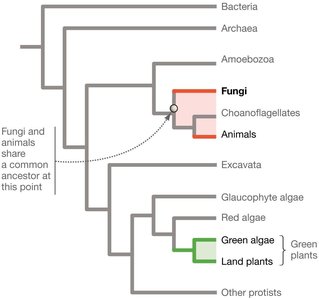
Fungi are a diverse group of eukaryotic organisms that play essential roles in ecosystems, including decomposition, symbiosis, and disease. They are more closely related to animals than to plants, sharing several cellular and biochemical features.
Mycology: The scientific study of fungi.
Key similarities to animals: Fungi use chitin for cell walls, have similar flagella, and store carbohydrates as glycogen (plants use starch).
Growth Forms of Fungi
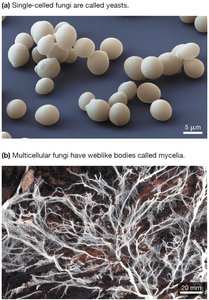
Fungi exhibit two main growth forms: unicellular (yeasts) and multicellular (mycelia).
Yeasts: Single-celled fungi.
Mycelia: Multicellular, filamentous structures composed of hyphae. Mycelia can be microscopic or extremely large and long-lived.
Structure of the Fungal Mycelium
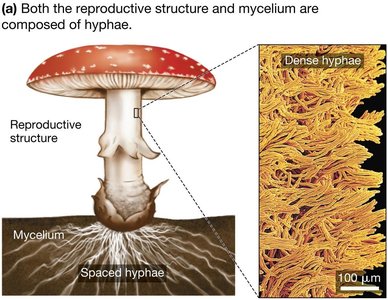
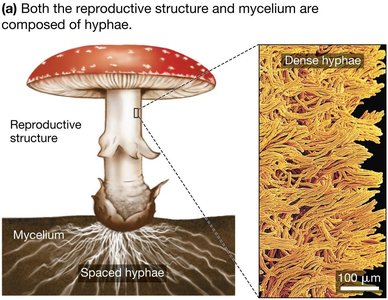
The mycelium is the main body of multicellular fungi, made up of hyphae—long, narrow filaments.
Hyphae: Can be divided by cross-walls called septa or be coenocytic (multinucleate, without septa).
Dynamic growth: Hyphae grow and die back in response to food sources.
Survival: Fungi survive dry environments or nutrient deprivation as spores.
Hyphal Types and Transport
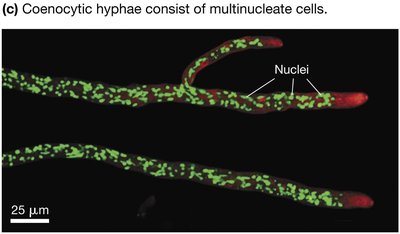
Hyphae can be monokaryotic (one nucleus per cell), dikaryotic (two nuclei per cell), or coenocytic (multinucleate).
Septa: Cross-walls dividing hyphae into compartments, with pores allowing passage of nuclei and organelles.
Transport: Fungi lack complex transport systems; nutrients move rapidly through pores or the coenocytic body.
Nutrition in Fungi
Fungi are heterotrophic, obtaining nutrients by external digestion.
External digestion: Fungi secrete digestive enzymes into their food source and absorb nutrients.
Mycelium structure: Highly branched, with a large surface area to volume ratio, facilitating absorption but making them prone to drying out.
Fungi as Decomposers
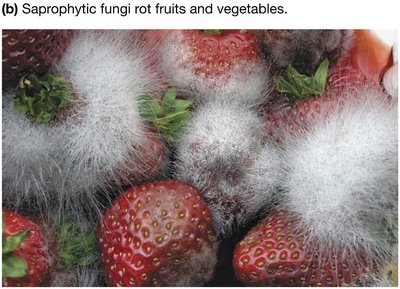
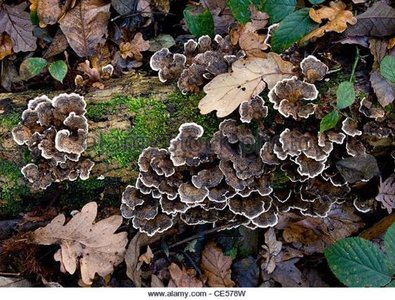
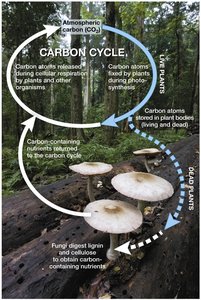
Many fungi are saprophytic, breaking down dead plant material and playing a crucial role in the carbon cycle.
Saprophytic fungi: Secrete enzymes to break down cellulose and lignin (only fungi and a few bacteria can break down lignin).
Carbon cycle: Fungi return carbon to the environment by decomposing plant tissues.
Predatory Fungi
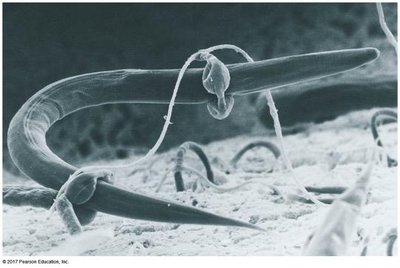
Some fungi are predatory, using hyphae to ensnare and digest prey such as nematodes.
Hyphal traps: Lasso-like structures capture prey.
Digestion: Hyphae invade and digest the prey's body.
Symbiotic Relationships of Fungi
Fungi can form various symbiotic relationships with other organisms, including parasitic, mutualistic, and commensal associations.
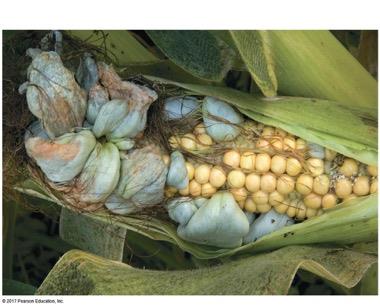
Parasitic: Fungi absorb nutrients from living hosts, often reducing host fitness and causing diseases (e.g., smuts, blights, rusts).
Mutualistic: Fungi benefit their partners, such as mycorrhizal fungi with plants or lichens with photosynthesizers.
Commensal: Fungi live with hosts without harming or benefiting them (e.g., Candida albicans in humans).
Mutualistic Fungi: Mycorrhizae and Lichens
Mycorrhizal fungi: Form symbiotic relationships with plant roots, increasing nutrient uptake for the plant and receiving carbohydrates in return.
Lichens: Associations between a fungus and a photosynthesizer (green algae or cyanobacterium), important for soil formation and as food sources.
Fungal Reproduction
Fungi reproduce both sexually and asexually, often using spores as the dispersal unit.
Asexual reproduction: Fragmentation, pinching off hyphae, or production of spores via mitosis.
Sexual reproduction: Haploid-dominant life cycle; zygote is the only diploid cell, undergoes meiosis to produce haploid spores.
Key steps: Plasmogamy (fusion of hyphae), karyogamy (fusion of nuclei), followed by meiosis.
Mating types: Many fungi have multiple mating types; only hyphae of different types combine via plasmogamy.
Comparison of Fungi, Animals, and Plants
Cell wall composition: Fungi use chitin, plants use cellulose, animals lack cell walls.
Carbohydrate storage: Fungi and animals use glycogen, plants use starch.
Nutrition: Fungi are heterotrophic with external digestion, animals are heterotrophic with internal digestion, plants are autotrophic.
Key Lineages of Fungi
Fungi are classified into several major lineages, including Zygomycetes, Basidiomycota, and Ascomycota, each with distinct reproductive and structural features.
Summary Table: Fungal Symbiosis Types
Type | Description | Example |
|---|---|---|
Parasitic | Fungi harm host, absorb nutrients | Corn smut, athlete's foot |
Mutualistic | Both partners benefit | Mycorrhizae, lichens |
Commensal | Fungi benefit, host unaffected | Candida albicans in humans |
Key Terms
Hyphae: Filamentous structures forming the body of multicellular fungi.
Mycelium: Network of hyphae.
Septum: Cross-wall dividing hyphae.
Coenocytic: Hyphae without septa, multinucleate.
Saprophytic: Decomposing dead organic matter.
Plasmogamy: Fusion of hyphae.
Karyogamy: Fusion of nuclei.
Spore: Dispersal unit in fungi.
