 뒤로
뒤로Inside the Cell: Structure and Function of Cellular Components
스터디 가이드 - 스마트 노트
 자료에 맞춘 맞춤형 노트, 핵심 정의, 예시, 맥락을 확장해 제공합니다.
Inside the Cell
Introduction to Cell Theory
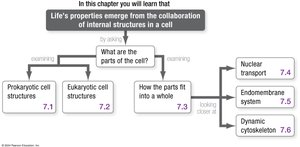
Cells are the fundamental unit of life, as established by the Cell Theory. All living organisms are composed of cells, which arise from pre-existing cells. Cells are divided into two fundamental types: prokaryotes and eukaryotes.
Prokaryotes lack a membrane-bound nucleus.
Eukaryotes possess a membrane-bound nucleus and various organelles.
Prokaryotic Cell Structures and Their Functions
General Structure
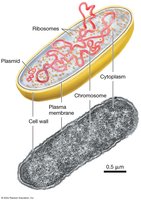
Prokaryotic cells, including Bacteria and Archaea, are generally smaller and simpler than eukaryotic cells. They contain essential components for life but lack compartmentalization by internal membranes.
Chromosome: Single, circular DNA molecule located in the nucleoid region.
Plasmids: Small, circular DNA molecules that may carry advantageous genes.
Ribosomes: Complexes of RNA and protein responsible for protein synthesis.
Cell Wall: Provides structural support and shape.
Capsule (optional): Polysaccharide layer outside the cell wall for protection and adhesion.
Cytoplasm: Internal fluid containing enzymes and molecules for metabolism.
Extracellular Appendages
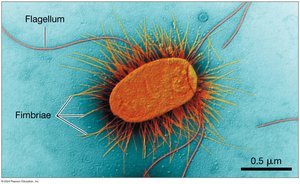
Flagella: Long, whip-like structures that rotate to propel the cell.
Fimbriae: Needlelike projections that promote attachment to surfaces or other cells.
Eukaryotic Cell Structures and Their Functions
General Features
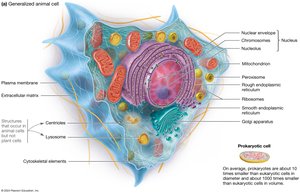
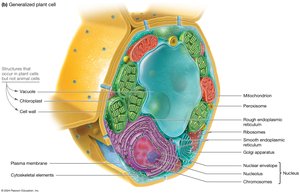
Eukaryotic cells are typically larger and more complex than prokaryotic cells. They contain a variety of membrane-bound organelles that compartmentalize cellular functions.
Include protists, fungi, plants, and animals.
May be unicellular or multicellular.
Contain a nucleus and other organelles.
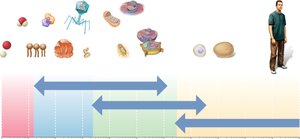
Most eukaryotic cells are larger than prokaryotic cells.
The Cytosol
The cytosol is the fluid portion of the cytoplasm, excluding organelles. It serves as the site for metabolic reactions and the initiation of protein synthesis.
The Nucleus
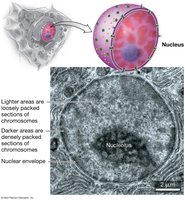
The nucleus is the control center of the cell, containing most of the cell's genetic material. It is surrounded by a double-membrane nuclear envelope with nuclear pores for transport. The nucleolus within the nucleus is the site of ribosomal RNA synthesis and ribosome assembly.
Endoplasmic Reticulum (ER)
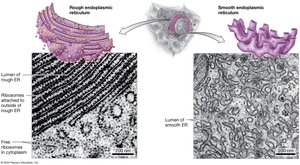
The endoplasmic reticulum is an extensive membrane system continuous with the nuclear envelope. It exists in two forms:
Rough ER (RER): Studded with ribosomes; synthesizes proteins destined for secretion, membranes, or organelles.
Smooth ER (SER): Lacks ribosomes; synthesizes lipids, detoxifies harmful substances, and stores Ca2+ ions.
Golgi Apparatus
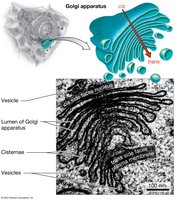
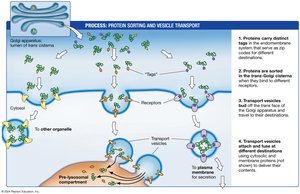
The Golgi apparatus consists of stacked, flat membranous sacs called cisternae. It processes, modifies, sorts, and ships proteins and lipids received from the ER. Vesicles transport materials to and from the Golgi.
Lysosomes
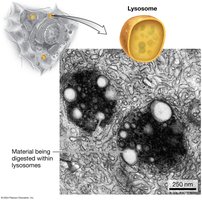
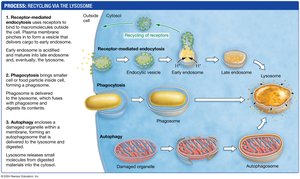
Lysosomes are membrane-bound organelles found in animal cells. They contain hydrolytic enzymes for digesting macromolecules and recycling cellular components. Plant cells use vacuoles for similar functions.
Vacuoles
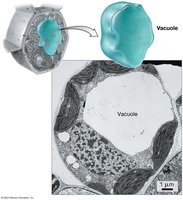
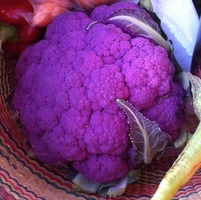
Vacuoles are large, membrane-bound structures in plants and fungi. They store water, ions, pigments, and sometimes toxic compounds. Vacuoles help maintain cell turgor pressure and may be specialized for digestion.
Peroxisomes
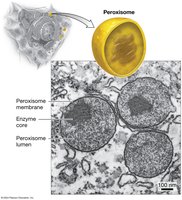
Peroxisomes are small, membrane-bound organelles that originate from the ER. They are centers for oxidation reactions, such as the breakdown of fatty acids and detoxification of harmful substances. The enzyme catalase converts hydrogen peroxide, a byproduct, into water and oxygen.
Mitochondria
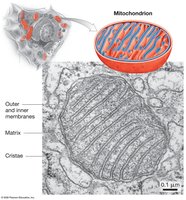
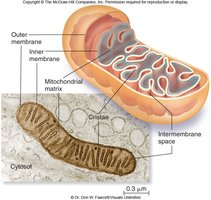
Mitochondria are the powerhouses of the cell, generating ATP through cellular respiration. They have a double membrane; the inner membrane is highly folded into cristae, increasing surface area for ATP production. Mitochondria contain their own DNA and ribosomes, supporting the endosymbiosis theory.
Chloroplasts
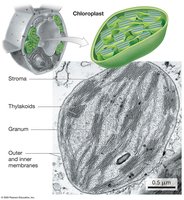
Chloroplasts are found in plant and algal cells and are the site of photosynthesis. They have three membranes, with the innermost forming thylakoids, which are stacked into grana. The stroma surrounds the thylakoids. Chloroplasts also contain their own DNA and ribosomes.
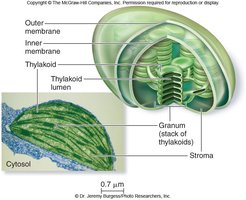
Endosymbiosis Theory
The endosymbiosis theory proposes that mitochondria and chloroplasts originated as free-living bacteria engulfed by ancestral eukaryotic cells. Evidence includes their own DNA, ribosomes, and independent division.
Cytoskeleton
The cytoskeleton is a network of protein fibers that provides structural support, facilitates cell movement, organizes organelles, and transports materials within the cell. It consists of three main types:
Actin filaments (microfilaments): Smallest, involved in cell shape and movement.
Intermediate filaments: Provide structural support, especially for the nucleus.
Microtubules: Largest, serve as tracks for vesicle transport, separate chromosomes during cell division.
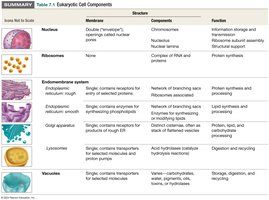
Summary Table: Eukaryotic Cell Components
The following tables summarize the main organelles, their structure, and functions in eukaryotic cells:
Organelle | Membrane | Structure | Components | Function |
|---|---|---|---|---|
Nucleus | Double | Nuclear pores | Chromosomes, nucleolus | Information storage, ribosome subunit assembly |
Ribosomes | None | Complex of RNA and protein | — | Protein synthesis |
Rough ER | Single | Network of branching sacs, ribosomes | — | Protein synthesis and processing |
Smooth ER | Single | Network of branching sacs, no ribosomes | — | Lipid synthesis and processing |
Golgi apparatus | Single | Stack of cisternae | — | Protein, lipid, and carbohydrate processing |
Lysosomes | Single | Acid hydrolase enzymes | — | Digestion and recycling |
Vacuoles | Single | Varied—pigments, oils, water, toxins | — | Storage, digestion, recycling |
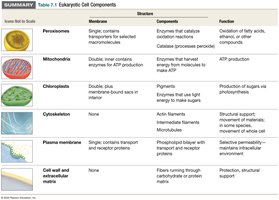
Organelle | Membrane | Components | Function |
|---|---|---|---|
Peroxisomes | Single | Enzymes for oxidation reactions | Oxidation of fatty acids, detoxification |
Mitochondria | Double | Enzymes for ATP production | ATP production |
Chloroplasts | Double | Pigments, enzymes for photosynthesis | Production of sugars via photosynthesis |
Cytoskeleton | None | Actin filaments, intermediate filaments, microtubules | Structural support, movement |
Plasma membrane | Single | Phospholipid bilayer with proteins | Selective permeability, cell communication |
Cell wall (plants, fungi, some protists) | None | Fibers running through carbohydrates or proteins | Protection, structural support |
Form Follows Function
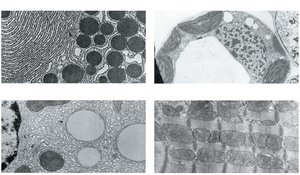
Cell structure is closely related to its function. For example, pancreatic cells have abundant rough ER for enzyme secretion, muscle cells have many mitochondria for ATP production, and plant leaf cells contain numerous chloroplasts for photosynthesis.
Protein Sorting and Vesicle Transport
Proteins synthesized in the rough ER are tagged and sorted in the Golgi apparatus. Molecular tags direct proteins into specific transport vesicles, which deliver them to their correct destinations, including secretion out of the cell via exocytosis.
Lysosomal Recycling Pathways
Lysosomes digest large molecules and recycle monomers. Material is delivered to lysosomes via endocytosis (including receptor-mediated endocytosis and phagocytosis) or autophagy (self-eating of damaged organelles).
The Dynamic Cytoskeleton
Actin Filaments (Microfilaments)
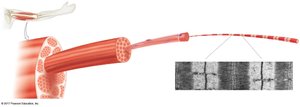
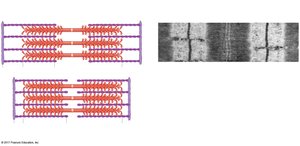
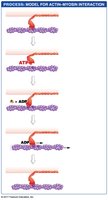
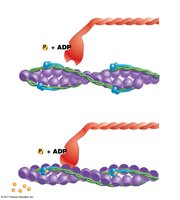
Actin filaments are the smallest cytoskeletal elements, composed of two intertwined strands of actin. They interact with myosin motor proteins to produce cell movement and muscle contraction.
Intermediate Filaments
Intermediate filaments provide mechanical support for the cell and help maintain the shape of the nucleus (nuclear lamins). They are not directly involved in movement.
Microtubules
Microtubules are the largest cytoskeletal elements, composed of tubulin dimers. They provide a framework for organelle positioning, serve as tracks for vesicle transport, and are essential for chromosome separation during cell division.
Conclusion
The structure and function of cellular components are intricately linked, allowing cells to perform the complex processes necessary for life. Understanding these organelles and their interactions is fundamental to the study of biology.
